Pull-Ups from Zero: A Progression Guide
10 min read · September 2026 · by Manikanta Sirumalla
A strict pull-up is one of the most satisfying things a body can do and one of the most common goals people never reach. The gap is not potential. It is that pull-ups are a skill and a strength that need specific, progressive practice, and most people either never practise them or try to skip the steps. This is the progression that works, for anyone, from zero.
Why pull-ups are hard
A pull-up requires lifting your entire body weight with the muscles of the back and arms, through a long range of motion, from a position where they are at a mechanical disadvantage. The lats do most of the work, with the biceps, brachialis, lower traps, rhomboids and rear deltoids assisting, and the trunk holding the body rigid (Youdas et al. 2010).
The demand is a ratio: pulling strength divided by body weight. Untrained adults are on the wrong side of that ratio, and women start further from it on average because a smaller proportion of their muscle is in the upper body. A widely reported training study at the University of Dayton found that only a minority of untrained women could do a pull-up after three months of general strength training, and that finding is often quoted as proof that women cannot do pull-ups. What it actually showed was that general training is not specific enough. Women who follow a pull-up-specific progression get pull-ups; gyms are full of them.
The technique
Learn the pattern before you can complete it; every stage of the progression practises the same shape.
Grip. Hands slightly wider than shoulder width for an overhand pull-up; shoulder width and palms facing you for a chin-up; palms facing each other on neutral handles if available. Full grip with the thumb around the bar. Start with chin-ups or neutral grip, which are easier for most people.
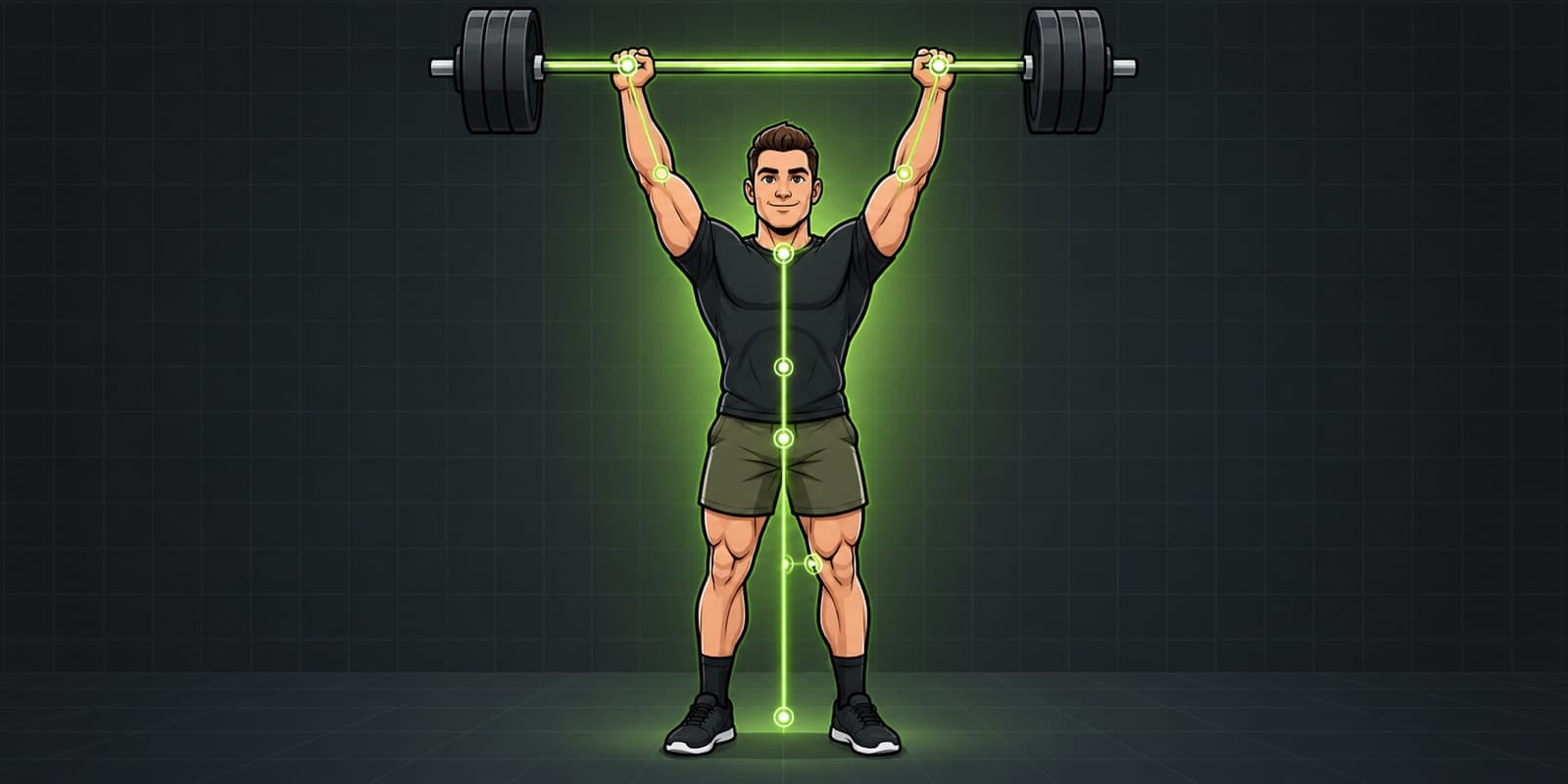
Dead hang. Arms straight, shoulders relaxed up toward the ears, body straight, legs together and slightly in front, glutes and abs tight. This is the start and end position of every rep.
Initiate with the shoulder blades. Before the elbows bend, pull the shoulder blades down and together, which lifts the body a few centimetres and engages the lats. This scapular pull is the step most people skip.
Drive the elbows down. Think of pulling the elbows to your back pockets rather than pulling the chin to the bar. The chest leads; the body stays straight or in a slight hollow, not swinging.
Top. Chin over the bar, chest toward the bar, elbows pointed down and back. Pause briefly.
Lower under control. Two to three seconds back to a full dead hang, arms straight. Every rep starts and ends there.
What not to do. Kipping, swinging, half reps that start with bent arms, and craning the neck to get the chin over. Those all reduce the training effect and make the "pull-up" you eventually do worth less.
The progression
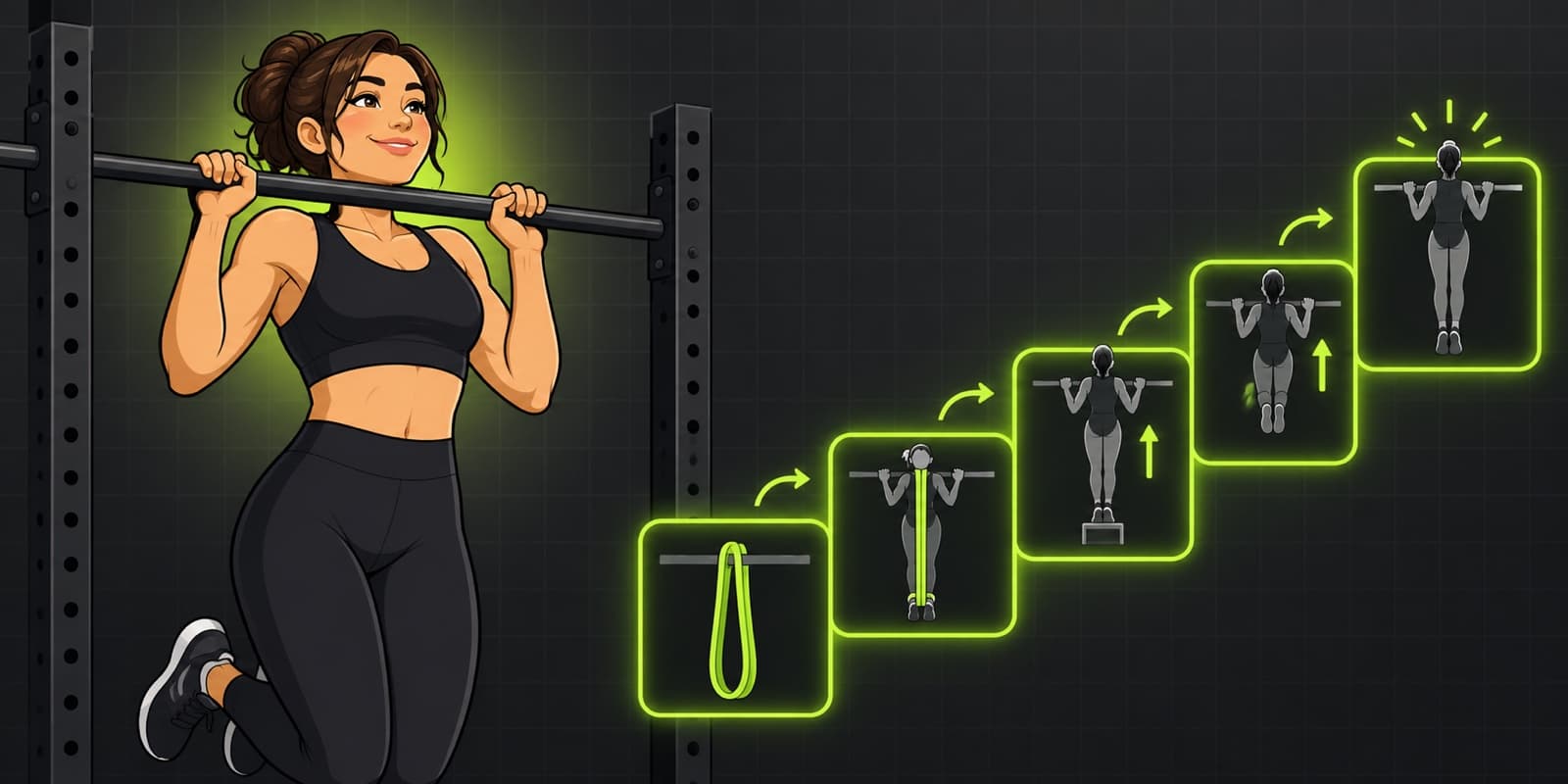
Each stage becomes the main exercise at three sessions a week, for 3 to 5 sets, until you can do the rep target with clean technique. Then move on. Stages overlap: keep negatives and hangs in the program at every level.
Stage 1: hang and scapular pulls
- Dead hangs: 3 to 5 sets, working up to 30 to 45 seconds. Builds grip and shoulder stability.
- Scapular pull-ups: from a dead hang, pull the shoulder blades down and together without bending the elbows, hold two seconds, lower. 3 sets of 8 to 12.
- Rows: inverted rows on a low bar or rings, and cable or dumbbell rows, 3 sets of 8 to 12, to build the pulling muscles. See Best Back Exercises.
Move on when you can hang 30 seconds and do 10 clean scapular pulls.
Stage 2: negatives
The eccentric (lowering) phase is where you are strongest, so it is where you can practise the full range under your full body weight.
- Jump or step to the top position (chin over bar), hold one second, and lower as slowly as possible to a dead hang. Aim for 3 to 5 seconds, working to 8 to 10.
- 3 to 5 sets of 3 to 5 reps. Rest 2 to 3 minutes between sets.
- Expect significant soreness the first week; negatives are eccentric-heavy. See Muscle Soreness (DOMS).
Move on when you can do 5 negatives of 8 seconds each.
Stage 3: assisted pull-ups
Now the full movement with some help.
- Band-assisted: a loop band on the bar with a knee or foot in it. Start with a band that lets you do 5 to 8 reps; move to a lighter band when you can do 10.
- Machine-assisted: set the counterweight so you can do 6 to 8 reps; reduce it by the smallest increment when you hit 10.
- Feet-assisted: a box under the feet on a low bar, using the legs as little as possible.
- 3 to 5 sets of 5 to 8, plus 2 sets of negatives at the end.
Keep every rep strict, full range, scapular pull first. The assistance is there to let you practise the pattern, not to let you cheat it.
Move on when you can do 8 reps with a light band or a machine assistance of 10 to 15 percent of body weight.
Stage 4: isometric holds and partials
Strength is specific to joint angle, and the sticking point for most people is the middle to top of the pull.
- Top holds: jump to the top, hold chin over bar for 5 to 10 seconds, lower slowly. 3 to 5 sets.
- Mid-range holds: hold at 90 degrees at the elbow for 5 to 10 seconds.
- Partial reps from the top: lower a quarter of the way and pull back up, 3 to 5 reps.
Combine with light-band assisted reps and negatives. This is the stage that turns "almost" into a first rep.
Stage 5: the first strict rep, then more
When you do your first strict chin-up, celebrate, then:
- Grease the groove: several single reps spread through each session or the day, never to failure. Frequency builds the skill.
- Cluster sets: 5 sets of 1 to 2, with 2 minutes rest, three times a week.
- Keep the negatives and assisted reps for volume the singles cannot provide.
- Add a rep to your best set every one to two weeks. Progress from 1 to 5 typically takes another one to two months.
Stage 6: 5 to 10 and beyond
Once you can do 5 strict reps, treat the pull-up like any other lift:
- 3 to 5 sets of 3 to 6, adding small weights (a belt with plates, or a dumbbell between the feet) to keep the reps in that range.
- Vary the grip: pull-ups, chin-ups, neutral.
- Aim for an overall weekly total that climbs over time.
Supporting work
The pull-up is a back exercise, and building the back with other exercises makes it come faster:
- Lat pulldowns, especially heavy, slow reps with a scapular initiation. The closest analogue.
- Rows of every kind for the mid-back and rear deltoids.
- Biceps curls, since the biceps are a genuine contributor.
- Dead hangs and farmer's carries for grip, which fails before the back in many beginners.
- Hollow body holds for the trunk rigidity that stops swinging.
Two back-focused sessions a week alongside the pull-up progression is ideal. See Best Back Exercises.
Body weight
Strength-to-weight is the equation. Adding pulling strength is the main lever, and it works at any weight. Reducing excess body fat, if you carry it, moves the other side of the equation and is worth doing for its own reasons, but not through an aggressive diet that costs you strength. A moderate deficit with high protein and this progression gets both. See The Cutting Guide.
Timelines
From a genuine zero (cannot hold a top position), three sessions a week:
- Stage 1 to 2: two to four weeks.
- Stage 2 to 3: two to four weeks.
- Stage 3 to first strict rep: four to twelve weeks.
- First rep to 5 reps: four to eight weeks.
So two to four months for a first chin-up for most people, six months to a set of five. Starting closer to the threshold shortens everything. Missing sessions lengthens it more than anything else.
Women specifically
Everything above applies. The differences are a starting point further from the ratio on average, and a stronger cultural message that it is not possible. Neither is a barrier. The progression is the same, the timelines are similar once started, and the result is the same. Women who lift regularly and follow a specific progression get pull-ups, and the muscle built along the way improves everything else about training. See Best Back Exercises for building the back and Perimenopause and Strength Training for why upper-body pulling strength matters more with age.
The bottom line
Pull-ups are a skill and a strength, and both come from specific, progressive practice three times a week: hangs and scapular pulls, then slow negatives, then assisted reps with decreasing help, then holds at the top, then strict singles built into sets. Start with chin-ups, keep every rep strict from a dead hang, build the back with rows and pulldowns, and give it two to four months. Anyone can get there, and almost everyone who follows the steps does.
Sources
- Youdas JW, Amundson CL, Cicero KS, et al. "Surface electromyographic activation patterns and elbow joint motion during a pull-up, chin-up, or perfect-pullup rotational exercise." Journal of Strength and Conditioning Research, 2010.
- Dickie JA, Faulkner JA, Barnes MJ, Lark SD. "Electromyographic analysis of muscle activation during pull-up variations." Journal of Electromyography and Kinesiology, 2017.
- Ronai P, Scibek E. "The Pull-up." Strength and Conditioning Journal, 2014.
- Leslie KL, Comfort P. "The effect of grip width and hand orientation on muscle activity during pull-ups and the lat pull-down." Strength and Conditioning Journal, 2013.
Frequently asked questions
Why can't I do a pull-up?
A pull-up requires pulling your full body weight with the lats, biceps and upper back, which is a high strength-to-weight demand that untrained adults rarely meet. Women have less upper-body muscle on average and a higher share of weight in the lower body, so the ratio is harder, but it is entirely trainable. The missing ingredient is nearly always specific progressive practice, not potential.
How long does it take to get your first pull-up?
From a genuine zero, with three sessions a week of specific progression work, most people reach a first strict chin-up in 2 to 4 months and a first pull-up shortly after. People closer to the threshold get there in weeks. Heavier body weight and less starting strength extend it; consistency shortens it.
Are chin-ups easier than pull-ups?
Yes, for almost everyone. The supinated (palms facing you) grip lets the biceps contribute more and puts the shoulder in a stronger position. Most people get a chin-up first, then a neutral-grip pull-up, then an overhand pull-up. All three build the back.
Are assisted pull-up machines or bands better?
Both work. Bands give more help at the bottom where you are weakest and less at the top, which mimics the strength curve well but makes progress harder to measure. Machines let you set exact assistance and reduce it in small steps. Use whichever your gym has; negatives and isometrics matter more than the assistance tool.
Should I lose weight to do a pull-up?
If you carry a lot of excess fat, reducing it makes the ratio easier and is worth doing for other reasons. But strength gains are the main lever, and many heavier people do pull-ups. Do not diet aggressively just for the pull-up; train the progression and let body composition improve alongside it.
How do I go from 1 pull-up to 10?
Grease the groove: several sets of 1 to 3 reps spread through the day or session, well short of failure, plus one weekly session of negatives and weighted or assisted work. Add a rep to your best set every week or two. Once you can do 5 strict, add small amounts of weight to keep the reps at 3 to 6 and the total volume climbing.