Best Shoulder Exercises: Building All Three Deltoids
9 min read · September 2026 · by Manikanta Sirumalla

The deltoid has three heads with three different jobs, and most training programs work one of them hard and neglect the other two. Front delts get hammered by every press. Side delts, which create width, and rear delts, which create balance and protect the joint, need direct work that most people either skip or do badly. This guide ranks the exercises by head, on the evidence, and builds a program around the two that are usually missing.
The three heads
- Anterior (front) deltoid: flexes the arm forward and assists every press. Trained heavily by bench, incline and overhead pressing; almost never needs isolation.
- Lateral (side) deltoid: abducts the arm out to the side. Trained modestly by overhead pressing and directly by lateral raises. This is where shoulder width comes from.
- Posterior (rear) deltoid: extends and horizontally abducts the arm. Trained by rows with the elbows out, face pulls and reverse flys. Under-trained in most programs, which is a common contributor to rounded shoulders and shoulder pain.
Beneath the deltoid sits the rotator cuff, four small muscles that centre the ball of the shoulder in its socket. They matter for health more than appearance and are trained by external rotation work and, indirectly, by pulling.
Front deltoid: pressing
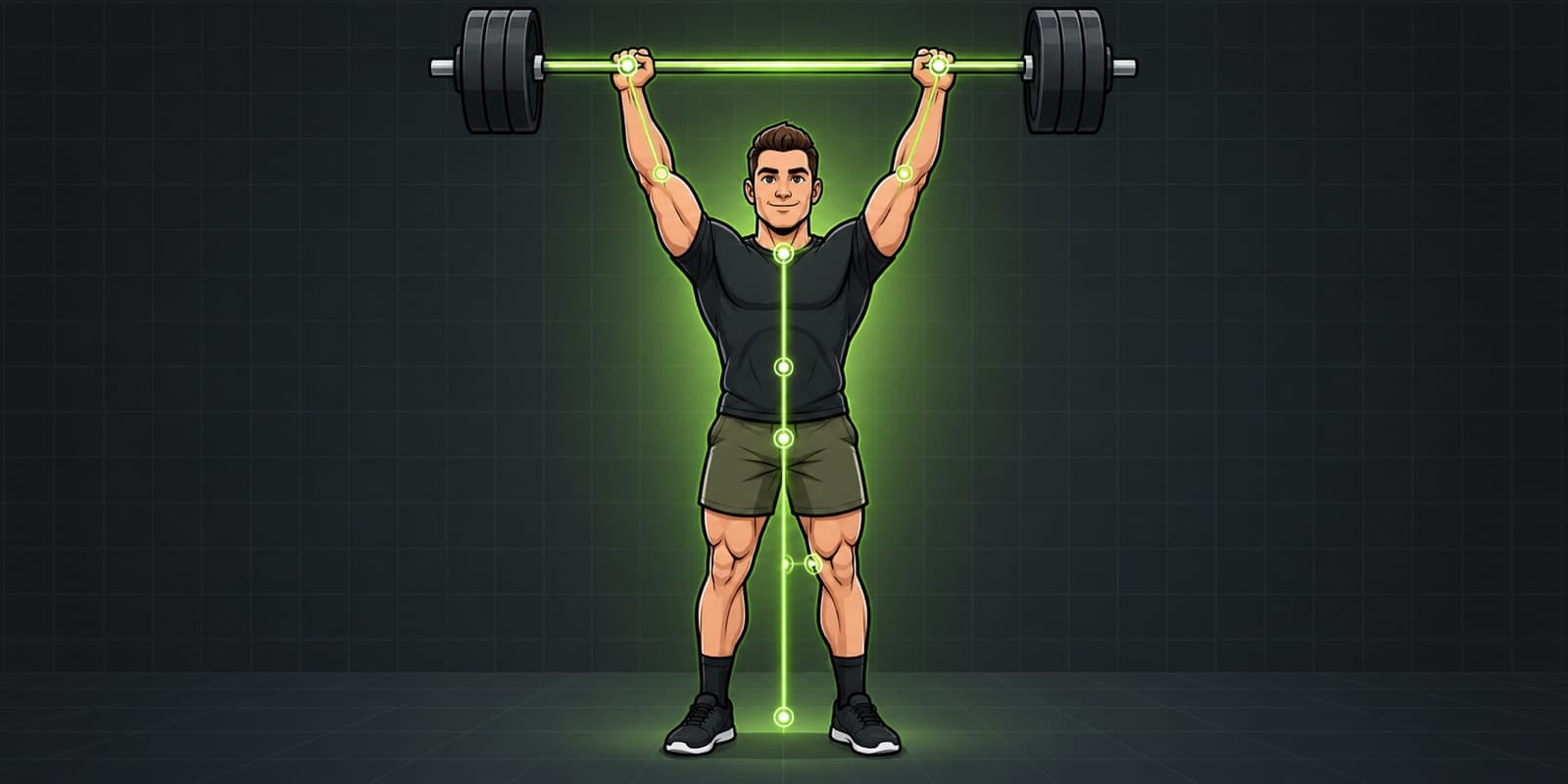
Standing barbell overhead press. The best front and side delt builder among the compound movements, with strong trunk and upper-back involvement. See How to Overhead Press.
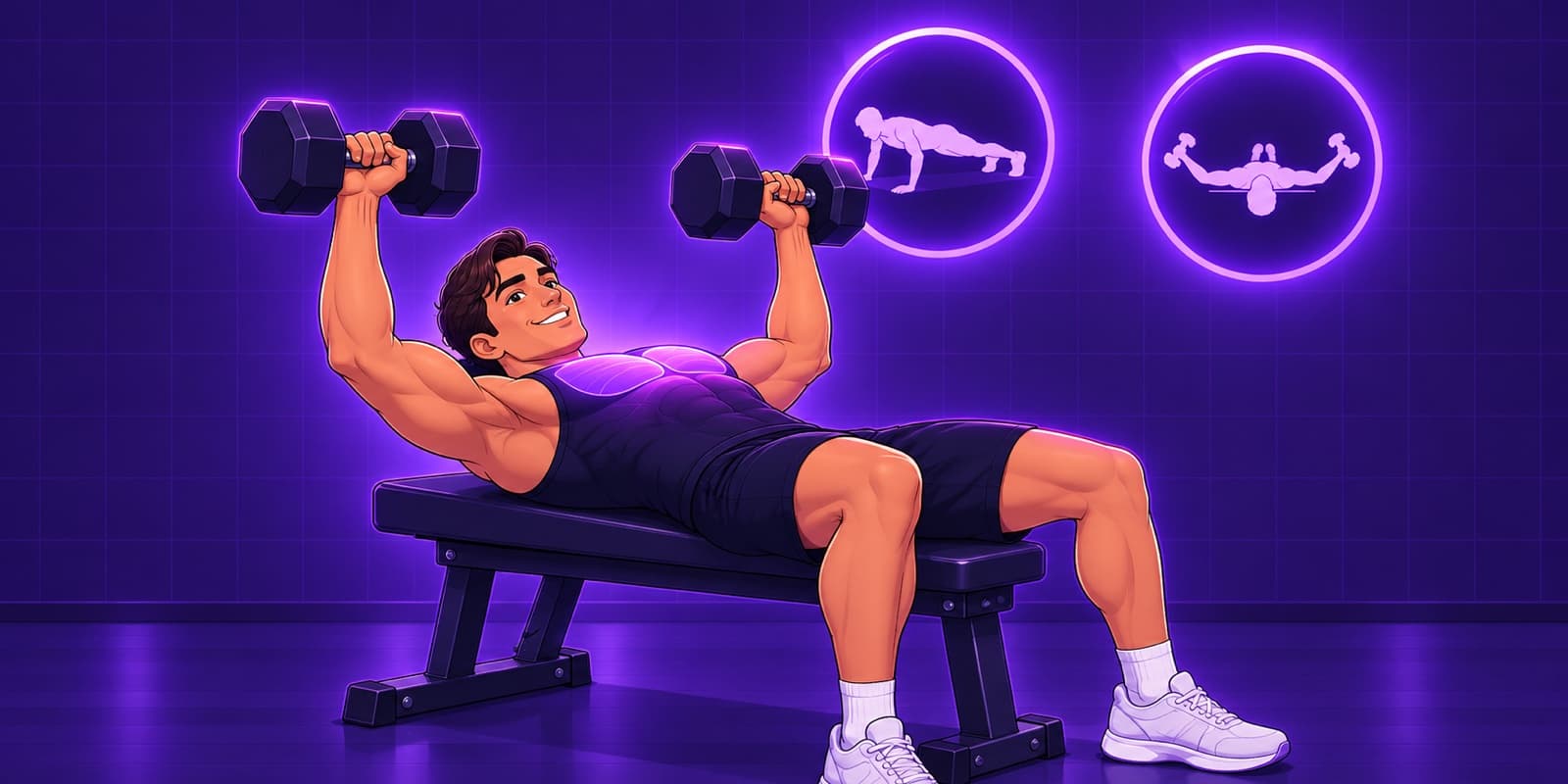
Seated and standing dumbbell press. Similar deltoid activation to the barbell, a greater range, and a neutral-grip option that many shoulders tolerate better (Saeterbakken and Fimland 2013).
Landmine press and Arnold press. Useful variations; the landmine for limited mobility or sore shoulders, the Arnold for a longer range with more lateral involvement.
Front raises. Direct anterior delt isolation. Almost always redundant in a program with pressing; skip them.
Incline and flat bench pressing also train the front delt substantially, which is why a program with two or three pressing movements needs no front-delt isolation at all.
Lateral deltoid: raises
This is the head that needs the most attention and gets the least.
Dumbbell lateral raise. The classic. Slight forward lean, a small elbow bend, raise to shoulder height leading with the elbows, lower under control. Its weakness is the resistance profile: almost no load at the bottom, where the muscle is stretched, and all the load at the top.
Cable lateral raise. Constant tension through the whole range, including the bottom, and higher lateral delt activation than dumbbells in comparisons (Coratella et al. 2020). Set the cable at hip height or below and stand slightly away from it. The best lateral raise variant for most people.
Leaning (behind-the-back or leaning-away) lateral raise. Holding a rack and leaning away increases the range under load, so the side delt works harder at the bottom.
Machine lateral raise. Stable, constant tension, easy to take close to failure. Excellent for volume.
Upright row (wide grip). High lateral delt activation, but it internally rotates the shoulder under load and aggravates many people's shoulders. If you use it, keep the grip wide and the bar below chest height.
Programming lateral raises: the side delt responds to volume and higher reps, 10 to 20 per set, with moderate loads that allow strict form. Momentum and heavy dumbbells turn the exercise into a trap and forearm workout. Eight to sixteen hard sets a week across two or three sessions is the range where shoulders visibly widen.
Rear deltoid
Face pull. Rope to the face, elbows high, hands finishing beside the ears with a slight external rotation. Rear delts, mid and lower traps, and rotator cuff in one movement. The single most useful shoulder-health exercise for anyone who presses.
Reverse fly (dumbbell, cable, machine). Direct rear-delt isolation. Bend forward, slight elbow bend, raise the arms out to the sides with the elbows leading. Cables and machines provide better tension than dumbbells here too.
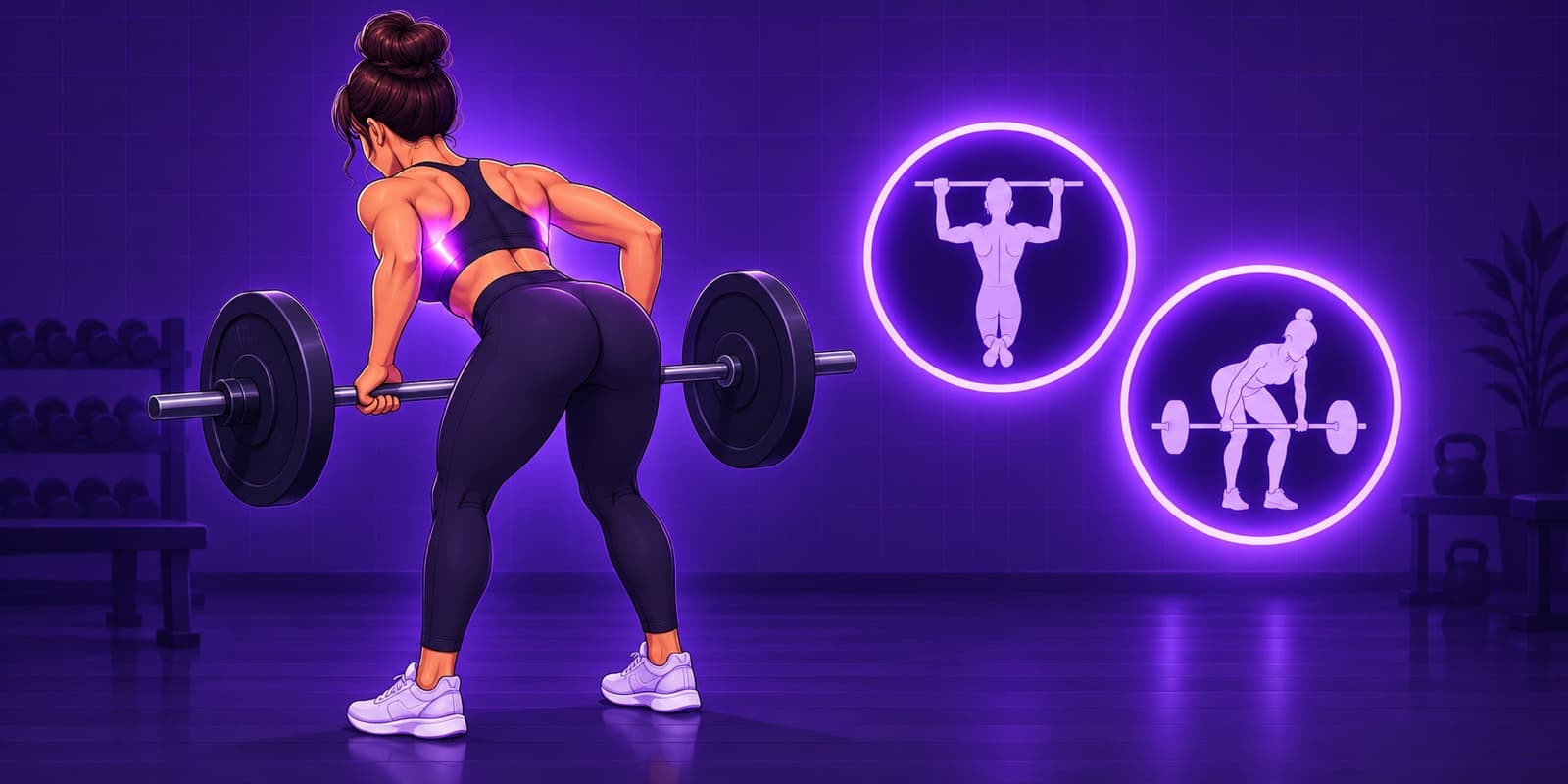
Rear-delt row. A row with the elbows flared to about 90 degrees, pulled to the upper chest. Heavier loading for the rear delt and upper back.
Band pull-aparts. High-rep, low-load rear-delt and rotator cuff work that can be done daily.
Six to twelve hard sets a week of rear-delt work is a reasonable target, and rows with the elbows out contribute. See Best Back Exercises.
Rotator cuff
External rotation with a cable, band or light dumbbell (elbow at the side, or at 90 degrees of abduction), two or three sets of 12 to 20, two or three times a week, is cheap insurance for anyone who presses heavy. Face pulls and pull-aparts cover much of it. The cuff does not need heavy loading; it needs regular, controlled work.
Balance and shoulder health
Shoulder pain in lifters usually traces to an imbalance: lots of pressing, little pulling, no rear-delt work, and a bench technique with flared elbows and unstable shoulder blades. The fixes are structural:
- At least as many hard pulling sets as pressing sets per week.
- Rear-delt and face-pull work in every upper session.
- Pressing technique with retracted shoulder blades and tucked elbows. See How to Bench Press.
- Overhead pressing with the mobility to lock out over the mid-foot without arching.
- Pain with overhead reaching or at night that persists more than a couple of weeks: get it assessed.
A complete shoulder program
Spread across two upper-body or push/pull sessions per week:
Session A
- Standing barbell overhead press: 4 sets of 5 to 8
- Cable lateral raise: 4 sets of 12 to 15
- Face pulls: 3 sets of 15 to 20
Session B
- Seated dumbbell press: 3 sets of 8 to 12
- Machine or leaning lateral raise: 4 sets of 12 to 20
- Reverse fly or rear-delt row: 3 sets of 12 to 15
- Cable external rotation: 2 sets of 15 per side
Combined with the front-delt work from bench and incline pressing, that is roughly 7 sets of pressing, 8 sets of lateral raises and 6 to 9 sets of rear-delt work per week. Progress raises by reps first, then load; progress presses by load.
The bottom line
Pressing handles the front delt. Width comes from 8 to 16 weekly sets of lateral raises, best done with cables, leaning variants or machines at 10 to 20 reps. Balance and joint health come from 6 to 12 weekly sets of rear-delt work, face pulls above all, with light external rotation for the cuff. Two sessions a week, strict form, high reps on the raises, and shoulders that look and feel the part.
Sources
- Saeterbakken AH, Fimland MS. "Effects of body position and loading modality on muscle activity and strength in shoulder presses." Journal of Strength and Conditioning Research, 2013.
- Coratella G, Tornatore G, Longo S, Esposito F, Cè E. "An Electromyographic Analysis of Lateral Raise Variations and Frontal Raise in Competitive Bodybuilders." International Journal of Environmental Research and Public Health, 2020.
- Campos YAC, Vianna JM, Guimarães MP, et al. "Different Shoulder Exercises Affect the Activation of Deltoid Portions in Resistance-Trained Individuals." Journal of Human Kinetics, 2020.
- Schoenfeld BJ, Kolber MJ, Haimes JE. "The Upright Row: Implications for Preventing Subacromial Impingement." Strength and Conditioning Journal, 2011.
- Botton CE, Wilhelm EN, Ughini CC, Pinto RS, Lima CS. "Electromyographical analysis of the deltoid between different strength training exercises." Medicina Sportiva, 2013.
Frequently asked questions
What is the best exercise for wider shoulders?
Lateral raises, in volume. Width comes from the lateral (side) deltoid, which pressing trains only modestly. Cable lateral raises, leaning dumbbell raises and machine raises load it through more of the range than a standard dumbbell raise; 8 to 16 hard sets a week at 10 to 20 reps builds it.
Do I need front raises?
Almost never. The anterior deltoid is heavily trained by every press, flat, incline and overhead, and adding front raises usually just increases fatigue. Skip them unless a specific weakness shows up.
Are overhead presses enough for shoulders?
For the front delt, yes; for the side and rear delts, no. Overhead pressing produces strong anterior and moderate lateral deltoid activation, but the rear delt barely works and the side delt is not fully stimulated. Add raises and rear-delt work.
How do I do lateral raises correctly?
Slight forward lean, a small bend in the elbows, raise the arms out to the side to about shoulder height leading with the elbows, with the little finger slightly higher than the thumb or the hand neutral, and lower under control. Do not shrug, swing, or go above shoulder height with heavy weights. Lighter weight and higher reps work better here than for almost any other exercise.
What exercises help shoulder pain from lifting?
Usually rear-delt and rotator cuff work to balance a pressing-heavy program: face pulls, band pull-aparts, external rotations, and more rowing. Fixing bench press elbow flare and shoulder-blade position also helps. Persistent pain, especially with overhead reaching or at night, should be assessed.
How many times a week should I train shoulders?
Two sessions covers it well. The side and rear delts recover quickly and respond to frequency, so splitting raises and rear-delt work across two or three sessions is often better than a single shoulder day.