Hip Thrust Guide: Form, Setup, and What the Research Says About Glute Growth
9 min read · September 2026 · by Manikanta Sirumalla
Twenty years ago, the hip thrust did not exist as a gym exercise. It is now the most searched glute movement on the internet, has its own machines in most commercial gyms, and is the anchor of nearly every glute-focused program. The popularity is deserved: it loads the glutes directly, at the joint angle where they work hardest, with weights that no other glute exercise allows. The claims around it have sometimes outrun the evidence. This guide covers both.
What the hip thrust trains
The hip thrust is horizontal hip extension against resistance, with the shoulders elevated so the range is long and the load can be heavy. The gluteus maximus is the prime mover, with the hamstrings, adductors and quads assisting, and the trunk stabilising.
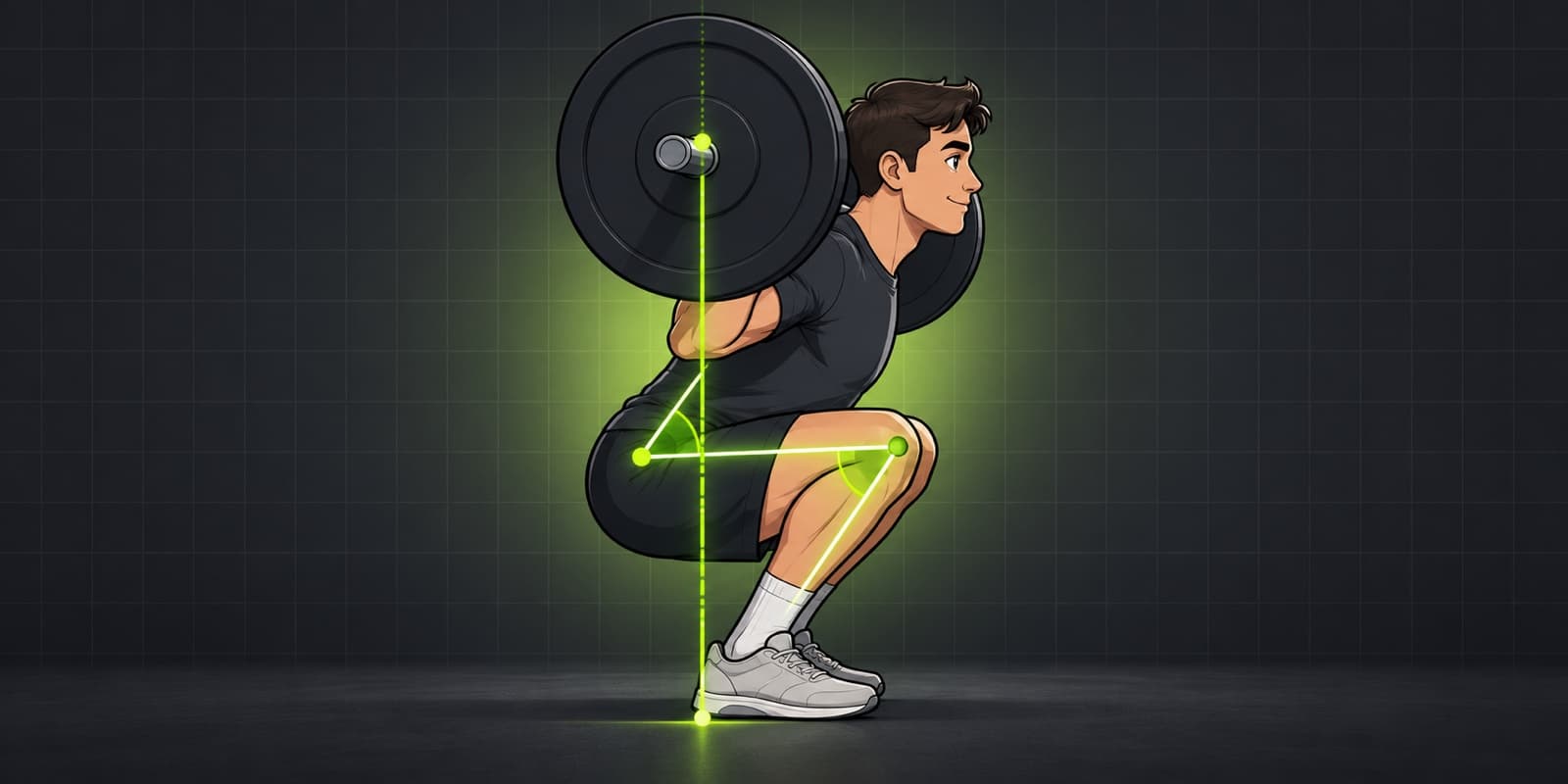
Its distinctive feature is the strength curve. In a squat or deadlift, the glutes are most loaded at the bottom, stretched, and unloaded at the top. In the hip thrust, the load on the glutes is greatest at the top, where they are fully shortened. EMG studies consistently find the hip thrust produces higher peak and mean gluteus maximus activation than the back squat at the same relative load (Contreras et al. 2015; Neto et al. 2020). The two exercises load the same muscle at opposite ends of its length.
Setup
Bench. A flat bench, ideally 35 to 45 cm high, so that when you sit against it the bottom of the shoulder blades meets the edge. Too high and you will slide up and arch; too low and the range is shortened. Anchor the bench against a wall or a rack, because it will move otherwise. Dedicated hip thrust benches and machines solve both problems.
Bar. A thick pad on the bar is not optional; an unpadded bar on the hips is painful enough to limit the set. Roll the bar over your legs until it sits in the crease of the hips, over the pubic bone, not on the stomach. Bumper plates or full-size plates make rolling it into position easier.
Body. Sit on the floor with the upper back against the bench, the bar over the hips, and the feet flat and drawn toward the body. Elbows on the bench, hands lightly on the bar to steady it.
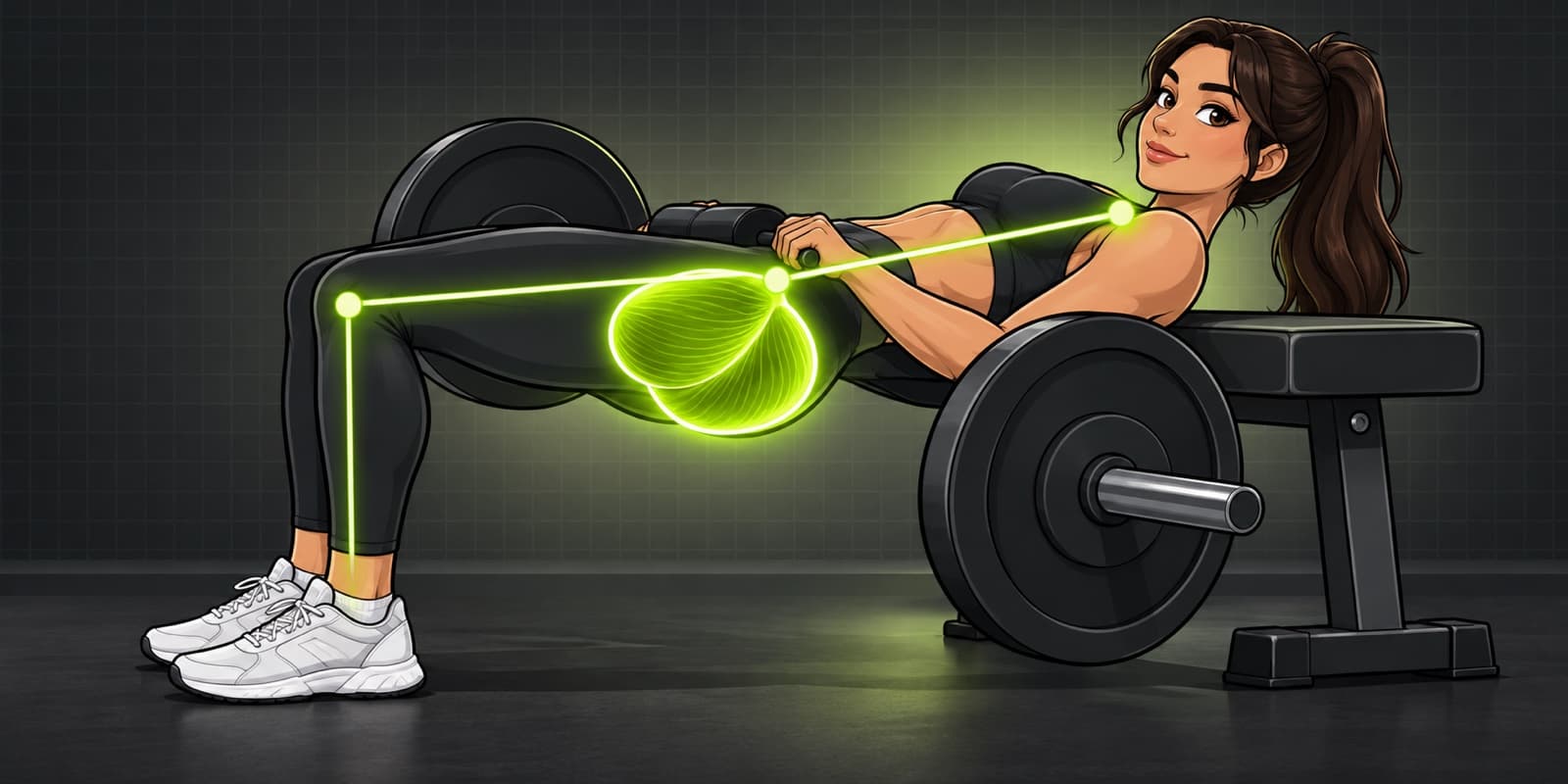
Feet. Hip to shoulder width apart, toes straight ahead or slightly out, placed so that at the top of the movement the shins are vertical. Test it: lock out and look at your shins. If they angle back toward you, the feet are too close; if they angle away, too far.
The movement
- Tuck the chin toward the chest and keep it there; looking at the ceiling encourages an arched back. Eyes forward, toward the knees.
- Take a breath and brace the trunk. Ribs down.
- Drive through the heels and the whole foot, lifting the hips until the torso and the thighs form a straight line from the shoulders to the knees. The knees stay over the ankles.
- At the top, finish with a posterior pelvic tilt: tuck the tailbone under and squeeze the glutes as hard as you can. The lower back should be flat or slightly rounded, never arched. Hold for one to two seconds.
- Lower under control, two seconds, until the plates or the hips approach the floor, without fully relaxing.
- Re-brace and repeat.
The lockout is the exercise. A rep that stops short of a full hip extension with a glute squeeze is a partial rep, whatever the weight on the bar.
The back-arch problem
The single most common fault, and the one that makes people say hip thrusts hurt their back, is finishing the rep by arching the lower back instead of extending the hips. The bar goes up, the ribs flare, and the lumbar spine takes the load while the glutes do less.
The fix is the posterior pelvic tilt: at the top, tuck the pelvis under so the front of the hip bones tilt up toward the ribs. The chin tuck and the "ribs down" cue make this easier. If you cannot lock out without arching, reduce the load. The hip thrust is one of the few lifts where a slight lumbar rounding at the top is the correct position, and an arch is the fault.
Hip thrust vs squat: what the studies show
The EMG advantage of the hip thrust led to the claim that it builds glutes better than squats. Training studies have tested that directly, and the picture is more balanced.
A 12-week study in trained women compared a squat-only program with a hip-thrust-only program. The squat group gained more gluteus maximus thickness, and gained quad size the hip thrust group did not (Barbalho et al. 2020). A 2023 study in young adults compared nine weeks of squats versus hip thrusts and found similar gluteus maximus growth in both, with the squat producing additional growth in the quads and adductors and the hip thrust producing greater strength gains on the hip thrust itself (Plotkin et al. 2023). An earlier study in athletes found hip thrusts improved sprint speed more than front squats, while front squats improved jump height more (Contreras et al. 2017).
The reasonable conclusion: EMG activation does not translate one-for-one into growth; the deep squat loads the glutes at long muscle lengths, which is a powerful growth stimulus in itself; and the hip thrust loads them at short lengths with very heavy weights, which is a different and complementary stimulus. Programs that include both cover the full length-tension curve, and that is what the best-designed glute programs do. See Best Glute Exercises Ranked by Evidence.
Variations
- Glute bridge: from the floor, shorter range, lighter. The starting point and a warm-up.
- Bodyweight and single-leg hip thrusts: for beginners, for the postpartum return, and for hip stability. See Postpartum Return to Lifting.
- Dumbbell or kettlebell hip thrust: easier to set up, limited by how much you can hold on the hips.
- Banded hip thrust: a band anchored under the feet or on a machine increases resistance at the top where the glutes work hardest.
- B-stance hip thrust: one foot slightly forward on its heel, shifting most of the load to the other leg; a useful single-leg progression.
- Machine hip thrust: convenient, stable, and increasingly common.
- Frog pumps, abduction, kickbacks: accessory movements for higher-rep glute work after the main lift.
Common faults and fixes
| Fault | Fix |
|---|---|
| Arching the lower back at the top | Chin tuck, ribs down, posterior pelvic tilt, glute squeeze; lighter load |
| Partial lockout | Reduce the load until every rep reaches a full straight line with a squeeze |
| Feet too close or too far | Adjust so shins are vertical at the top |
| Bench sliding or too high | Anchor it; use a 35 to 45 cm bench or a dedicated thruster |
| Heels lifting | Drive through the heels; feet slightly further from the body |
| Neck craned back | Chin tucked, eyes toward the knees |
| Rushing the reps | Two seconds down, a pause and squeeze at the top |
Programming
The hip thrust tolerates heavy loads and high reps equally well; both have a place.
- Hypertrophy: 3 to 4 sets of 8 to 12, with a pause at the top, once or twice a week. Pair with a squat or leg press in the same program and a Romanian deadlift for the stretched hamstrings and glutes. See Romanian Deadlift Guide.
- Strength: 3 to 5 sets of 3 to 6 at heavy loads, still with a full lockout on every rep.
- Athletic transfer: the hip thrust has evidence for improving sprint speed; 3 sets of 5 to 8 with fast concentric reps.
- Beginners and returns: bodyweight and dumbbell bridges and thrusts, 3 sets of 12 to 15, before loading a bar.
- Progression: add load when every rep reaches a full lockout with a two-second squeeze. Most people progress the hip thrust faster than any other lift; do not let the weight on the bar outrun the quality of the lockout.
The bottom line
Upper back on a bench at about knee height, padded bar in the hip crease, feet placed so the shins are vertical at the top, chin tucked and ribs down. Drive through the heels to a straight line from shoulders to knees, finish with a posterior pelvic tilt and a hard glute squeeze, hold, and lower under control. The hip thrust loads the glutes shortened and heavy; the squat loads them stretched; the research says do both. Lock out every rep, progress only as fast as the lockout allows, and the glutes will follow.
Sources
- Contreras B, Vigotsky AD, Schoenfeld BJ, Beardsley C, Cronin J. "A Comparison of Gluteus Maximus, Biceps Femoris, and Vastus Lateralis Electromyographic Activity in the Back Squat and Barbell Hip Thrust Exercises." Journal of Applied Biomechanics, 2015.
- Neto WK, Soares EG, Vieira TL, et al. "Gluteus Maximus Activation during Common Strength and Hypertrophy Exercises: A Systematic Review." Journal of Sports Science and Medicine, 2020.
- Barbalho M, Coswig V, Souza D, et al. "Back Squat vs. Hip Thrust Resistance-training Programs in Well-trained Women." International Journal of Sports Medicine, 2020.
- Plotkin DL, Rodas MA, Vigotsky AD, et al. "Hip thrust and back squat training elicit similar gluteus muscle hypertrophy and transfer similarly to the deadlift." Frontiers in Physiology, 2023.
- Contreras B, Vigotsky AD, Schoenfeld BJ, et al. "Effects of a Six-Week Hip Thrust vs. Front Squat Resistance Training Program on Performance in Adolescent Males: A Randomized Controlled Trial." Journal of Strength and Conditioning Research, 2017.
Frequently asked questions
Is the hip thrust better than the squat for glutes?
The hip thrust produces higher glute EMG, especially at the top of the movement. But direct training studies comparing the two over 9 to 12 weeks find similar gluteus maximus growth, with the squat producing more quad and adductor growth and the hip thrust more strength in the hip thrust. The best answer is both: the squat loads the glutes stretched, the hip thrust loads them shortened.
Hip thrust vs glute bridge: what is the difference?
A glute bridge is done from the floor with a shorter range and lighter loads; the hip thrust elevates the shoulders on a bench, which increases the range and lets you load much heavier. The bridge is a good starting point and a warm-up; the hip thrust is the main lift.
Why does my lower back hurt during hip thrusts?
Usually from arching the lower back at the top instead of finishing with a posterior pelvic tilt, from the bench being too high, or from letting the ribs flare. Keep the chin tucked, ribs down, and finish by tucking the pelvis and squeezing the glutes so the torso and thighs form a straight line, not a curve.
Where should my feet be for hip thrusts?
Flat on the floor, about hip to shoulder width, placed so that the shins are vertical when the hips are locked out. Feet too close shifts work to the quads; too far, to the hamstrings. Toes slightly out is fine. Drive through the whole foot with an emphasis on the heels.
How much should I hip thrust?
Most people can hip thrust considerably more than they squat. Rough benchmarks for trained lifters: body weight on the bar is a solid beginner milestone, 1.5 times body weight intermediate, and 2 times or more advanced. Load only what you can lock out with a full glute squeeze; partial reps with big weights are the common cheat.
Should I pause at the top of a hip thrust?
A one- to two-second squeeze at lockout is the standard cue and increases glute activation. The top of the hip thrust is where the glutes are most shortened and most active, so the pause is where the exercise does its distinctive work.