How to Bench Press: Complete Form Guide
10 min read · September 2026 · by Manikanta Sirumalla
The bench press is the most popular exercise in the gym, and the flat bench on Monday is a cliché for a reason: it builds the chest, shoulders and triceps better than almost anything else, and it is the simplest way to load the upper body heavily. It is also the lift that causes the most shoulder complaints, nearly all of them from technique. This guide covers the setup, the press, and the fixes.
What the bench press trains
Pressing a bar off the chest is horizontal shoulder adduction and elbow extension. The pectoralis major does most of the work, the anterior deltoid assists, and the triceps extend the elbow. The upper back, lats and legs are stabilisers; they do not move, but a loose upper back is the reason many benches feel unstable and hurt. Grip width and bar path shift the balance between chest and triceps, as discussed below.
Setup
Position on the bench. Lie so that your eyes are roughly under the bar. Slightly further toward your feet is fine; too far toward your head and you will hit the uprights on the press.
Feet. Flat on the floor, pulled back toward your hips as far as flexibility allows while keeping the heels down. This sets up leg drive. If the bench is too high for flat feet, use plates under them. Feet up on the bench removes leg drive and stability and is not recommended.
Shoulder blades. This is the most important part of the setup. Pull your shoulder blades together and down, as if trying to tuck them into your back pockets, and keep them pinned to the bench throughout. This creates a stable base for the shoulder joint, prevents it rolling forward at the bottom of the press, and produces a moderate arch in the upper and lower back. A useful drill: grab the bar, push yourself down the bench slightly, and use the bar to pull your upper back into position.
The arch. With the shoulder blades retracted and the feet planted, the lower back will arch naturally. This is not a fault. The arch stabilises the shoulders, slightly reduces the range of motion, and allows more chest involvement. It loads the spine in extension without compression, which is well tolerated by healthy backs. The glutes stay on the bench. A large competition arch is a technique for moving maximal loads; a moderate one is right for most training.
Grip. Wrap the thumb around the bar. A thumbless "suicide" grip is exactly as dangerous as its name. Place the bar low in the palm, over the bones of the forearm, with the wrist nearly straight; a bent-back wrist wastes force and hurts. Grip width: forearms vertical when the bar is on the chest, which for most people is around 1.5 times shoulder width. The rings on a standard bar mark the widest legal competition grip.
Eyes. Fix on a point on the ceiling. Do not track the bar.
Unrack
Take a breath, brace, and press the bar off the hooks, or have a spotter give a lift-off. Move it forward until it is directly over the shoulders with straight arms. Do not start the lift until the bar is settled over the shoulder joint; unracking and immediately lowering from over the face is a common cause of a wandering bar path.
The descent
- Take a deep breath and brace the trunk. Hold it through the lift for heavy sets.
- Lower the bar under control, one to two seconds, to the lower chest or sternum. Not the neck, not the upper chest.
- Tuck the elbows to about 45 to 70 degrees from the torso. Not flared to 90, not pinned to the sides. At the bottom, the forearms should be vertical from the side and from the front.
- Keep the shoulder blades retracted and the upper back tight. The shoulders do not roll forward as the bar descends.
- Touch the chest lightly. No bounce. A brief pause on heavy sets teaches control and is the competition standard.
The press
- Drive the feet into the floor. Leg drive transfers through the rigid trunk into the upper back and adds force to the press without lifting the hips off the bench.
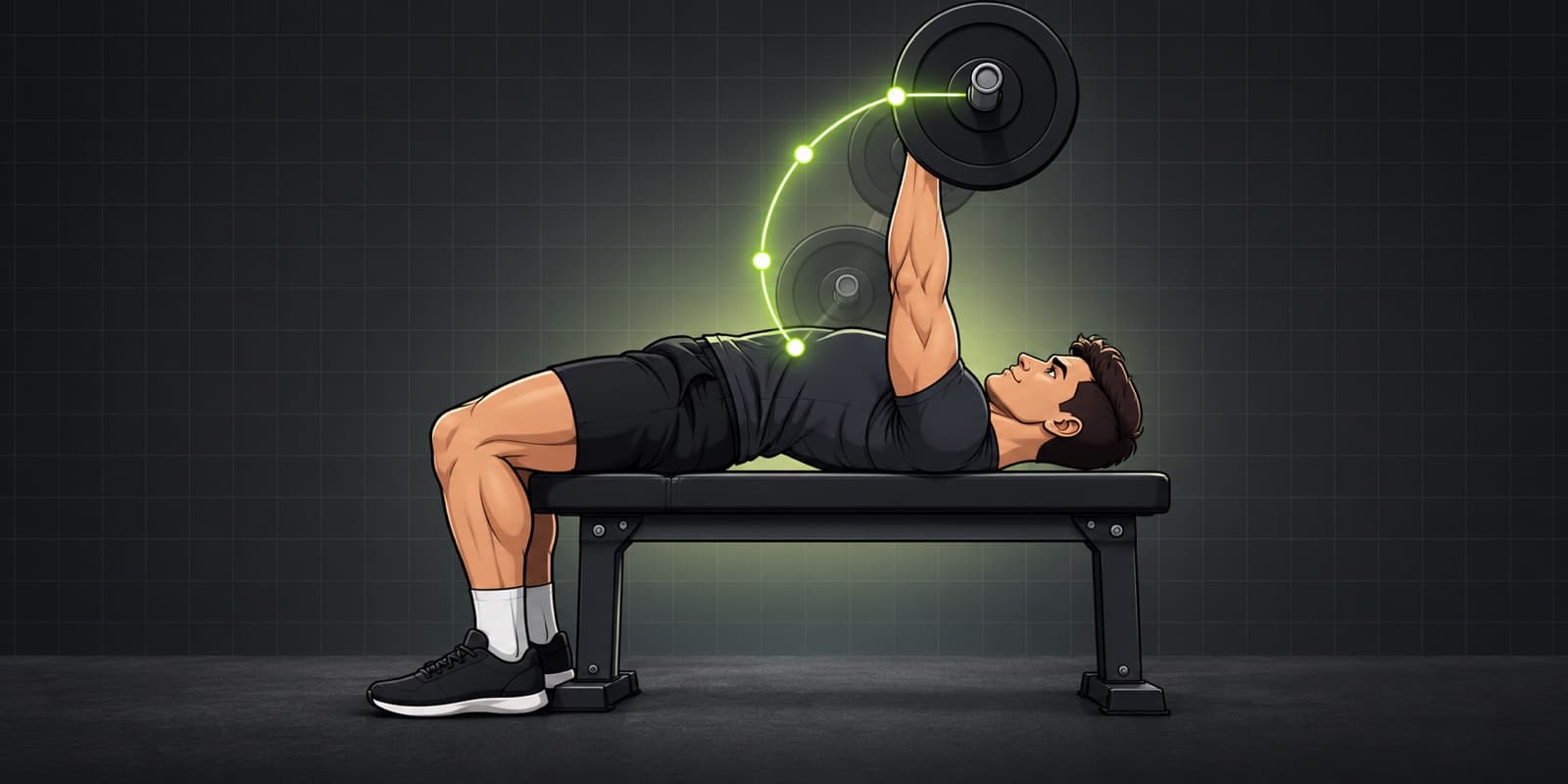
- Press the bar up and slightly back, so that it finishes over the shoulder joint. The bar path is a shallow arc, not a straight vertical line: it starts at the lower chest and ends above the shoulders (Duffey and Challis 2011).
- Keep the elbows under the bar throughout. Flaring at the top is normal as the bar comes over the shoulders; flaring at the bottom is the fault.
- Lock out with straight arms, keep the shoulder blades retracted, and re-brace for the next rep.
Grip width and muscle emphasis
EMG and biomechanics work shows a consistent pattern (Saeterbakken et al. 2017; Lehman 2005):
- Wide grip (about 2 times shoulder width): shortest range, most chest involvement, greatest shoulder stress and the highest rate of pec injuries under heavy loads.
- Medium grip (about 1.5 times): the best balance of chest, front deltoid and triceps, and the safest for the shoulders. The default.
- Close grip (shoulder width or inside): longest range, most triceps, less chest; an excellent assistance lift.
For general training and hypertrophy, medium grip on the main lift and close grip as a variation covers everything.
Shoulder pain on the bench
The bench press does not inherently hurt shoulders. Three things do:
Flared elbows. At 90 degrees from the body, the humerus is in the position of greatest impingement and the pec is at its most vulnerable to tearing. Tuck to 45 to 70 degrees.
A loose shoulder girdle. Without retraction, the shoulder rolls forward at the bottom of every rep, loading the anterior capsule and the rotator cuff. Set the shoulder blades and keep them set.
Volume and imbalance. Benching three times a week with no rowing or rear-deltoid work leaves the front of the shoulder tight and the back weak. Match pressing volume with pulling volume and add face pulls and external rotation. See Best Back Exercises and Best Shoulder Exercises.
If the pain persists after fixing technique and adding pulling work, get assessed. In the meantime, dumbbell presses with a neutral grip, floor presses and a slightly narrower grip are usually tolerated.
Common faults and fixes
| Fault | Fix |
|---|---|
| Elbows flared to 90 degrees | Tuck to 45 to 70; touch lower on the chest; cue "bend the bar" |
| Shoulders rolling forward at the bottom | Retract and depress the shoulder blades before unracking; keep the upper back tight; reduce the load |
| Bouncing off the chest | Pause on the chest for every rep for a few weeks |
| Hips lifting off the bench | Feet further forward; less extreme arch; cue "push the floor away, not up" |
| Bar path straight up from the chest | Press up and back toward the face; the bar finishes over the shoulders |
| Wrists bent back | Bar low in the palm over the forearm bones; wrist wraps for heavy sets |
| Uneven lockout | Film from the foot of the bench; unilateral dumbbell work; check grip is even |
Variations
- Close-grip bench: triceps emphasis, longer range, shoulder-friendly.
- Incline bench (30 degrees): shifts work to the upper chest and front deltoids. Around 30 degrees produces the best upper-chest activation without becoming a shoulder press (Rodríguez-Ridao et al. 2020).
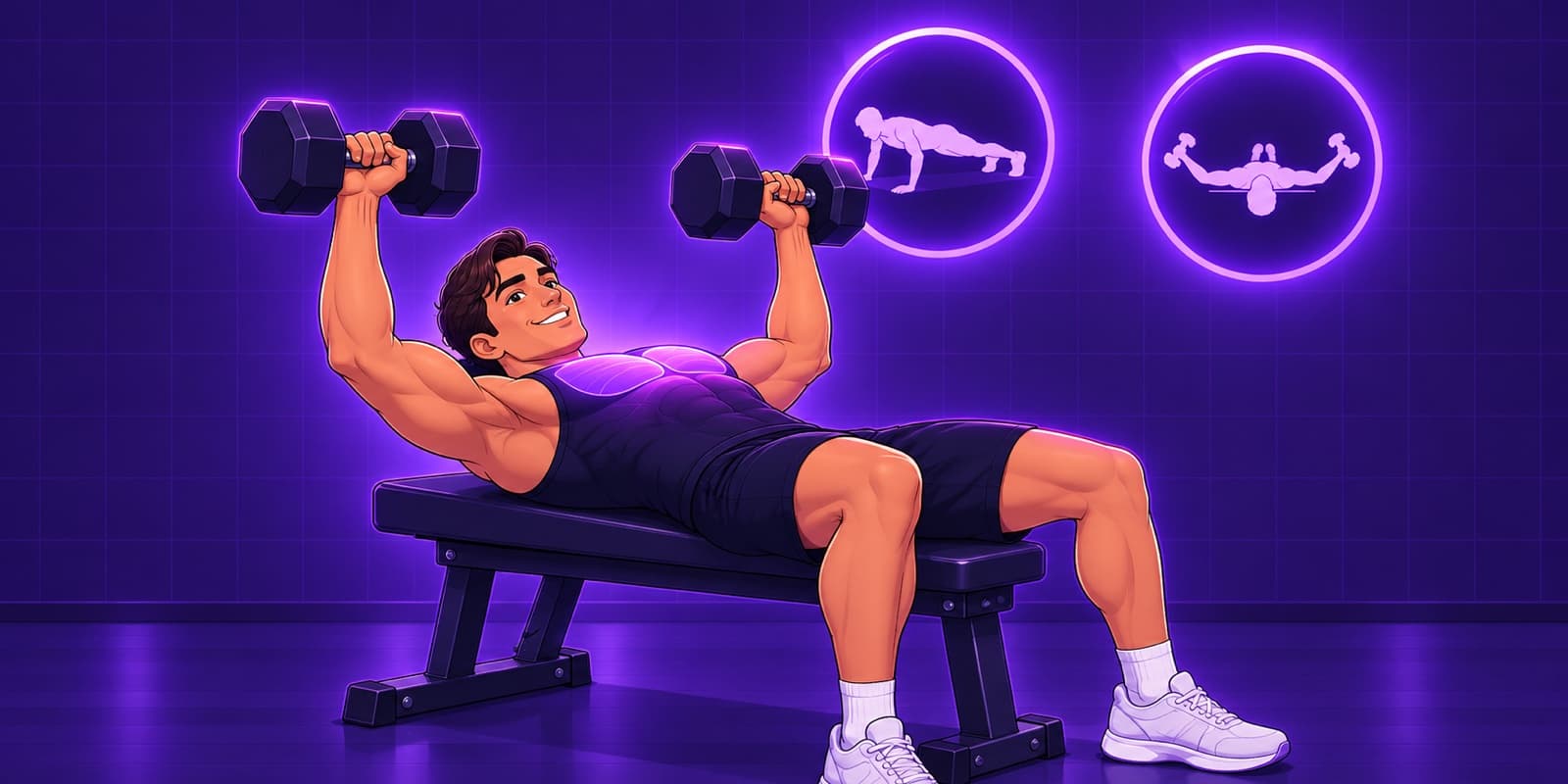
- Dumbbell bench: greater range, independent arms, neutral grip option; excellent for hypertrophy and for sore shoulders.
- Paused bench: builds strength off the chest and enforces control.
- Floor press: limits the range at the bottom, useful for shoulder issues and lockout strength.
- Spoto press, board press, pin press: partial-range strength variations for experienced lifters.
Programming
- Beginners: 3 sets of 5 to 8, twice a week, adding 2.5 kg per session while form holds.
- Hypertrophy: 3 to 4 sets of 6 to 12 on the barbell, plus a dumbbell or incline variation, one or two sessions a week. See Best Chest Exercises.
- Strength: 3 to 5 sets of 2 to 5 at 80 to 90 percent, plus paused or close-grip work.
- Balance: at least as much horizontal pulling as pressing over the week.
- Safety: use a spotter or a rack with safeties for heavy sets. Never bench heavy alone without one; a failed rep with no escape is one of the few genuinely dangerous situations in the gym.
The bottom line
Eyes under the bar, feet planted, shoulder blades pulled back and down for a stable base and a moderate arch, medium grip with vertical forearms at the bottom. Lower under control to the lower chest with elbows tucked to 45 to 70 degrees, touch without bouncing, drive the legs and press up and slightly back to lockout over the shoulders. The retracted shoulder girdle and the tucked elbow are what keep the shoulders healthy; balance pressing with pulling, use a spotter for heavy sets, and add weight slowly.
Sources
- Saeterbakken AH, Mo DA, Scott S, Andersen V. "The Effects of Bench Press Variations in Competitive Athletes on Muscle Activity and Performance." Journal of Human Kinetics, 2017.
- Lehman GJ. "The influence of grip width and forearm pronation/supination on upper-body myoelectric activity during the flat bench press." Journal of Strength and Conditioning Research, 2005.
- Duffey MJ, Challis JH. "Vertical and lateral forces applied to the bar during the bench press in novice lifters." Journal of Strength and Conditioning Research, 2011.
- Rodríguez-Ridao D, Antequera-Vique JA, Martín-Fuentes I, Muyor JM. "Effect of Five Bench Inclinations on the Electromyographic Activity of the Pectoralis Major, Anterior Deltoid, and Triceps Brachii during the Bench Press Exercise." International Journal of Environmental Research and Public Health, 2020.
- Green CM, Comfort P. "The affect of grip width on bench press performance and risk of injury." Strength and Conditioning Journal, 2007.
- Kompf J, Arandjelović O. "The Sticking Point in the Bench Press, the Squat, and the Deadlift: Similarities and Differences, and Their Significance for Research and Practice." Sports Medicine, 2017.
Frequently asked questions
Is arching your back on the bench press cheating or dangerous?
Neither. A moderate arch, created by retracting the shoulder blades and keeping the glutes on the bench, stabilises the shoulders, shortens the range slightly and lets the chest do more work. It loads the spine in extension without compression, which is well tolerated. Extreme competition arches are a powerlifting technique, not a requirement.
How wide should my grip be on the bench press?
Wide enough that your forearms are vertical when the bar touches your chest, typically about 1.5 times shoulder width, with the ring marks on a standard bar as the widest legal grip. Wider grips shorten the range and stress the shoulders more; narrower grips use more triceps and lengthen the range. Medium is the default.
Why does my shoulder hurt when I bench press?
Usually from flared elbows (90 degrees out from the body), an unretracted shoulder girdle that lets the shoulder roll forward at the bottom, or a very wide grip. Tuck the elbows to 45 to 70 degrees, pull the shoulder blades back and down before unracking, narrow the grip slightly, and lower to the lower chest rather than the neck. Persistent pain needs assessment.
Should the bar touch my chest?
Yes, for a full range of motion, lightly and without bouncing, at roughly the lower chest or sternum. Stopping short reduces the pec stretch and the training effect. People with shoulder issues can use a board or pause slightly above the chest, but the touch is the standard.
Where should I look when benching?
At a fixed point on the ceiling, not at the bar. Tracking the bar with your eyes makes the bar path inconsistent. Set the eyes on a spot when you unrack and press the bar toward it.
How much should I be able to bench?
Typical benchmarks for trained lifters: a bodyweight bench for men and about two-thirds bodyweight for women marks an intermediate level; 1.5 times bodyweight for men and around bodyweight for women is advanced. Beginners should ignore standards and progress from an empty bar.