Best Hamstring and Leg Exercises: Quads, Hamstrings and Calves by the Evidence
10 min read · September 2026 · by Manikanta Sirumalla
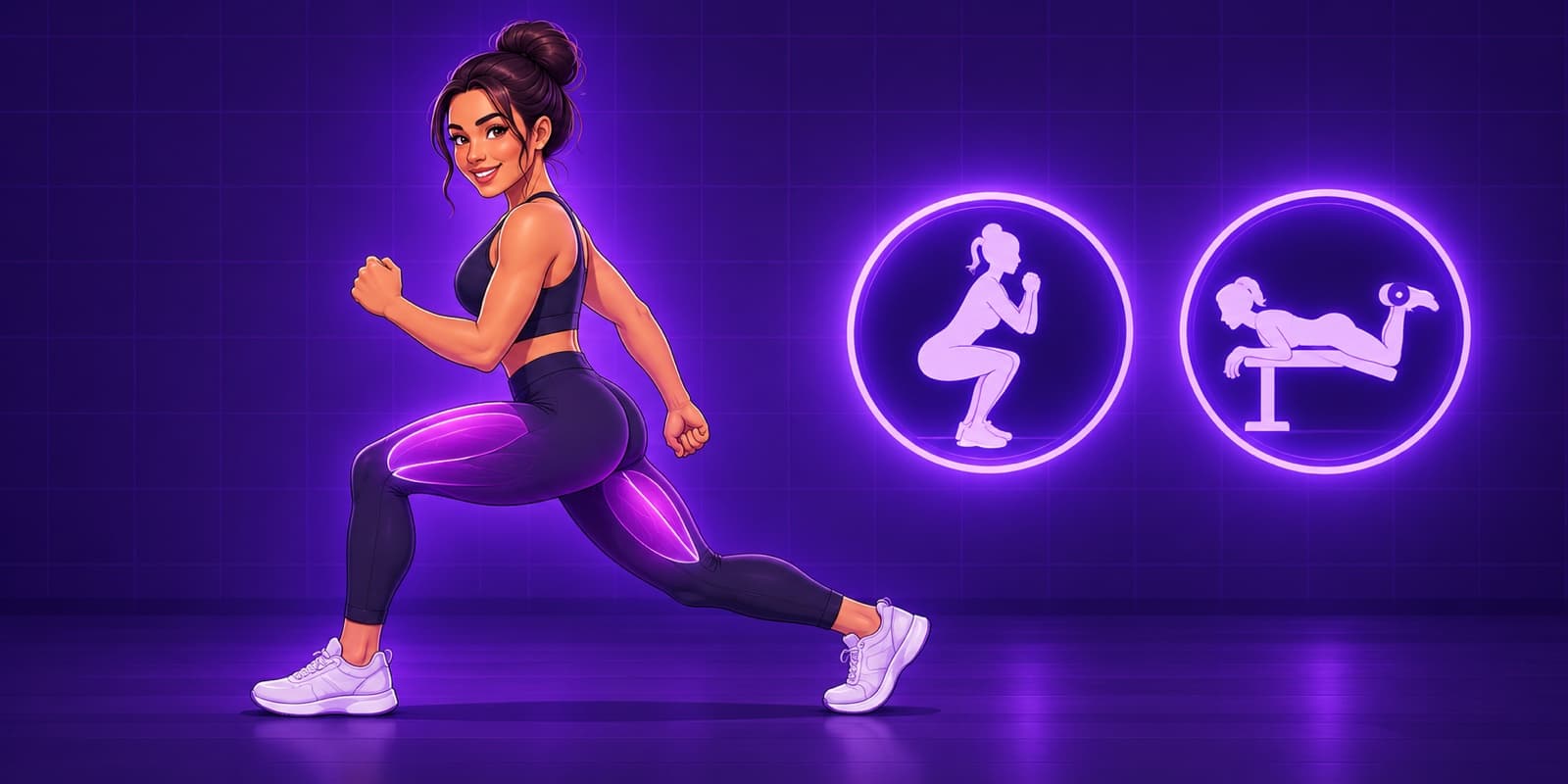
The legs carry more than half the body's muscle, and they respond to training in proportion. They are also where the research has most changed the standard advice in the last decade: on squat depth, on which leg curl to use, on the muscle the squat does not train, and on hinges versus curls. This guide ranks the exercises by muscle, on that evidence, and assembles a complete program. Glutes are covered separately in Best Glute Exercises.
Quadriceps
The quadriceps are four muscles: the three vasti (lateralis, medialis, intermedius), which only extend the knee, and the rectus femoris, which crosses the hip as well and both flexes the hip and extends the knee. That difference turns out to matter.
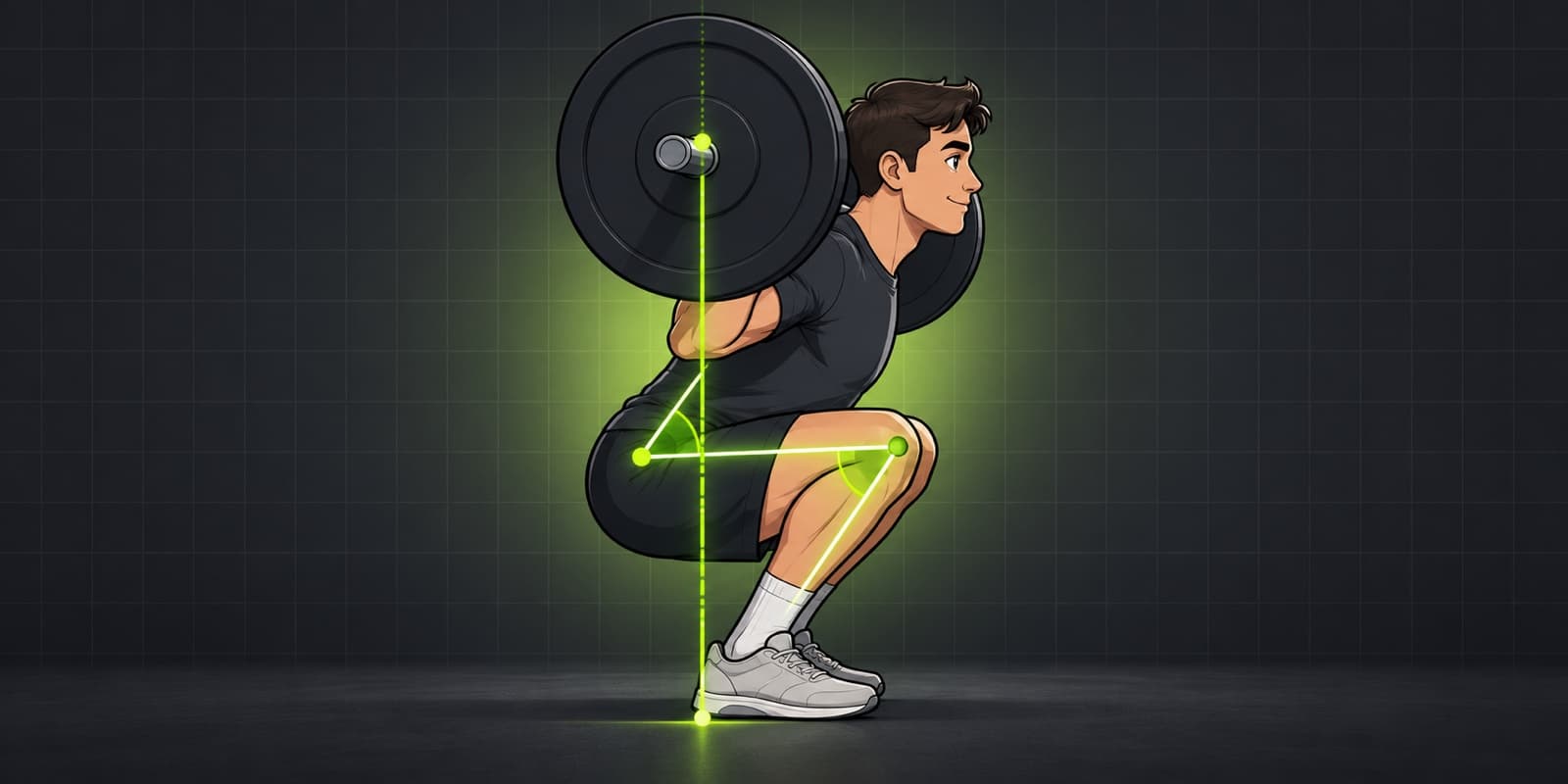
Deep squat. The foundation. Full-depth squats produce greater growth in the vasti, glutes and adductors than half squats (Kubo et al. 2019; Bloomquist et al. 2013), and a range of motion that reaches full depth outperforms partial ranges in strength and size gains (Pallarés et al. 2020). High-bar and front squats bias the quads more than low-bar. See How to Squat.
Hack squat and pendulum squat. Machine squat patterns that hold the torso upright and let the knees travel forward, which loads the quads heavily with less balance and back demand. Excellent for quad volume.
Leg press. High load, deep range, low fatigue. Lower foot placement increases quad involvement; higher and wider placement brings in the glutes and hamstrings. A staple for quad growth after the main squat.
Leg extension. The exercise that does what squats cannot. The rectus femoris is barely activated during squats, because as the knee extends the hip extends too and the muscle is shortening at one end while lengthening at the other. In leg extensions, the hip stays flexed and the rectus femoris works fully. Studies find the rectus femoris grows little from squat training and substantially from extensions (Ema et al. 2013; Ema et al. 2016). For complete quad development, extensions are not optional.
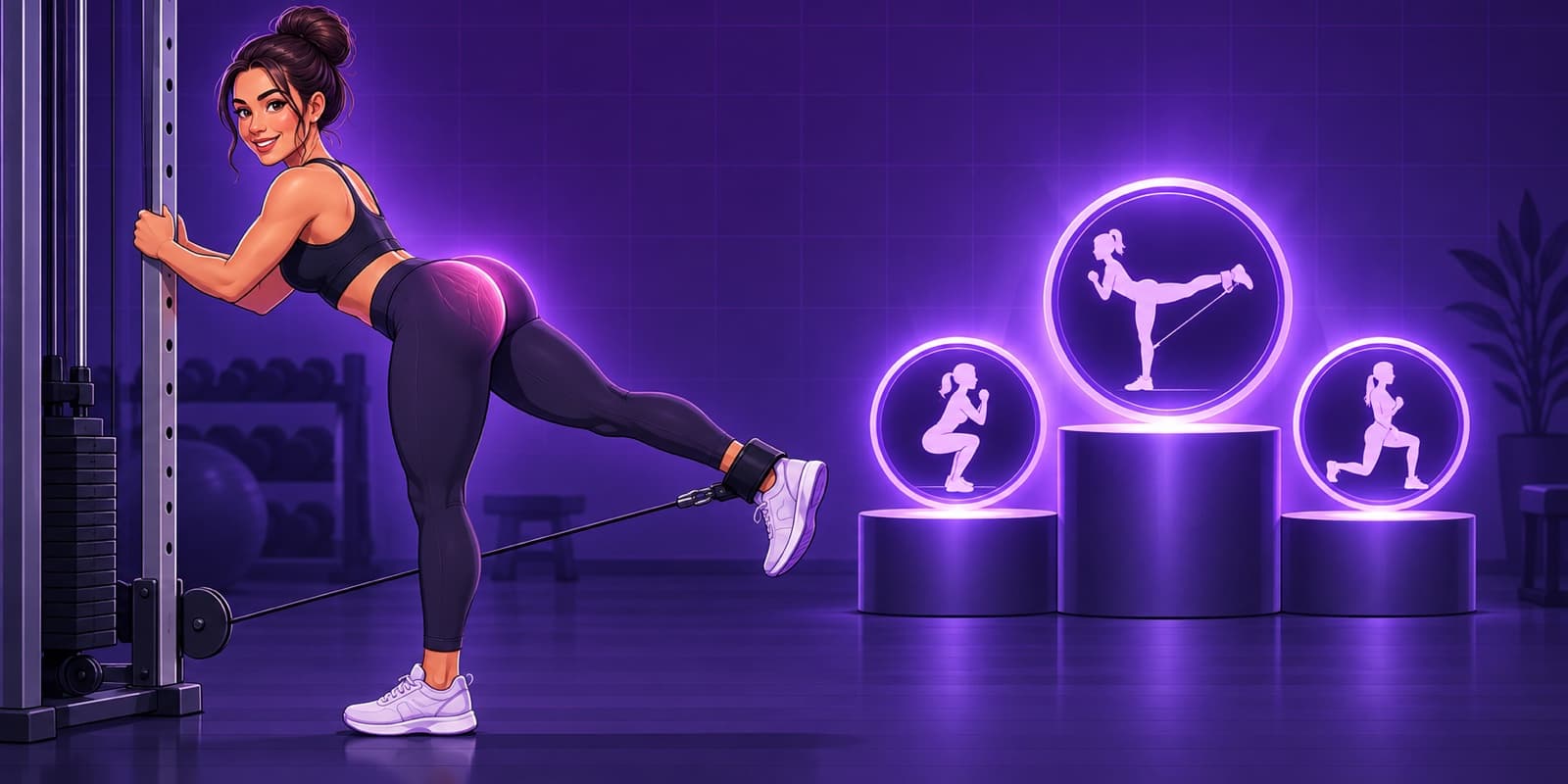
Split squats and lunges. Single-leg quad and glute work; a forward torso lean shifts work to the glutes, an upright torso and a shorter stance to the quads. See Best Glute Exercises.
Hamstrings
The hamstrings are the biceps femoris (long and short heads), semitendinosus and semimembranosus. All but the short head cross the hip as well as the knee, so they are trained by both hip extension and knee flexion, and the research shows the two patterns develop different parts of the muscle.
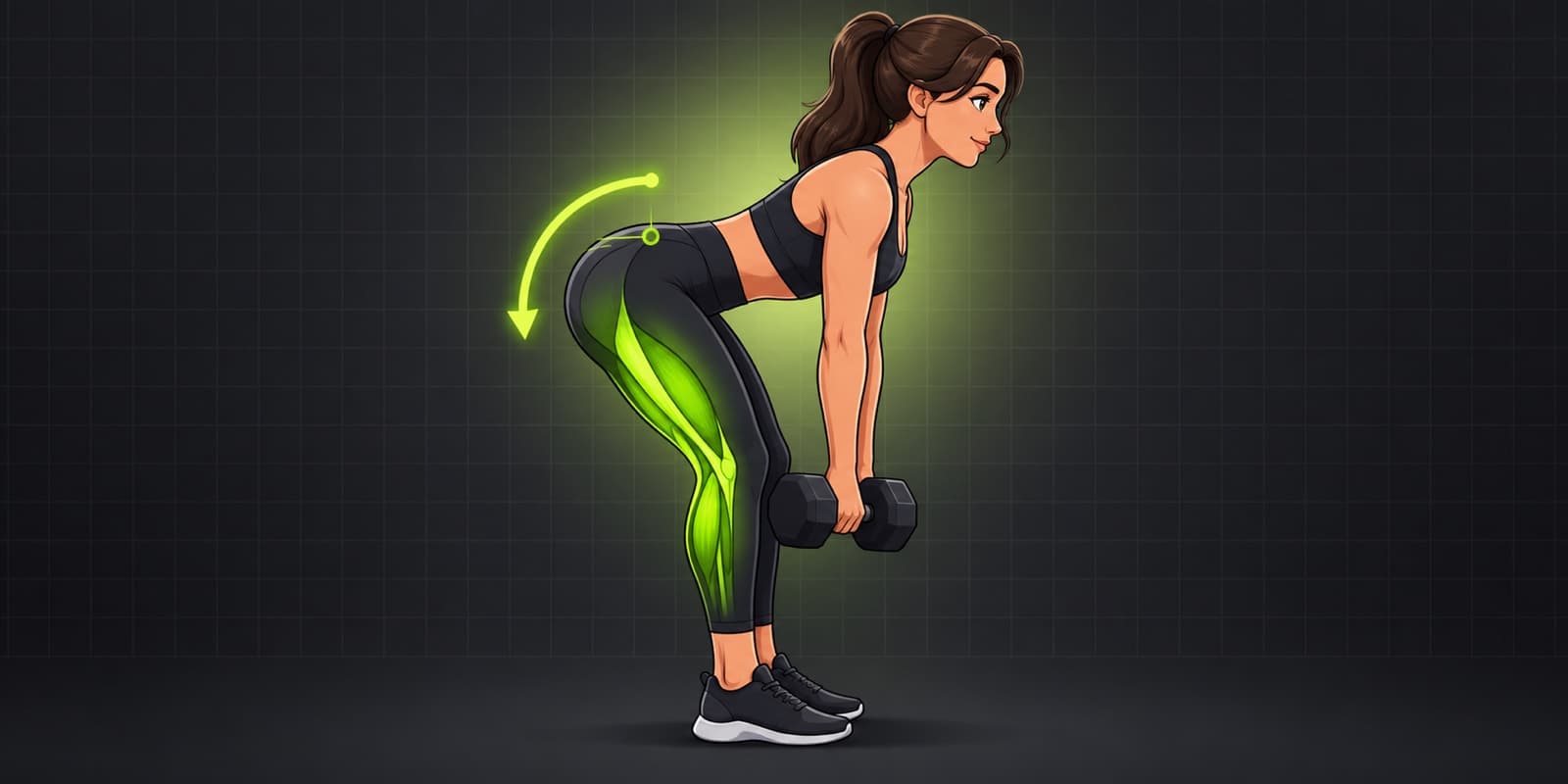
Romanian deadlift and hip hinges. Hip-extension exercises preferentially develop the long head of the biceps femoris and the semimembranosus, and train the hamstrings at long muscle lengths, which is where they grow most and where they need strength to resist strains (Bourne et al. 2017). See Romanian Deadlift Guide.
Seated leg curl. Here the research overturned a gym convention. In a 2021 study, seated leg curls, where the flexed hip puts the hamstrings on stretch, produced substantially more hamstring growth than lying (prone) leg curls over 12 weeks (Maeo et al. 2021). If your gym has a seated machine, use it as the primary curl.
Nordic hamstring curl. Kneeling with the ankles held, lowering the torso forward under control. Knee-flexion exercises like the Nordic develop the short head of the biceps femoris and semitendinosus, and Nordics specifically lengthen the biceps femoris fascicles and reduce hamstring strain risk in athletes by roughly half in trials (Bourne et al. 2017; van Dyk et al. 2019). Brutal, effective, and worth doing at low volume year-round if you sprint or play field sports.
Lying leg curl and glute-ham raise. Both effective; both slightly inferior to their seated and Nordic counterparts on the current evidence. Fine as second options.
Stiff-leg and good morning variations. Hinges with more lower-back involvement for experienced lifters.
The practical conclusion: one hinge and one curl per week, at minimum, with the seated curl preferred and Nordics added for injury resilience.
Calves
The calf is the gastrocnemius, which crosses the knee and works best with a straight leg, and the soleus, beneath it, which works with a bent knee and is a larger muscle than most people realise.
Standing calf raise. Straight knee, full range from a deep stretch at the bottom to a full contraction at the top, with a pause at each end. Trains the gastrocnemius.
Seated calf raise. Bent knee, same range and pauses. Trains the soleus, which the standing raise largely misses.
Leg press calf raise and single-leg raises. Variations for load and for balance.
Calves respond to full range, a pause at the stretch, moderate to high reps, and consistency. Bouncing half reps with heavy loads are why most people's calves do not grow. Two exercises, 6 to 12 sets a week, progressed, is the program.
Adductors and the rest
The adductors on the inner thigh are large muscles that grow substantially from deep squats and wide-stance work (Kubo et al. 2019). Sumo deadlifts, wide-stance leg presses and adductor machines add direct volume. The tibialis anterior on the front of the shin, trained by tibialis raises, helps shin splints and ankle stability but is a minor cosmetic muscle.
Technique principles
- Depth on squat patterns. Full range is the difference between a leg exercise and a partial one.
- Stretch on hamstring work. Seated curls, RDLs with a full hinge, Nordics to the floor.
- Extensions for the rectus femoris. The squat leaves it untrained.
- Pause at the stretch on calves. Bouncing wastes the set.
- Control the eccentric. Two to three seconds on hinges, curls and calf raises.
- Balance quads and hamstrings. A quad-dominant program with no hinge or curl is how knees and hamstrings get hurt.
A complete leg program
Two sessions a week, 10 to 20 hard sets per muscle across both:
Session A (squat emphasis)
- High-bar or front squat: 4 sets of 5 to 8
- Romanian deadlift: 3 sets of 8 to 10
- Leg press: 3 sets of 10 to 12
- Seated leg curl: 3 sets of 10 to 12
- Standing calf raise: 4 sets of 8 to 12
Session B (hinge and single-leg emphasis)
- Trap bar or conventional deadlift: 3 sets of 5
- Hack squat or Bulgarian split squat: 3 sets of 8 to 10
- Leg extension: 3 sets of 12 to 15
- Nordic curl or lying leg curl: 3 sets of 5 to 8 (Nordic) or 10 to 12 (curl)
- Seated calf raise: 4 sets of 10 to 15
Rest two to three minutes on compound lifts, 90 seconds on machines. Add load when all sets reach the top of the range with full range of motion. See Training Volume for scaling sets to recovery, and Muscle Soreness (DOMS) for surviving the first fortnight of Nordics.
The bottom line
Deep squats and a squat-pattern machine for the vasti, leg extensions for the rectus femoris they miss, a Romanian deadlift and a seated leg curl (plus Nordics for athletes) for the hamstrings from both ends, and standing and seated calf raises with a full range and a pause. Ten to twenty hard sets per muscle a week across two sessions, full range, controlled eccentrics, progressive load. Legs grow when all of their muscles are trained, not when the squat is the whole plan.
Sources
- Kubo K, Ikebukuro T, Yata H. "Effects of squat training with different depths on lower limb muscle volumes." European Journal of Applied Physiology, 2019.
- Bloomquist K, Langberg H, Karlsen S, et al. "Effect of range of motion in heavy load squatting on muscle and tendon adaptations." European Journal of Applied Physiology, 2013.
- Pallarés JG, Hernández-Belmonte A, Martínez-Cava A, et al. "Effects of range of motion on resistance training adaptations: A systematic review and meta-analysis." Scandinavian Journal of Medicine and Science in Sports, 2021.
- Ema R, Wakahara T, Miyamoto N, Kanehisa H, Kawakami Y. "Inhomogeneous architectural changes of the quadriceps femoris induced by resistance training." European Journal of Applied Physiology, 2013.
- Ema R, Sakaguchi M, Akagi R, Kawakami Y. "Unique activation of the quadriceps femoris during single- and multi-joint exercises." European Journal of Applied Physiology, 2016.
- Maeo S, Huang M, Wu Y, et al. "Greater Hamstrings Muscle Hypertrophy but Similar Damage Protection after Training at Long versus Short Muscle Lengths." Medicine and Science in Sports and Exercise, 2021.
- Bourne MN, Duhig SJ, Timmins RG, et al. "Impact of the Nordic hamstring and hip extension exercises on hamstring architecture and morphology: implications for injury prevention." British Journal of Sports Medicine, 2017.
- van Dyk N, Behan FP, Whiteley R. "Including the Nordic hamstring exercise in injury prevention programmes halves the rate of hamstring injuries: a systematic review and meta-analysis of 8459 athletes." British Journal of Sports Medicine, 2019.
Frequently asked questions
What is the best exercise for quads?
A deep squat, whichever variation you can do well: high-bar back squat, front squat, safety-bar squat or hack squat. Full depth grows the quads more than partial squats. Add leg extensions, because the rectus femoris, the quad muscle that crosses the hip, is barely trained by squats and grows substantially with extensions.
Are leg curls or Romanian deadlifts better for hamstrings?
They train different parts. Hip hinges like the RDL develop the long head of the biceps femoris and the semimembranosus; knee-flexion exercises like leg curls and Nordic curls develop the short head and semitendinosus. Both belong in the program.
Seated or lying leg curl?
Seated. A 2021 trial found seated leg curls produced substantially more hamstring growth than lying curls because the hip is flexed, which lengthens the hamstrings and trains them in the stretched position. If your gym has both, prioritise the seated machine.
Is the leg press as good as squats?
For quad growth, close to it, and it lets you train hard without back or balance limits. Squats train more muscle overall and the trunk, and they transfer better to sport. Use the squat as the main lift and the leg press for extra quad volume.
Do I need to train calves separately?
Yes, if you want them to grow. Calves get little stimulus from squats and deadlifts. Standing calf raises train the gastrocnemius, seated raises train the soleus, and both respond to a full range with a pause at the stretch and 8 to 15 reps.
How many leg exercises per workout?
Four to six covers quads, hamstrings, glutes and calves. A typical session is a squat pattern, a hinge, a quad accessory, a hamstring accessory and a calf raise. More exercises rarely means more growth; more sets on the right ones does.