Best Core Exercises (And Why Crunches Aren't It)
9 min read · September 2026 · by Manikanta Sirumalla
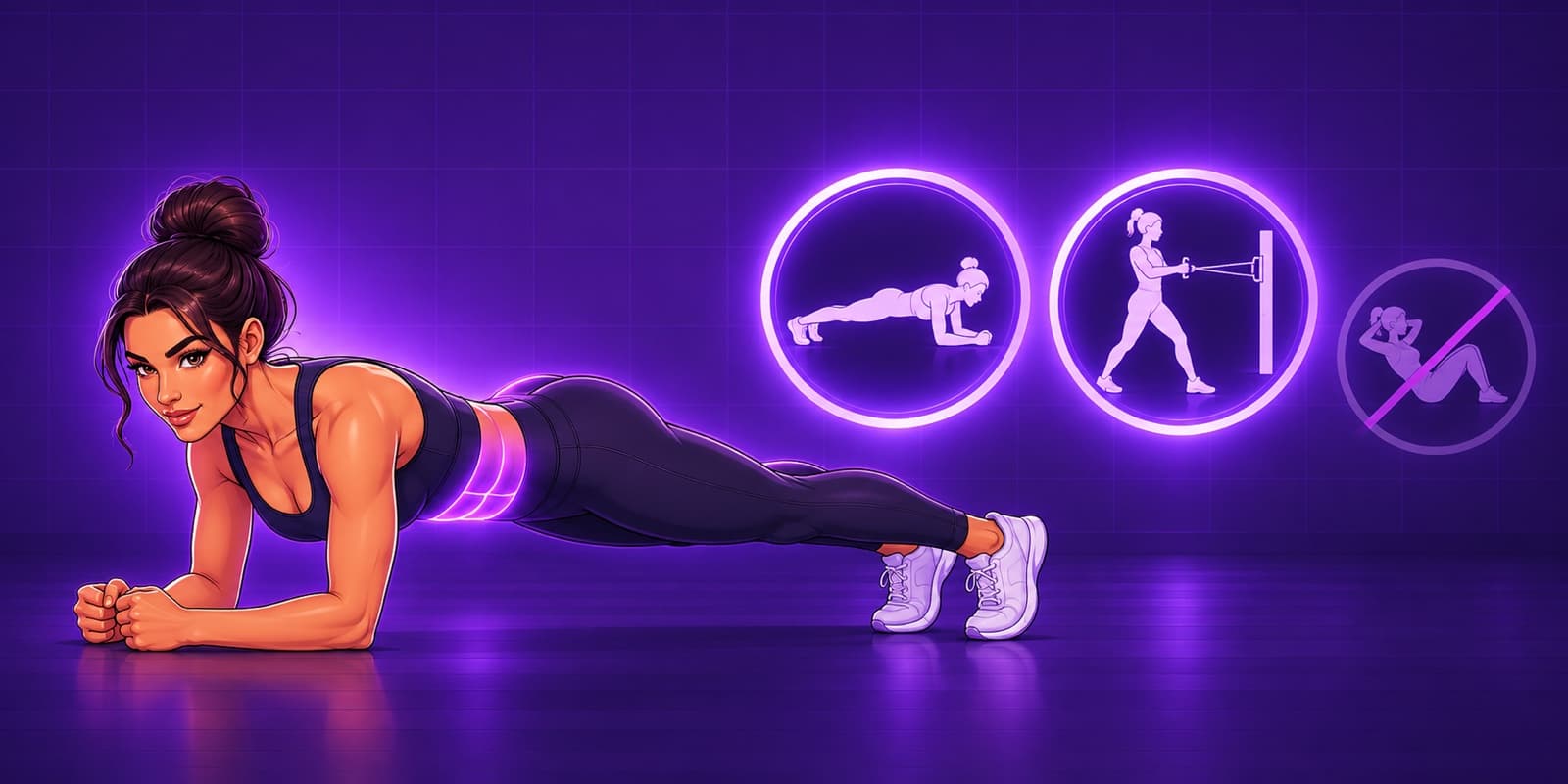
Ask most people to train their core and they lie on the floor and do crunches. Ask a spine biomechanist and they will suggest you do almost anything else. The core is not a muscle that bends you forward; it is a cylinder of muscle whose job is to stop the spine moving while the arms and legs do. The exercises that train that job look different, work better, and are safer. This guide explains why and gives you the program.
What the core is for
The trunk musculature, the rectus abdominis, the obliques, the transverse abdominis, the erectors, the quadratus lumborum and the diaphragm and pelvic floor, forms a pressurised cylinder around the spine. Its primary function in lifting, sport and daily life is to stiffen that cylinder so that force generated by the hips and legs transfers through it to the arms, or the ground, without the spine buckling.
Stuart McGill, whose laboratory produced much of the research behind modern core training, framed it this way: the core's role is to prevent motion, not to create it. Strong athletes have trunks that resist bending, twisting and extending under load; a big crunch is not on the list of things that make them better (McGill 2010).
That reframing gives three categories of exercise:
- Anti-extension: resisting the lower back arching. Planks, dead bugs, ab rollouts, body saws, hanging leg raises done strictly.
- Anti-rotation: resisting twisting. Pallof presses, bird dogs, single-arm carries and presses, landmine rotations done with control.
- Anti-lateral flexion: resisting side bending. Side planks, suitcase carries, single-arm overhead carries.
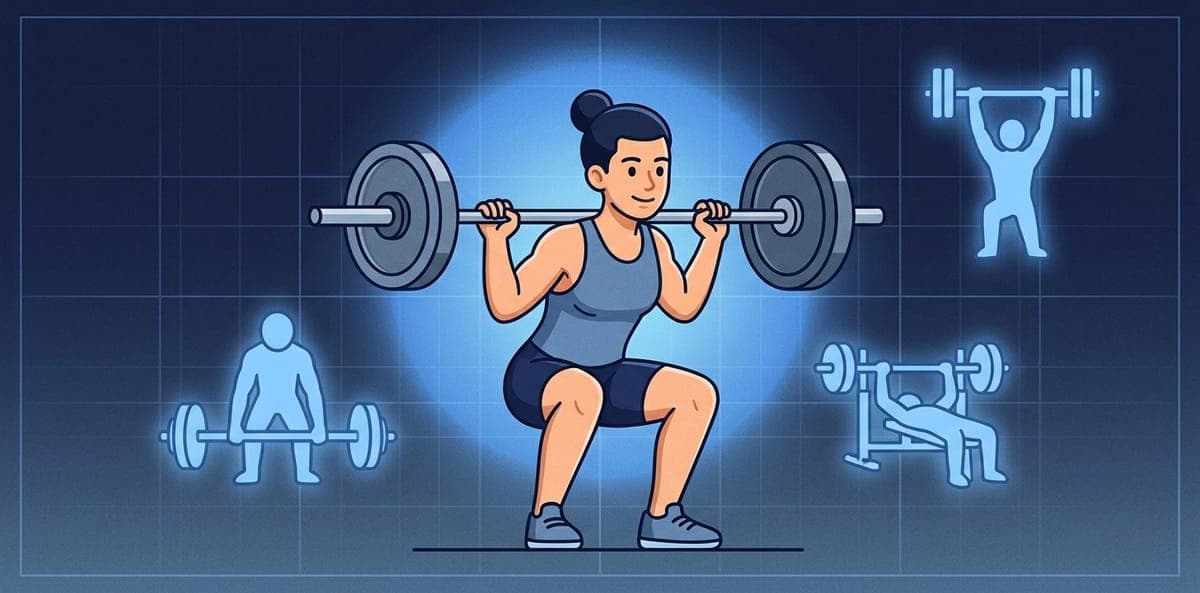
Every heavy compound lift demands all three at once, which is why squats and deadlifts produce very high trunk muscle activation (Hamlyn et al. 2007) and why strong lifters have strong cores whether or not they do direct work.
Why crunches are a poor investment
Three reasons, in order of importance.
They train the wrong thing. Crunches build trunk flexion strength, the ability to curl the spine forward. Outside of a few sports, nobody needs much of that. They do not build the stiffness that transfers to a heavier squat, a faster sprint or a back that does not hurt.
Repeated loaded flexion is the pattern that stresses discs most. In McGill's laboratory, cyclic flexion under compression was the loading pattern most consistently associated with disc damage in spine models, and the compression produced by a sit-up was measured at levels that exceed some occupational safety guidelines (Axler and McGill 1997; McGill 2010). Healthy spines tolerate a moderate number of crunches without injury; the point is that the risk-to-benefit ratio is poor compared with the alternatives (Contreras and Schoenfeld 2011).
They do not reveal abs. A visible midsection is a function of body fat, not of abdominal training. The rectus abdominis becomes visible at roughly 10 to 12 percent body fat in men and 18 to 20 percent in women, however it was trained. Spot reduction, the idea that exercising a muscle burns the fat over it, has been tested repeatedly and does not work. See Body Fat Percentage and The Cutting Guide.
If you like crunches and your spine is healthy, a modest number is fine. They should not be the core program.
Tier 1: anti-extension
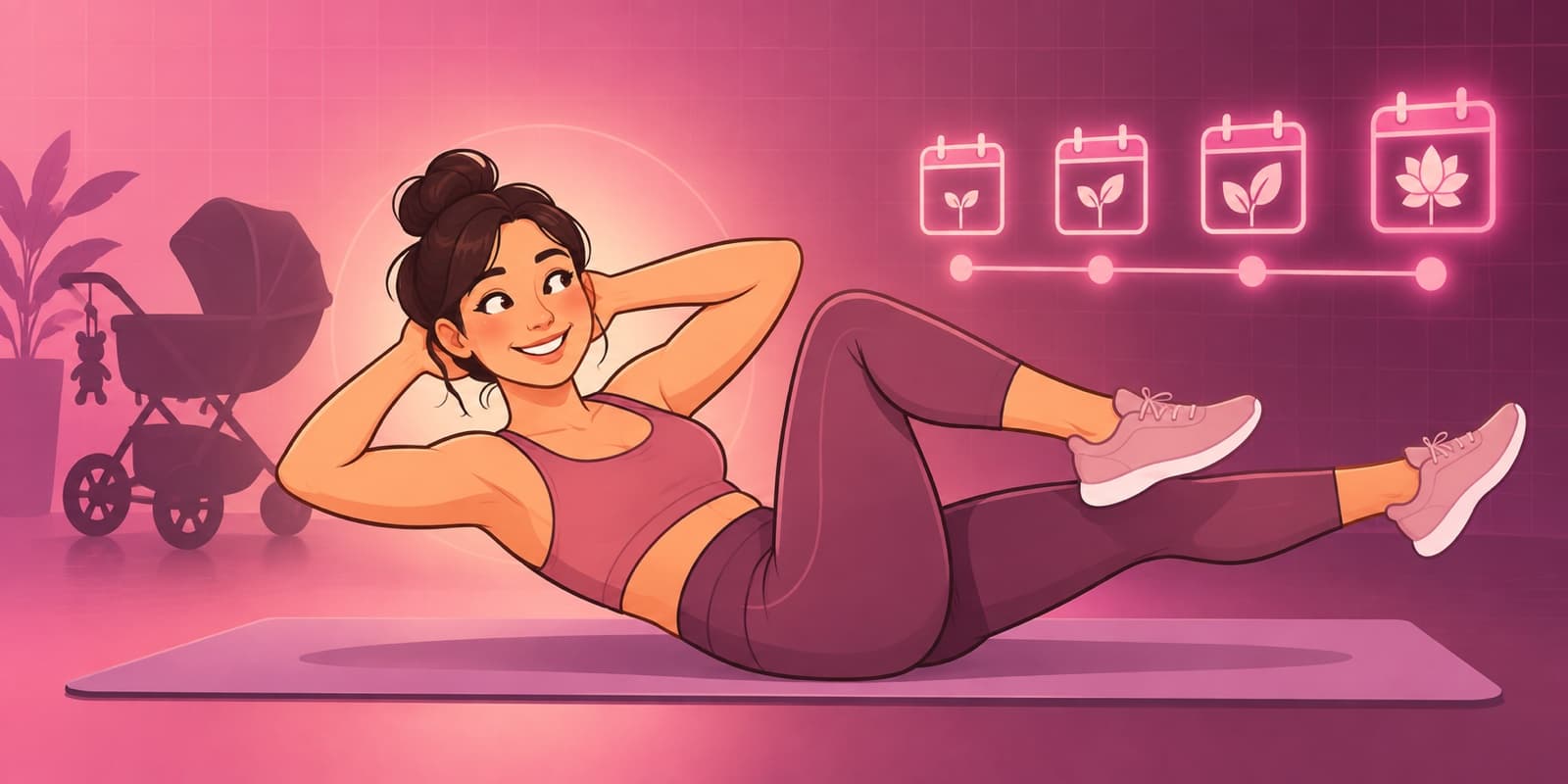
Dead bug. On the back, arms up, hips and knees at 90 degrees. Press the lower back into the floor, then extend one arm overhead and the opposite leg out, without the back leaving the floor. The best teaching exercise for bracing, the best postpartum starting point, and harder than it looks done strictly. See Postpartum Return to Lifting.
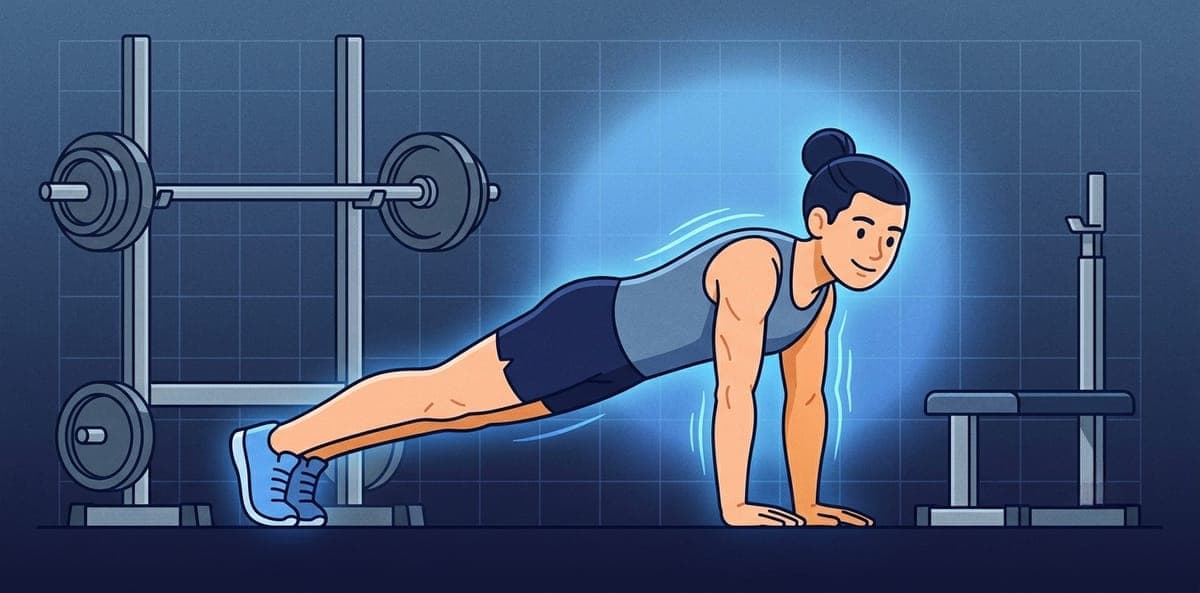
Plank and its progressions. A strict plank with the glutes squeezed and the ribs pulled down (a posterior pelvic tilt) trains anti-extension hard for 10 to 20 seconds at maximal tension. Progress by lifting a limb, adding a plate, walking the hands forward (long-lever plank) or moving the feet back and forth (body saw). Holding a sloppy plank for three minutes is not progress.
Ab rollout. A wheel or barbell rolled out from the knees, then from the feet, with the hips extended and the back flat. Among the highest rectus abdominis and oblique activations recorded in EMG comparisons of abdominal exercises (Escamilla et al. 2006). Progress by range, then by standing.
Hanging leg or knee raise, strict. With a posterior pelvic tilt at the top and no swing. Trains anti-extension and hip flexion under load.
Tier 2: anti-rotation
Pallof press. Stand side-on to a cable or band at chest height, hold the handle at the sternum, and press it straight out and back, resisting the pull to rotate. Add a hold at full extension. Simple, scalable and one of the most useful trunk exercises there is.
Bird dog. On hands and knees, extend the opposite arm and leg while keeping the hips and shoulders square. A core exercise from McGill's "big three" for spine rehabilitation, and a good warm-up.
Single-arm carries and presses. Any load held or pressed on one side asks the trunk to resist rotating and bending toward it. A single-arm overhead carry does more for the obliques than any twist.
Controlled rotation (landmine rotations, cable chops). Rotation is a legitimate athletic movement when the rotation comes from the hips and thoracic spine, not from the lower back. Keep the load moderate and the movement controlled; ballistic twists with a loaded bar are where rotational injuries come from.
Tier 3: anti-lateral flexion
Side plank. Elbow under the shoulder, body straight, hips up. Another of McGill's big three. Progress to feet-elevated, to a raised top leg, or to a loaded version.
Suitcase carry. A heavy dumbbell or kettlebell in one hand, walking tall with the shoulders level. Trains the obliques and quadratus lumborum, the grip, and the whole bracing system. Probably the most under-used core exercise in the gym.
Farmer's carry. Both hands loaded; less lateral demand, more overall bracing and grip. See Isometric Training for why carries and holds are so effective.
Heavy compound lifts
Squats, deadlifts, overhead presses and loaded carries produce trunk activation as high as or higher than most direct abdominal exercises (Hamlyn et al. 2007), and they train it in the context where it matters: under a bar. A program with heavy compound lifts and a few carries has most of the core covered. Direct work fills in rotation and side bending, teaches bracing to beginners, and matters more for athletes, for people returning from back pain, and for postpartum rehabilitation. See The 10 Best Compound Exercises.
Programming
Two or three short sessions a week, at the end of training or as a warm-up, 6 to 10 sets total:
Session A
- Dead bug: 3 sets of 8 per side
- Pallof press with hold: 3 sets of 10 per side
- Suitcase carry: 3 walks of 30 metres per side
Session B
- Ab rollout: 3 sets of 8 to 12
- Side plank: 3 holds of 20 to 40 seconds per side
- Bird dog: 2 sets of 8 per side
Progress like any other exercise: harder variations, more load, longer levers. Maximal-tension holds of 10 to 20 seconds, repeated, beat long passive holds. Skip anything that produces lower-back pain, and if you have a history of back problems, start with the dead bug, bird dog and side plank and build from there.
The bottom line
The core's job is to resist movement, so train it to resist: anti-extension with dead bugs, planks and rollouts, anti-rotation with Pallof presses and single-arm work, anti-lateral flexion with side planks and suitcase carries, on top of heavy squats and deadlifts. Crunches build a movement you rarely need with a poor risk-to-reward ratio and do nothing for visible abs, which come from body fat. Six to ten sets, two or three times a week, progressed properly.
Sources
- McGill S. "Core Training: Evidence Translating to Better Performance and Injury Prevention." Strength and Conditioning Journal, 2010.
- Axler CT, McGill SM. "Low back loads over a variety of abdominal exercises: searching for the safest abdominal challenge." Medicine and Science in Sports and Exercise, 1997.
- Contreras B, Schoenfeld B. "To Crunch or Not to Crunch: An Evidence-Based Examination of Spinal Flexion Exercises, Their Potential Risks, and Their Applicability to Program Design." Strength and Conditioning Journal, 2011.
- Escamilla RF, Babb E, DeWitt R, et al. "Electromyographic analysis of traditional and nontraditional abdominal exercises: implications for rehabilitation and training." Physical Therapy, 2006.
- Hamlyn N, Behm DG, Young WB. "Trunk muscle activation during dynamic weight-training exercises and isometric instability activities." Journal of Strength and Conditioning Research, 2007.
- Oliva-Lozano JM, Muyor JM. "Core Muscle Activity During Physical Fitness Exercises: A Systematic Review." International Journal of Environmental Research and Public Health, 2020.
Frequently asked questions
Are crunches bad for you?
Not dangerous in moderation for healthy spines, but a poor investment. Repeated loaded flexion is the pattern spine biomechanists have shown to be most associated with disc stress, and crunches build trunk flexion strength, which is rarely what anyone needs. Anti-movement exercises build the stability that transfers to lifting, sport and back health.
What is the best exercise for a strong core?
There is no single one, because the core resists movement in three planes. A well-chosen trio covers it: an anti-extension exercise (ab rollout or dead bug), an anti-rotation exercise (Pallof press) and an anti-lateral-flexion exercise (suitcase carry or side plank), plus heavy squats and deadlifts.
Do squats and deadlifts train the core enough?
They train it hard, isometrically, and for many people that plus carries is sufficient. Direct core work adds resilience in the movements the big lifts do not challenge, particularly rotation and side bending, and matters more for athletes, for beginners learning to brace, and for people returning from back pain or pregnancy.
How do I get visible abs?
By reducing body fat. The rectus abdominis is visible at around 10 to 12 percent body fat in men and 18 to 20 percent in women regardless of how it is trained. Core exercises build the muscle; a calorie deficit reveals it. Spot reduction does not work.
How often should I train core?
Two or three times a week, 6 to 10 sets total, is plenty, especially if you squat and deadlift. The core recovers quickly and responds to consistency more than volume. Add it at the end of sessions or as a warm-up.
How long should I hold a plank?
Once you can hold a strict plank for 60 seconds, holding longer adds little. Progress by making it harder instead: lift a limb, add load, use a longer lever, or move to an ab rollout. Ten-second maximal-tension holds repeated for sets are more useful than a five-minute passive hang.