Best Chest Exercises: What the Research Says About Building Your Pecs
9 min read · September 2026 · by Manikanta Sirumalla
The pectoralis major is a fan-shaped muscle with fibres running from the collarbone, the sternum and the ribs to the upper arm. Different fibres are best loaded from different angles, which is why chest training has always been organised around flat, incline and decline. The research has since clarified which angles actually matter, how much, and what else drives growth. This guide turns that into an exercise ranking and a program.
The anatomy that matters
- Clavicular head (upper chest): fibres from the collarbone, most active when the arm presses up and across at an incline.
- Sternal head (middle and lower chest): the bulk of the muscle, from the sternum and ribs, most active in horizontal pressing and pressing slightly downward.
- Function: all fibres adduct the arm across the body (the fly motion) and flex it forward (the press motion). Both patterns train the chest; the pressing pattern allows heavier loads, the fly pattern isolates.
The triceps and anterior deltoid assist every press. That is not a problem, but it explains why some people feel presses in their shoulders and why a fly movement earns its place.
Presses: the foundation
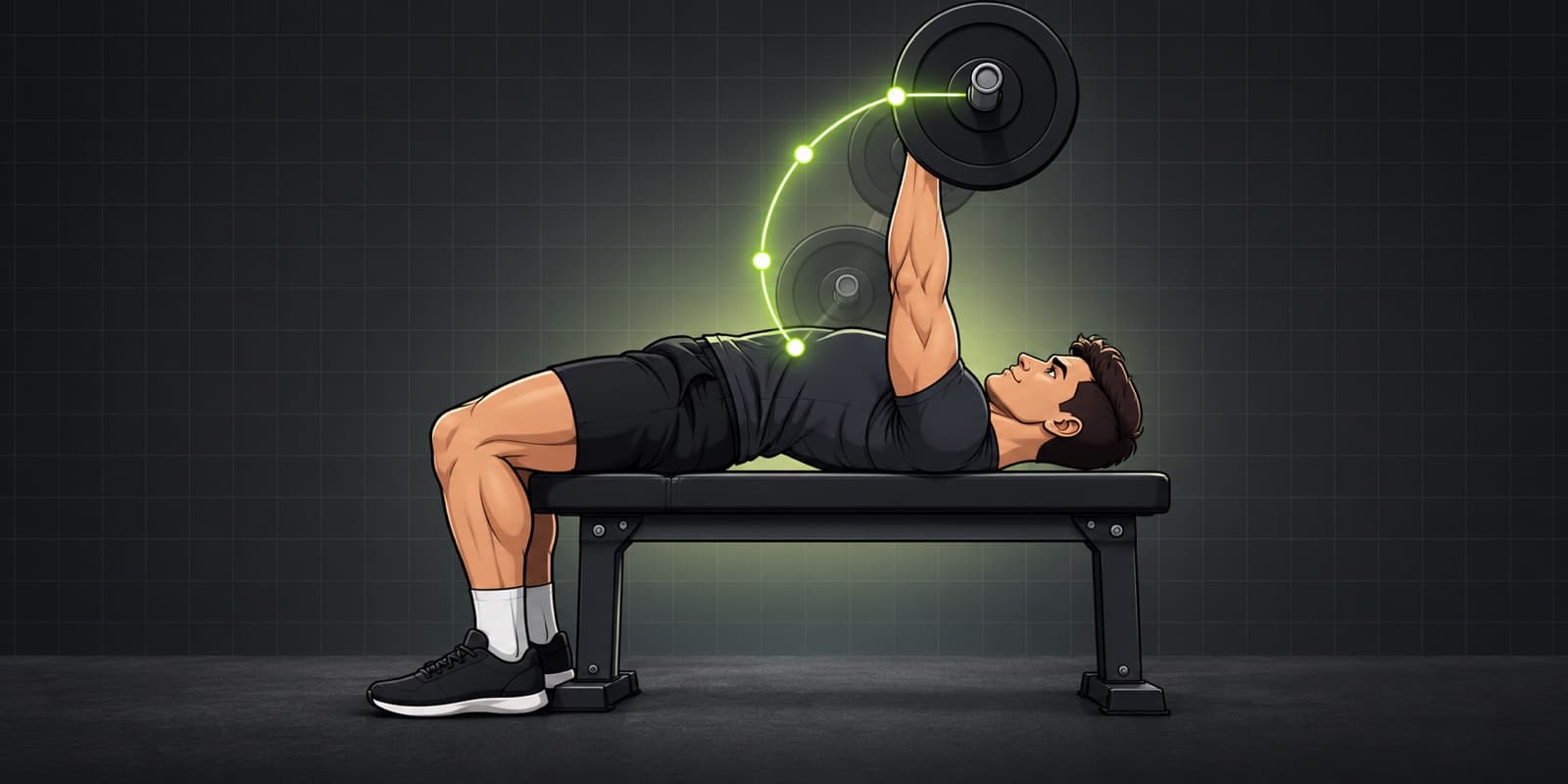
Barbell bench press. The heaviest loading available to the chest, with high activation of the sternal head and the triceps. It is the strength benchmark and the base of most programs. Technique determines whether the chest or the shoulders do the work; see How to Bench Press for the setup that protects the shoulders.
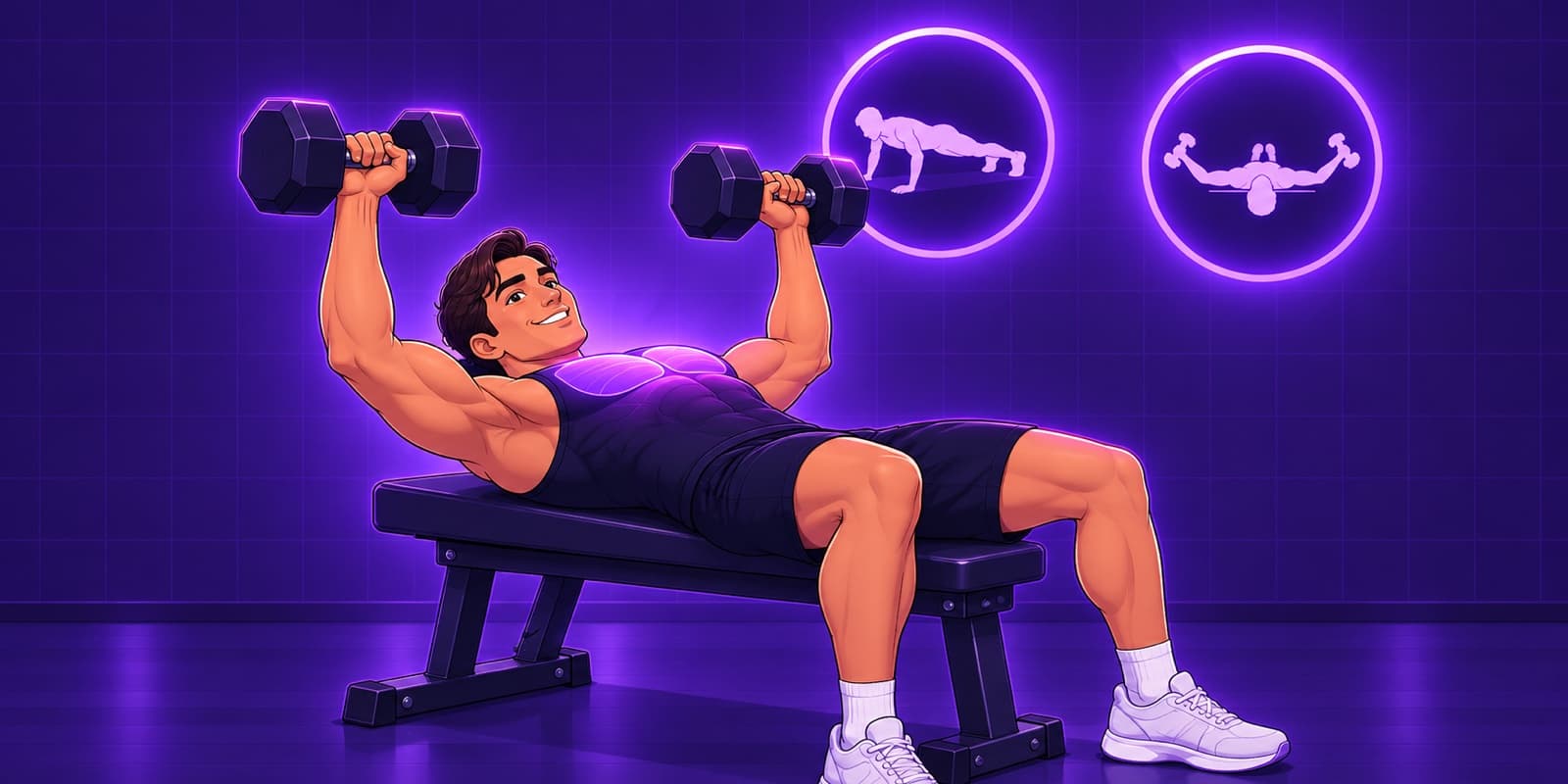
Dumbbell bench press. Similar overall pec activation to the barbell, with a greater range of motion at the bottom, a deeper stretch, and independent arms that expose and fix imbalances (Saeterbakken et al. 2011). Slightly less load, slightly more stimulus per rep for hypertrophy in many lifters' experience. Squeeze the dumbbells inward at the top to add an adduction component.
Incline press, 30 degrees. The upper-chest exercise. Studies comparing bench angles find the clavicular head is most active at around 30 degrees, and that at 45 degrees and above the anterior deltoid takes over (Lauver et al. 2016; Rodríguez-Ridao et al. 2020). Most adjustable benches go from flat to 30 in one or two clicks; use the lower setting. Dumbbells or a barbell both work.
Machine chest press. Stable, safe to train close to failure, and easy to load; the same movement without the stabiliser demand. Useful for volume after the free-weight press.
Decline press. Activates the sternal head strongly, but not more than the flat bench does. It is optional.
Flys and adduction: the stretch
Cable fly (low, mid and high). Constant tension through the whole range, including the stretched position at the start of the rep, which pressing cannot provide because the bar or dumbbells lose tension at the top. A low-to-high cable fly biases the upper chest, mid-height the sternal head, high-to-low the lower fibres. The best fly variant for growth.
Dumbbell fly. Loads the stretched position heavily and the contracted position hardly at all; that stretch is a large part of the stimulus (Pedrosa et al. 2022). Keep a slight bend in the elbows, lower to a comfortable stretch, and do not go heavier than you can control at the bottom, where the shoulder is vulnerable.
Pec deck. Constant tension, safe, easy to load. Good for finishing sets.
Bodyweight: dips and push-ups
Dips. With a forward lean and the elbows slightly out, dips activate the sternal and lower pec strongly and allow heavy weighted loading. They stress the shoulder at the bottom; stop the descent when the upper arm is parallel to the floor if there is any discomfort.
Push-ups. A horizontal press with a moving trunk. At matched effort, push-ups produced chest and triceps growth similar to the bench press at 40 percent of one-rep max over eight weeks (Kikuchi and Nakazato 2017). Their limit is load: once you can do 20 or more, add a plate on the back or a weighted vest, elevate the feet for an incline-like angle, or use rings for a deeper stretch. Deficit push-ups with hands on blocks lengthen the range.
Angle summary
| Region | Best movements |
|---|---|
| Upper chest (clavicular) | Incline press at 30 degrees, low-to-high cable fly, incline dumbbell press |
| Middle chest (sternal) | Flat barbell and dumbbell press, mid cable fly, push-ups |
| Lower chest (sternal, lower fibres) | Flat press, dips, high-to-low cable fly |
| Stretch-focused | Dumbbell press (deep), cable and dumbbell flys, ring push-ups |
You do not need every row of this table in every session. A flat press, an incline press and a fly across the week cover it.
Technique principles
- Retract the shoulder blades and keep them retracted for every press and fly. This is what makes the chest, not the front delt, do the work, and what keeps the shoulder joint safe.
- Elbows tucked to 45 to 70 degrees on presses. Flared elbows shift load to the shoulders and are the main cause of bench-press shoulder pain.
- Full range with a controlled stretch. The stretched position is a large part of the growth stimulus; do not cut the bottom of dumbbell presses and flys short.
- Match pressing with pulling. At least as many hard rowing and pulldown sets as pressing sets each week. See Best Back Exercises.
- Progress the presses; control the flys. Add load to presses; add reps and control to flys.
A complete chest program
Two sessions a week, 10 to 16 hard sets across both, as part of an upper-body or push day:
Session A
- Barbell bench press: 4 sets of 5 to 8
- Incline dumbbell press, 30 degrees: 3 sets of 8 to 12
- Cable fly, mid or low-to-high: 3 sets of 12 to 15
Session B
- Dumbbell bench press: 4 sets of 8 to 10
- Weighted dips or machine press: 3 sets of 8 to 12
- Pec deck or dumbbell fly: 2 to 3 sets of 12 to 15
Rest two to three minutes on presses, 90 seconds on flys. Add load when all sets hit the top of the rep range with a full range of motion. See Training Volume for adjusting total sets.
The bottom line
A flat press for the bulk of the chest, an incline press at 30 degrees for the upper fibres, and a cable or dumbbell fly for the stretched position, with dips and push-ups as strong additions. Retracted shoulder blades and tucked elbows put the work in the pecs; a full range with a controlled stretch drives growth; matching pulling volume keeps the shoulders healthy. Ten to sixteen hard sets a week across two sessions, progressed, is the program.
Sources
- Lauver JD, Cayot TE, Scheuermann BW. "Influence of bench angle on upper extremity muscular activation during bench press exercise." European Journal of Sport Science, 2016.
- Rodríguez-Ridao D, Antequera-Vique JA, Martín-Fuentes I, Muyor JM. "Effect of Five Bench Inclinations on the Electromyographic Activity of the Pectoralis Major, Anterior Deltoid, and Triceps Brachii during the Bench Press Exercise." International Journal of Environmental Research and Public Health, 2020.
- Saeterbakken AH, van den Tillaar R, Fimland MS. "A comparison of muscle activity and 1-RM strength of three chest-press exercises with different stability requirements." Journal of Sports Sciences, 2011.
- Kikuchi N, Nakazato K. "Low-load bench press and push-up induce similar muscle hypertrophy and strength gain." Journal of Exercise Science and Fitness, 2017.
- Pedrosa GF, Lima FV, Schoenfeld BJ, et al. "Partial range of motion training elicits favorable improvements in muscular adaptations when carried out at long muscle lengths." European Journal of Sport Science, 2022.
- Chaves SFN, Rocha-Júnior VA, Encarnação IGA, et al. "Effects of Horizontal and Incline Bench Press on Neuromuscular Adaptations in Untrained Young Men." International Journal of Exercise Science, 2020.
Frequently asked questions
What is the best exercise for upper chest?
Incline pressing at about 30 degrees. Studies measuring EMG across bench angles find the clavicular (upper) pec is most active at 30 degrees, and that steeper angles shift the work to the front deltoid. Incline dumbbell presses, low-to-high cable flys and reverse-grip bench press are useful supplements.
Are flys or presses better for chest growth?
Presses allow heavier loading and train the triceps and shoulders too, so they are the foundation. Flys isolate the pec and, done with cables or dumbbells, load it in the stretched position where growth stimulus is highest. Use presses for the bulk of your volume and one fly movement for the stretch.
Do push-ups build chest as well as bench press?
At matched effort, yes. A trial comparing push-ups with bench pressing at about 40 percent of one-rep max found similar chest and triceps growth over 8 weeks. Push-ups are limited by how much you can load them; once you can do 20 or more, add weight with a vest or plate, or elevate the feet.
How many chest exercises should I do per workout?
Two to three. A press, a second press at a different angle or with dumbbells, and a fly. More than that per session adds fatigue without much extra stimulus. Spread chest work over two sessions a week instead.
Do I need decline bench for lower chest?
No. The lower (sternal) pec is heavily activated by the flat bench press and by dips, and decline pressing adds little that those do not already provide. If you enjoy it, it is fine; it is not required.
Why do I feel bench press in my shoulders instead of my chest?
Flared elbows, an unretracted shoulder girdle, a very wide grip, or an incline that is too steep. Tuck the elbows to 45 to 70 degrees, pull the shoulder blades together, use a medium grip, and try dumbbell pressing with a slight inward squeeze at the top to feel the pecs.