Strength Training and Bone Density: Why Lifting Is Non-Negotiable for Women
9 min read · September 2026 · by Manikanta Sirumalla
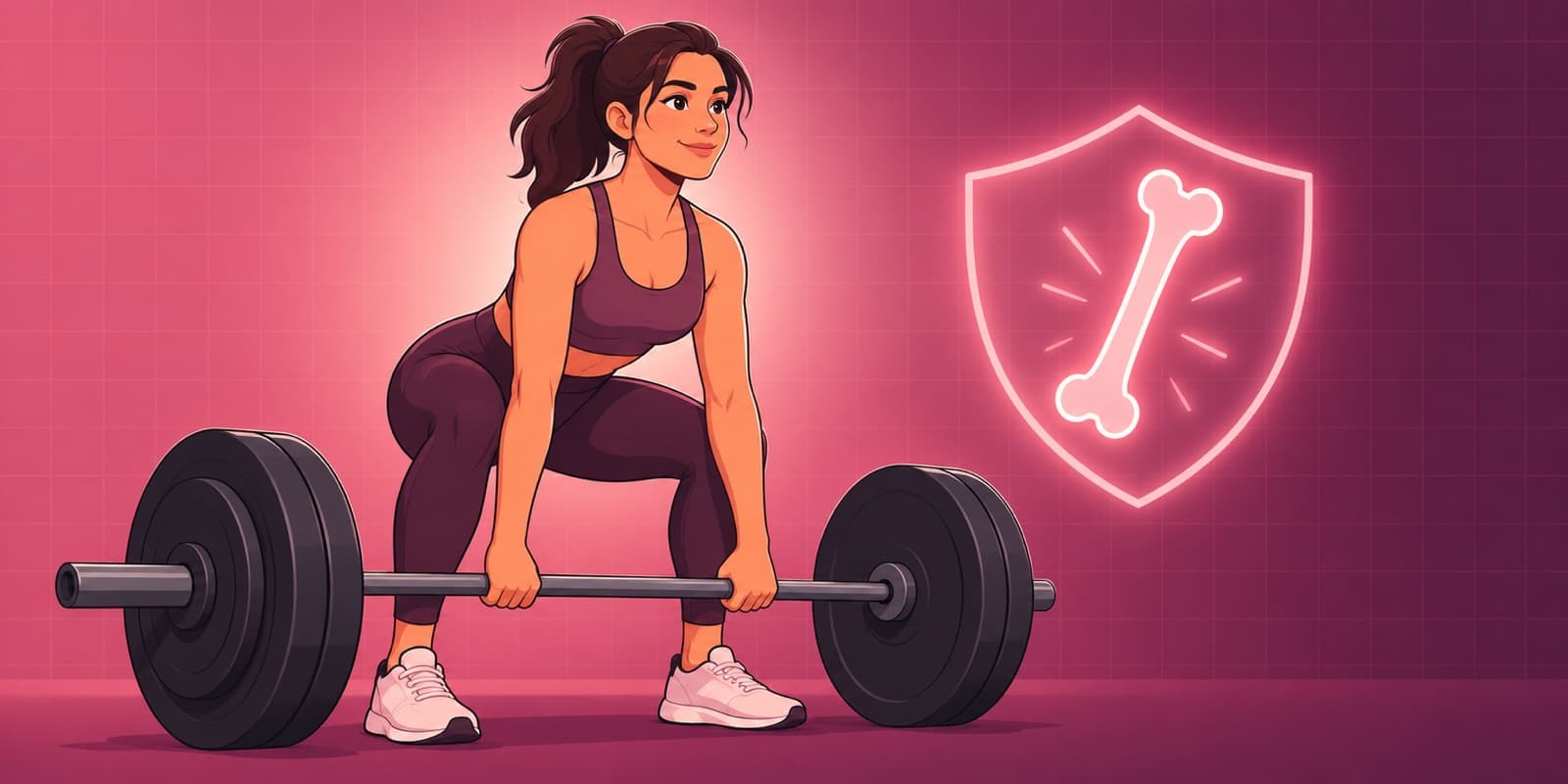
Osteoporosis is silent until it breaks something. A hip fracture after 65 carries a one-year mortality of around 20 to 30 percent and often ends independent living. Women are at far higher risk than men, because they reach a lower peak bone mass and then lose bone rapidly around menopause. The good news is that bone is living tissue that responds to what you ask of it, and the evidence is now very clear about what to ask.
How bone adapts
Bone follows a rule described by Julius Wolff in the 1890s and refined since: it remodels in response to the strain placed on it. Load a bone more than it is used to and specialised cells (osteocytes) sense the deformation, signal osteoclasts to clear old bone and osteoblasts to lay down new bone, and the structure thickens where the strain was highest.
The details of the rule matter for training:
- Magnitude beats repetition. Bone responds to high strain, not to many low strains. A few heavy loads do more than thousands of light ones. This is why walking, which applies the same low strain over and over, does little.
- Rate matters. Strain applied quickly (impact, explosive lifting) is a stronger signal than strain applied slowly.
- Novelty matters. Bone adapts to strain it is not used to, from unusual directions. Variety in loading beats one repeated movement.
- Site-specific. The bone that gets loaded is the bone that adapts. Squats and deadlifts load the spine and hips; they do nothing for the wrist.
- A little is enough. Bone cells become unresponsive after a short bout of loading. Multiple short sessions beat one long one.
Studies of tennis players show 10 to 20 percent more bone in the playing arm than the other; studies of gymnasts show bone density well above runners of similar fitness. High, fast, varied strain builds bone. Endurance work does not.
What the trials show
Resistance training. Meta-analyses of randomised trials in post-menopausal women find that progressive resistance training increases bone mineral density at the lumbar spine and femoral neck, with effects that grow with load and program length (Zhao et al. 2015; Howe et al. 2011). Programs using heavier loads and compound, spine-loading exercises outperform light programs and isolated movements.
Impact. Jumping, hopping and skipping produce ground-reaction forces of several times body weight, delivered fast. Trials using brief daily hopping or jumping in pre- and post-menopausal women show improved hip bone density with as little as 10 to 50 jumps a day (Kemmler et al. 2020).
LIFTMOR. The landmark trial. In 2018 Watson and colleagues randomised 101 post-menopausal women with osteopenia or osteoporosis to either eight months of supervised high-intensity resistance and impact training, or a home-based low-intensity program. The lifting group did deadlifts, back squats and overhead presses at 80 to 85 percent of their one-rep max, five sets of five, twice a week, plus jumping chin-ups with a drop landing. Their lumbar spine density rose by about 3 percent while the control group's fell; femoral neck density was maintained versus a loss in controls; and they improved in height, posture, back extensor strength and functional tests. There was one minor injury in the lifting group across the whole trial (Watson et al. 2018). Women with diagnosed bone disease lifted heavy, safely, and rebuilt bone.
Walking and swimming. Meta-analyses find walking alone has minimal effect on bone density, with at best a small preservation at the hip. Swimming and cycling, being non-weight-bearing, show no benefit and cyclists often have lower bone density than sedentary controls (Beck et al. 2017).
The position statement from Exercise and Sports Science Australia summarises the consensus: exercise for bone must be progressive, high-intensity resistance training combined with impact loading, and low-intensity programs are not effective (Beck et al. 2017).
The women's timeline
Teens and 20s. Peak bone mass is reached around 25 to 30 and sets the balance you draw down for the rest of life. Loading in this window, especially through sport and lifting, adds to the bank. A 10 percent higher peak bone mass is estimated to delay osteoporosis by about 13 years.
30s and early 40s. Bone is roughly stable in women with adequate estrogen, nutrition and loading. Undereating, amenorrhoea and low energy availability (see Iron Deficiency and the discussion of RED-S in Overtraining vs. Overreaching) cause bone loss at this age and are common in active women.
Perimenopause and the first five years after menopause. Loss accelerates to 1 to 2 percent per year, mostly from the spine and hip. This is the window where resistance and impact training have the largest effect on lifetime fracture risk. See Perimenopause and Strength Training.
60s and beyond. Loss continues more slowly. Training still increases bone density, and its effects on muscle, balance and power reduce the falls that cause fractures in the first place.
How to train for bone
The lifts. Squats, deadlifts and overhead presses load the spine and hip through the axial skeleton, which is exactly where osteoporotic fractures happen. Hip thrusts and lunges load the femoral neck. Rows and pull-ups load the arms and upper spine. See the form guides for the squat, deadlift and overhead press.
The load. Bone responds to strain, so the weight has to be meaningful: sets of 5 to 8 reps at 70 to 85 percent of one-rep max, built up over weeks. Start light to learn the pattern, then progress steadily. The LIFTMOR protocol was 5 sets of 5 at 80 to 85 percent; that is a target to build toward, not a starting point.
Impact. Add 10 to 20 jumps, hops or drop landings from a step, two or three times a week, with a soft landing. For women with diagnosed osteoporosis or a history of fracture, get clearance from a doctor and start with lower impact such as heel drops and stomping before progressing.
Frequency. Two or three sessions a week. Bone cells desensitise within a session, so short and frequent beats long and rare.
Variety. Change exercises, stance widths and loading directions periodically. Novel strain is stronger strain.
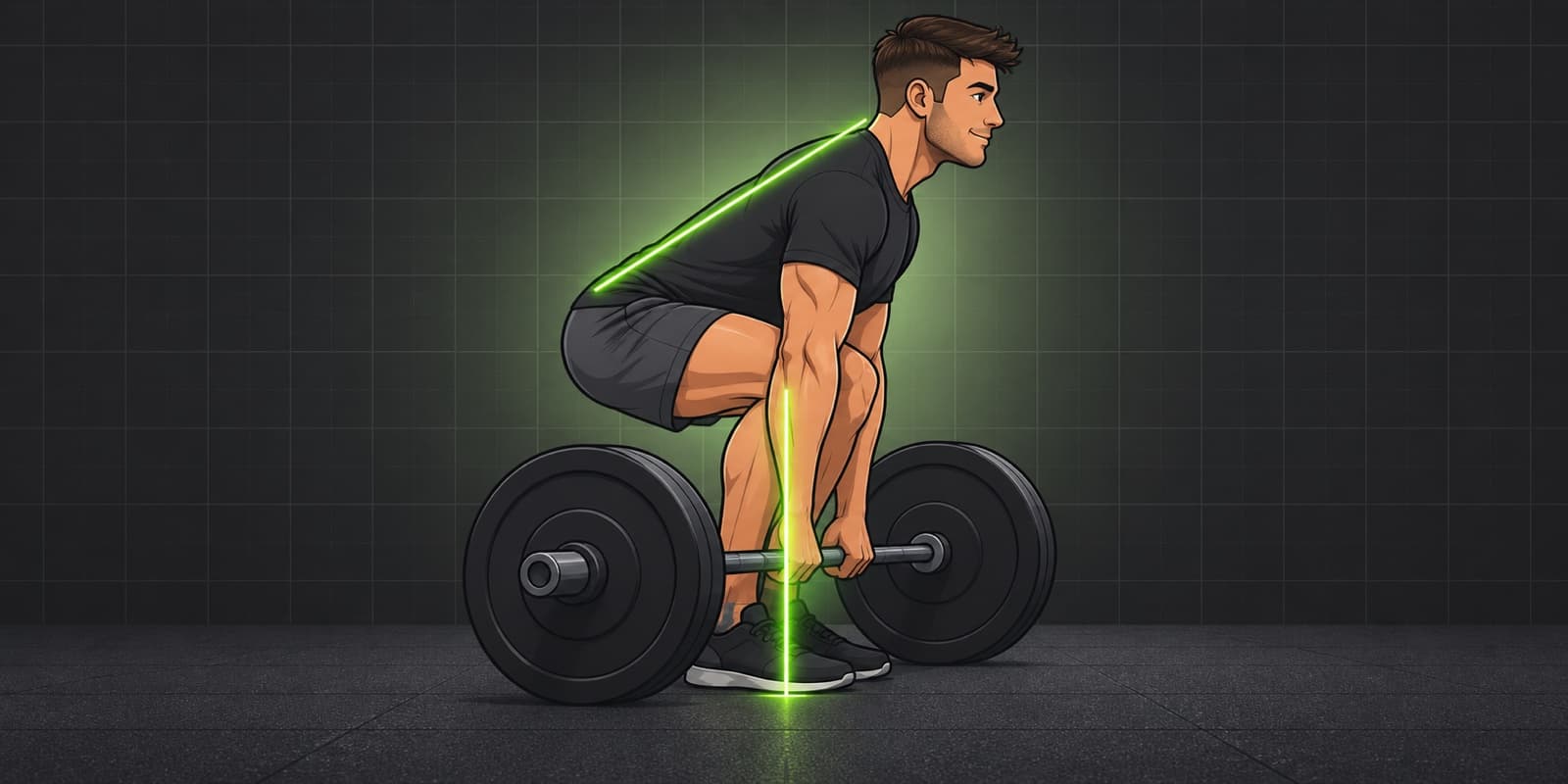
Technique. The only real risk in loading a fragile spine is loaded flexion (rounding forward under weight). A neutral spine in deadlifts and squats, and avoiding loaded sit-ups and rounded-back movements, removes most of it. Coaching for the first months is money well spent.
Time. Bone remodels slowly. Expect DEXA changes after 6 to 12 months. See DEXA Scan Guide for how to measure it.
Nutrition for bone
Loading is the signal; nutrients are the material.
- Calcium: 1,000 to 1,200 mg per day, preferably from food. Dairy, calcium-set tofu, tinned sardines and salmon with bones, leafy greens and fortified foods.
- Vitamin D: required for calcium absorption. Blood levels are often low in winter and at northern latitudes; a supplement of 1,000 to 2,000 IU daily is standard advice, or test and dose accordingly.
- Protein: bone is a third protein by volume. Higher protein intakes, once thought to harm bone, improve it when calcium is adequate. Aim for 1.6 g/kg or more. See How Much Protein.
- Energy availability: chronic undereating suppresses estrogen and bone formation. A long, hard cut is a bone risk in women. See The Cutting Guide.
- Creatine: some trials suggest reduced hip bone loss when combined with training; not proven, but low risk. See Creatine for Women.
- Alcohol and smoking: both accelerate bone loss.
If you already have low bone density
Osteopenia or osteoporosis is a reason to train, not to stop. The LIFTMOR participants had exactly this diagnosis. The adjustments: get medical clearance, especially with a history of vertebral fracture; work with a coach for technique; progress load more gradually; avoid loaded spinal flexion and high-impact landings until strength and technique are established; and discuss medication with your doctor, since bone drugs and training are complementary, not alternatives.
The bottom line
Bone builds in response to heavy, fast, varied strain, which means resistance training on the big lifts plus a little impact, and not walking, swimming or light weights. Trials show this works in women at every age, including with diagnosed osteoporosis, safely. Lift heavy two or three times a week, jump a little, eat enough calcium, vitamin D and protein, and start now, because every year of loading is a year of bone you keep.
Sources
- Watson SL, Weeks BK, Weis LJ, et al. "High-Intensity Resistance and Impact Training Improves Bone Mineral Density and Physical Function in Postmenopausal Women With Osteopenia and Osteoporosis: The LIFTMOR Randomized Controlled Trial." Journal of Bone and Mineral Research, 2018.
- Beck BR, Daly RM, Singh MA, Taaffe DR. "Exercise and Sports Science Australia (ESSA) position statement on exercise prescription for the prevention and management of osteoporosis." Journal of Science and Medicine in Sport, 2017.
- Zhao R, Zhao M, Xu Z. "The effects of differing resistance training modes on the preservation of bone mineral density in postmenopausal women: a meta-analysis." Osteoporosis International, 2015.
- Howe TE, Shea B, Dawson LJ, et al. "Exercise for preventing and treating osteoporosis in postmenopausal women." Cochrane Database of Systematic Reviews, 2011.
- Kemmler W, Shojaa M, Kohl M, von Stengel S. "Effects of Different Types of Exercise on Bone Mineral Density in Postmenopausal Women: A Systematic Review and Meta-analysis." Calcified Tissue International, 2020.
Frequently asked questions
What is the best exercise for bone density?
Heavy, progressive resistance training on lifts that load the spine and hips (squats, deadlifts, overhead press, hip thrusts), plus impact such as jumps or hops. These generate the high-magnitude, varied strain that bone adapts to. Low-load, high-rep exercise and non-impact cardio have little effect on bone density.
Does walking improve bone density?
Only marginally. Walking produces low, repetitive strain that bone is already adapted to. Studies show it may slow loss at the hip slightly but does not meaningfully increase density. It is good for health, but it is not a bone-building exercise. Add resistance and impact.
Is it safe to lift weights with osteoporosis?
With proper technique, supervision and progression, yes. The LIFTMOR trial had post-menopausal women with osteopenia and osteoporosis deadlifting, squatting and overhead pressing at 80 to 85 percent of their max for eight months, with one minor adverse event and significant improvements in spine density, function and posture. Avoid loaded spinal flexion and get coaching on form.
At what age should women start lifting for bone?
As early as possible. Peak bone mass is reached around 25 to 30, and loading in the teens and 20s builds the bank you draw on for life. That said, resistance training improves bone density at every age, including after 70, so it is never too late to start.
How long does it take to increase bone density?
Bone remodels slowly. Trials typically see measurable changes on DEXA after 6 to 12 months of consistent training, with gains of 1 to 3 percent at the spine and hip. Preventing the 1 to 2 percent annual loss around menopause is itself a significant result.
Do I need calcium and vitamin D supplements?
Aim for 1,000 to 1,200 mg of calcium per day, ideally from food (dairy, tinned fish with bones, tofu, leafy greens), and enough vitamin D to keep blood levels adequate, which often means a supplement in winter. Loading tells bone to build; calcium and vitamin D supply the material.