Training During Your Period: Permission, Not Prescription
7 min read · April 2025 · by Manikanta Sirumalla
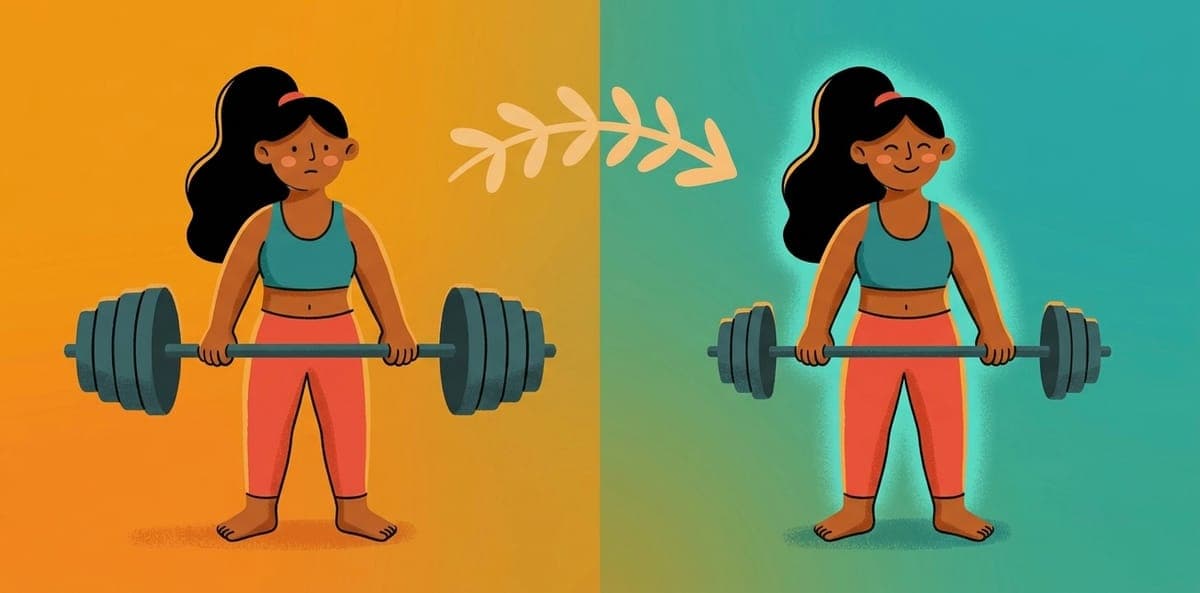
Plenty of people skip training while they are bleeding, usually for one of three reasons: pain, fatigue, or a background assumption that training on your period is either harmful or pointless.
The evidence does not support that assumption, and it does not support the opposite rule either. Bleeding is not a mandatory rest day for everyone, and it is not a day you owe yourself a hard session. Train and recover by the symptoms and performance you actually log, not by assuming a calendar phase guarantees strength, calories, or recovery. This article is about permission: to train normally when you feel fine, to ease a session when you do not, and to know which symptoms belong in a clinic rather than in a training log.
What Is Actually Happening
The menstrual phase is the quietest part of the cycle hormonally. Estrogen and progesterone are both at their lowest after falling at the end of the previous cycle. Prostaglandins, which drive the uterine contractions behind cramping, are elevated. The thermogenic effect of progesterone is gone, so the slight core temperature elevation of the second half of the cycle has resolved.
For training, the important point is narrower than most articles make it. Measured force production is not consistently lower during menstruation, even though perceived exertion is higher for some people (McNulty et al., 2020). Symptoms vary enormously between people and between cycles. So the phase itself tells you very little, and how you feel today tells you a lot.
Exercise and Period Pain
The strongest practical case for moving during your period is not about training adaptation. It is about symptoms.
A Cochrane review of exercise for dysmenorrhoea (Armour et al., 2019) pooled randomised trials of exercise for period pain. It found low-quality evidence that exercise, performed for around 45 to 60 minutes, three or more times per week, may reduce menstrual pain intensity compared with no exercise. Low-quality evidence means the finding is uncertain and the trials were small, so read it as encouraging rather than definitive. The trials generally used moderate intensity rather than maximal effort.
That is a reasonable basis for trying movement on a painful day and seeing what your own log says. It is not a basis for telling anyone that exercise will fix their pain, and it is emphatically not a reason to keep training through pain that is escalating or that stops you functioning.
Deciding What Today's Session Should Be
Use the same three-way decision that applies every other day of the month.
You feel fine. Train normally. There is no evidence that pre-emptively cutting volume during your period helps anything, and doing so costs you sessions you would have completed comfortably. If you feel like attempting a heavy top set, the calendar is not a reason not to.
Symptoms are noticeable but manageable. Run the session, hold the progression rather than pushing it, and finish. Repeating last session's numbers is a perfectly good week.
Symptoms are genuinely interfering. Ease this session: keep the same exercises and loads, cut working sets by roughly 20 to 30%, and leave an extra rep in reserve. Short reductions in volume do not cost you strength or muscle, especially when intensity is maintained, so this is a cheap decision.
Beyond load, a few practical swaps help on rough days. Moderate steady work such as walking, cycling, or swimming tends to feel better than high-intensity intervals. Heavy abdominal work and hard plyometrics are uncomfortable for some people during heavy flow and easy to substitute. None of that is a rule. If those things feel fine for you, keep them.
Iron, Briefly
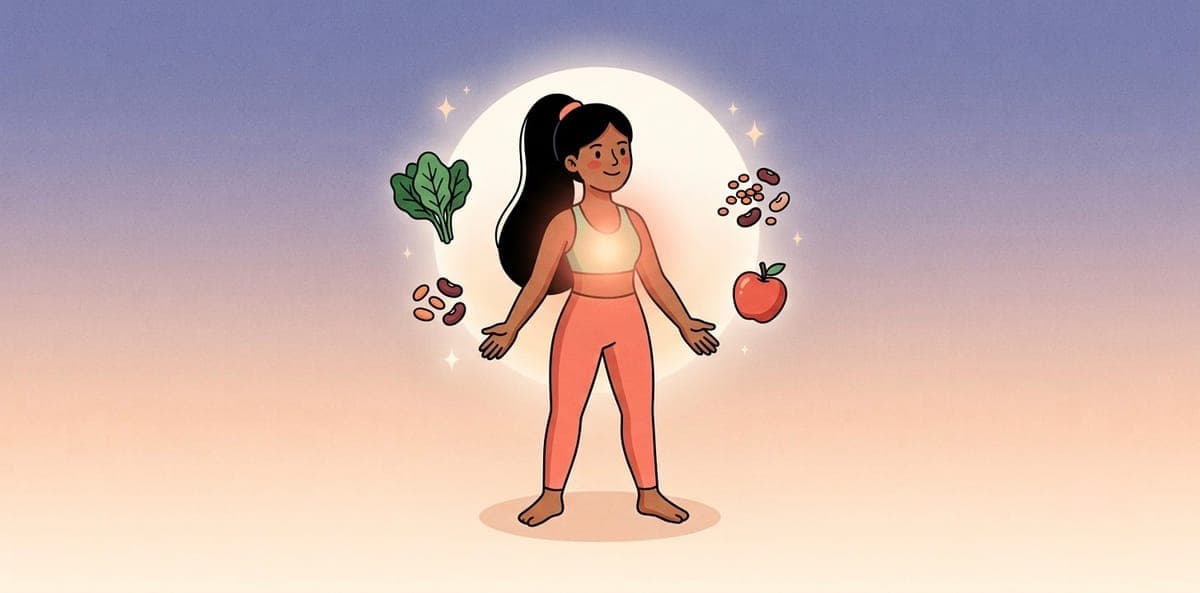
Repeated menstrual blood loss increases iron demand over time, which is the one nutrition point in this topic with a clear mechanism. Emphasising iron-rich foods is sensible general practice. Whether you are actually deficient is a question for a blood test and a clinician, not for a symptom checklist or a supplement aisle. The iron deficiency guide explains who is at higher risk and why the testing conversation matters.
When Symptoms Belong in a Clinic
Some symptoms are not a training problem to work around. The right response is a healthcare appointment, and no article can triage this for you. Talk to a clinician about:
- Period pain severe enough to disrupt work, study, or daily life, or pain that is getting worse across cycles
- Pain that no longer responds to what previously managed it
- Bleeding heavy enough that you are changing protection very frequently, passing large clots, or feeling faint, which the American College of Obstetricians and Gynecologists describes as heavy menstrual bleeding worth evaluating
- Periods that stop for three or more consecutive months when you are not pregnant, or a cycle that has changed substantially and stayed changed
- Symptoms alongside persistent fatigue, frequent illness, and stalled training, a pattern associated with low energy availability (IOC consensus statement on Relative Energy Deficiency in Sport, 2023)
Bring your log. Dated entries across several cycles give a clinician far more to work with than a recollection.
Building the Pattern
The first cycle you deliberately train through will feel like an experiment, because it is one. By the third, you will have something better than a rule: your own record of which days tend to be rough, which of them still produced good sessions, and which interventions actually helped. That record is what the symptom tracking guide is for.
Keep Reading
- Symptom tracking: turning daily ratings into add-load, hold, or deload decisions
- Menstrual cycle and training: the full four-phase picture and where the evidence stands
- Iron deficiency in active women: risk factors and why testing belongs with a clinician
- Rest days: making a genuine recovery day productive
- Science and evidence: the equations and references behind the numbers we publish
Sources
- Armour M, Ee CC, Naidoo D, et al. Exercise for dysmenorrhoea. Cochrane Database of Systematic Reviews, 2019.
- McNulty KL, Elliott-Sale KJ, Dolan E, et al. The effects of menstrual cycle phase on exercise performance in eumenorrheic women: a systematic review and meta-analysis. Sports Medicine, 2020.
- Colenso-Semple LM, D'Souza AC, Elliott-Sale KJ, Phillips SM. Current evidence shows no influence of women's menstrual cycle phase on acute strength performance or adaptations to resistance exercise training. Frontiers in Sports and Active Living, 2023.
- American College of Obstetricians and Gynecologists. Dysmenorrhea: painful periods and heavy menstrual bleeding.
- Mountjoy M, Ackerman KE, Bailey DM, et al. 2023 International Olympic Committee's (IOC) consensus statement on Relative Energy Deficiency in Sport (REDs). British Journal of Sports Medicine, 2023.
Frequently asked questions
Does exercise help period cramps?
Yes. Reviews of trials find that regular exercise, including both aerobic activity and strength training, reduces the severity of primary dysmenorrhoea, likely through endorphins, blood flow and reduced prostaglandin activity. Light movement on painful days also brings short-term relief.
Should you lift weights on your period?
Yes, if you feel up to it. Strength is not reduced during menstruation on average, and many women set personal records in this phase. Adjust the load with RPE on days when pain or fatigue is high.
How should I modify workouts during my period?
Keep the plan but lower the intensity or volume on symptomatic days, favour movements that do not aggravate cramps (avoid heavy loaded spinal flexion if it hurts), stay hydrated, and consider a heat pack before training. On good days, train normally.
Why is my energy low during my period?
Blood loss (and low iron in some women), poor sleep from pain or hormonal shifts, inflammation, and reduced appetite can all lower energy. Iron-rich foods, sleep, and adequate carbohydrate help; persistent fatigue every cycle warrants a ferritin test.