Stretching and Mobility: What the Evidence Says
9 min read · September 2026 · by Manikanta Sirumalla
Stretching has been part of exercise advice for so long that its benefits are rarely questioned. It prevents injury, reduces soreness, improves performance, keeps you young. Almost every one of these claims has now been tested, and most of them failed. What survives is narrower, more useful, and points to a surprising conclusion about where flexibility actually comes from.
What stretching does: range of motion
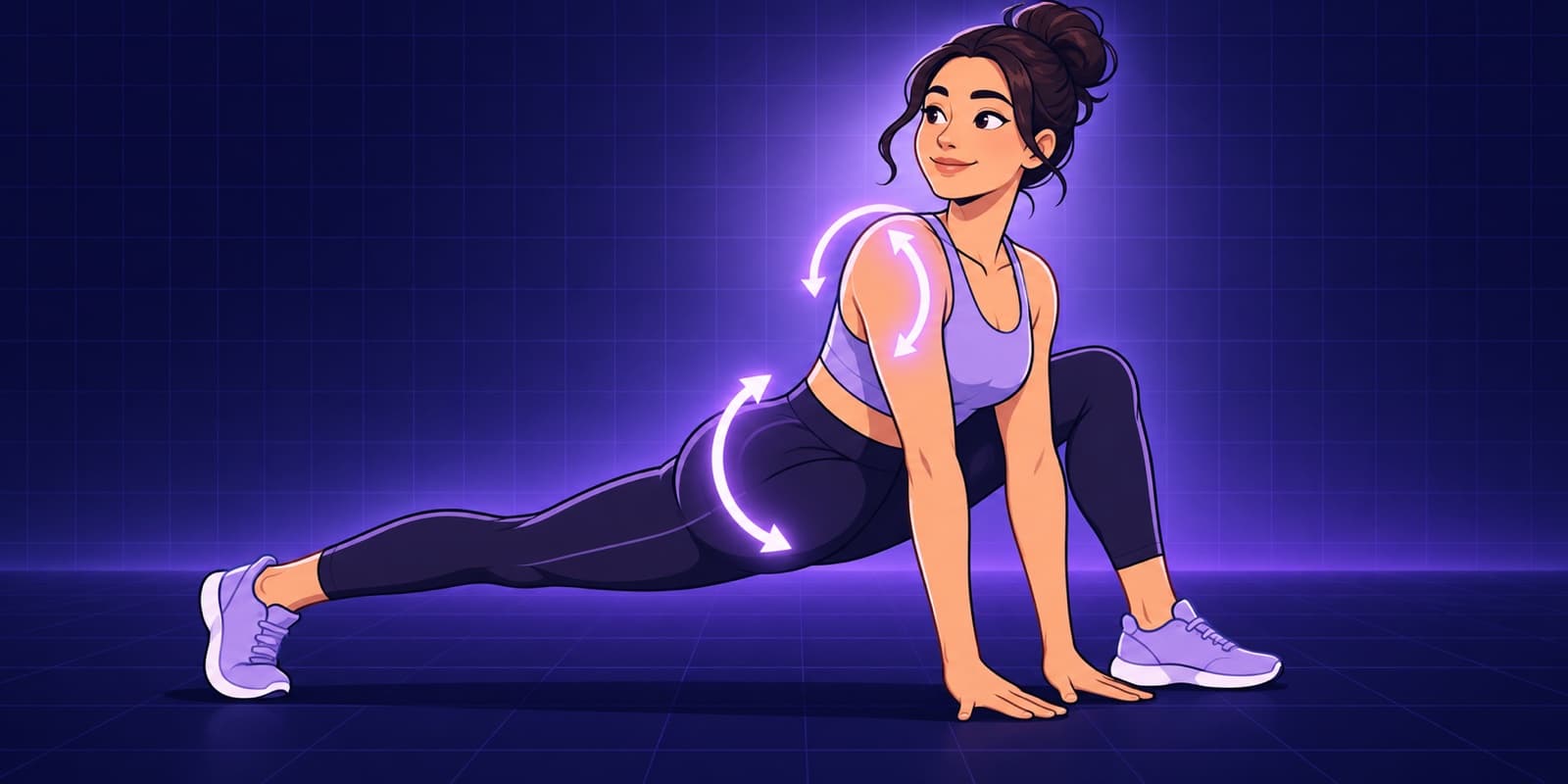
Stretching reliably improves range of motion. This is well established and not in dispute. Regular static stretching increases the range through which a joint can move, with measurable improvements within a few weeks.
What is more interesting is how. For the first weeks, most of the gain is not longer muscle. It is increased tolerance: the nervous system's stretch reflex and the sensation of stretch relax, allowing you to move further into the same tissue (Weppler and Magnusson 2010). Structural changes in muscle and tendon, such as longer fascicles, take months of consistent stretching and are smaller than the tolerance change.
The dose is modest. A 2018 review found that about five minutes of total stretching per muscle group per week, spread across sessions, is enough to improve range of motion, with more producing somewhat more (Thomas et al. 2018). Holds of 30 to 60 seconds are effective; longer holds add little.
What stretching does not do
Prevent injury. This is the biggest claim, and the evidence is against it. A 2014 meta-analysis of 25 randomised trials covering more than 26,000 participants found that stretching had no significant effect on injury rates. In the same analysis, strength training reduced sports injuries by about one-third and overuse injuries by almost half (Lauersen et al. 2014). A large review by the U.S. Centers for Disease Control reached the same conclusion about stretching a decade earlier (Thacker et al. 2004). If you want fewer injuries, lift.
Reduce soreness. A Cochrane review pooling 12 trials found that stretching before, after or both had no clinically meaningful effect on delayed onset muscle soreness (Herbert et al. 2011). See Muscle Soreness (DOMS).
Improve performance. Static stretching held immediately before exercise reduces strength, power and sprint speed by a few percent, with the effect growing with hold duration; holds of over 60 seconds per muscle produce reliable decrements that can last up to an hour (Simic et al. 2013; Behm et al. 2016). Short holds of under 30 seconds followed by dynamic movement have negligible effect, so a brief stretch of a tight muscle before training is not a disaster, but a long static stretching routine before lifting or sprinting is counterproductive.
Fix posture or "lengthen" muscles permanently. Tissue adapts to the positions and loads it is repeatedly exposed to. Stretching a muscle for a minute a day does not override the eight hours it spends in a chair. Strengthening the opposing muscles and changing the eight hours does more.
Static vs dynamic
Static stretching is holding a position at the end of range. It improves flexibility, and it reduces force output temporarily if done for long holds immediately before exercise.
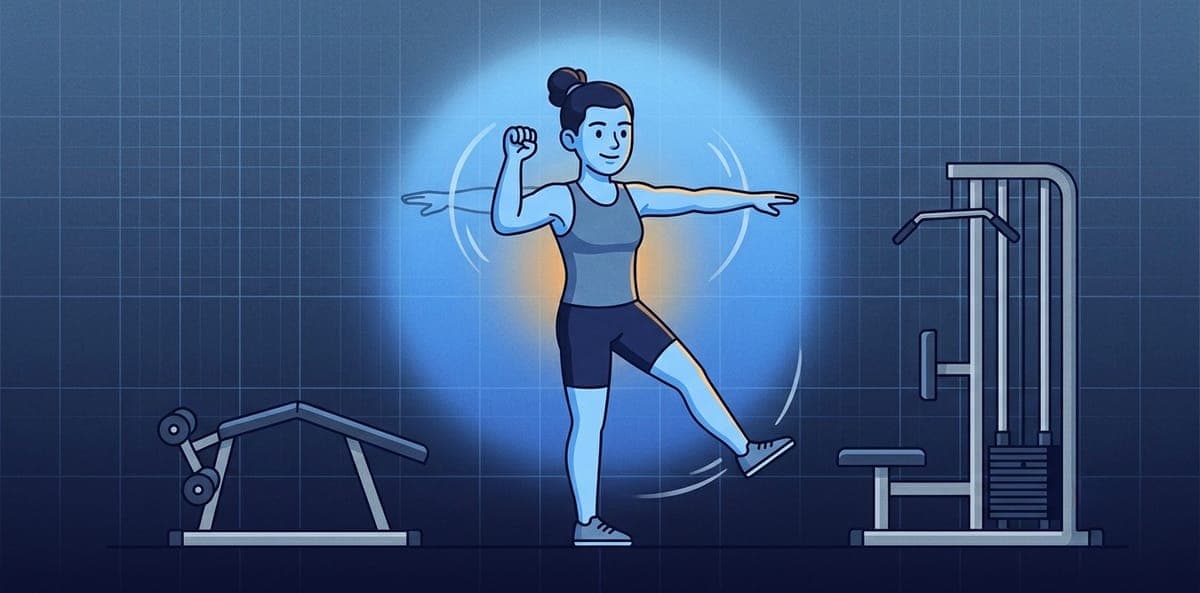
Dynamic stretching is moving a joint through its range under control: leg swings, walking lunges, arm circles, inchworms. It raises tissue temperature, rehearses the movement pattern, and does not reduce force. It modestly improves subsequent power and sprint performance compared with no warm-up.
PNF (contract-relax) stretching combines a contraction against resistance with a stretch. It produces slightly larger acute range-of-motion gains than static stretching, with the same caveats about pre-exercise use.
The conclusion for warm-ups is settled: dynamic movement and progressively heavier sets of the exercise you are about to do, not long static holds. See How to Warm Up Properly.
Strength training as flexibility training
The most useful finding in this area in the last decade is that strength training through a full range of motion improves flexibility about as well as stretching does.
A 2021 systematic review and meta-analysis compared resistance training with stretching for range of motion and found no significant difference between them (Afonso et al. 2021). Earlier work found the same: a full-range resistance program improved hamstring and hip flexibility as much as a static stretching program in the same period (Morton et al. 2011).
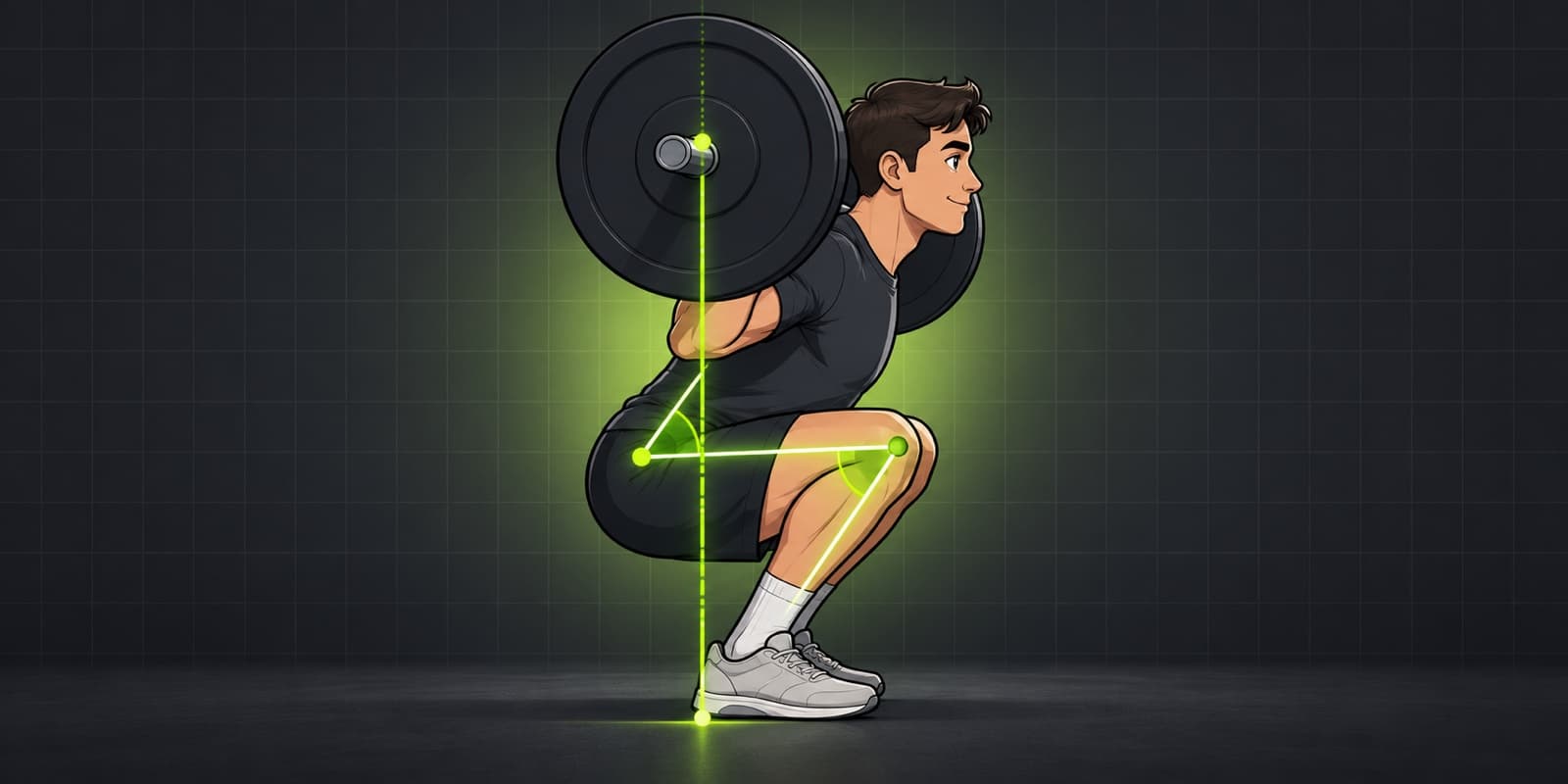
The mechanism is straightforward. A deep squat takes the hips, knees and ankles to end range under load; a Romanian deadlift takes the hamstrings there; an overhead press takes the shoulders and thoracic spine there. Loaded end-range positions provide the same stimulus for range of motion as a stretch, plus strength in that range, which is what you actually need to use it. A person who can squat to full depth with a barbell is more mobile, in every practical sense, than one who can touch their toes but cannot squat below parallel.
Emerging research even suggests that very long-duration stretching (30 minutes or more per day) can produce muscle growth, and that training at long muscle lengths produces more hypertrophy than at short ones, which connects the two worlds further (Arntz et al. 2023; Pedrosa et al. 2022). See Eccentric Training.
Mobility: the part that matters
"Mobility" in the useful sense is the range of motion you can control under load. Flexibility is passive range; mobility is usable range. The gap between them is strength at end range, and it is where most people's real limitations are.
A lifter who cannot squat deep usually does not have short muscles. They have some combination of ankle stiffness, an unfamiliar movement pattern, and weakness in the deep position. Stretching addresses only the first, and often not much. Practising the pattern with a light load, pausing at the bottom, and building strength there addresses all three.
So mobility work that is worth doing looks like:
- Loaded end-range movement. Deep goblet squats with a pause, Cossack squats, Romanian deadlifts to a full stretch, overhead pressing, dead hangs.
- Controlled articular rotations. Slow, full circles of the hips, shoulders and spine, actively controlled rather than passively pushed.
- Isometrics at end range. Holding a deep position while actively pushing into it builds strength where you are weakest. See Isometric Training.
- Targeted static stretching for a specific limitation that is restricting a lift, done in dedicated sessions, not before training.
Foam rolling and massage guns
Foam rolling increases range of motion acutely for a short period without reducing strength, which makes it a reasonable warm-up tool for a stiff area, and it produces a modest reduction in soreness (Pearcey et al. 2015). It does not "release fascia" or break adhesions; the pressure needed to deform fascia is far beyond what a roller applies. The effects are neural, like stretching's early effects. A couple of minutes on a tight area is useful; twenty minutes is not more useful.
A practical approach
Before lifting: five to ten minutes of dynamic movement, a minute of foam rolling on anything stiff if you like, then progressively heavier warm-up sets of your first exercise. No long static holds.
During lifting: train through a full range of motion. Squat deep, press overhead, hinge to a full hamstring stretch, row and pull to full extension. This is most of your mobility work.
After lifting or separately: if a specific range is limiting you (ankle dorsiflexion for squats, thoracic extension for overhead pressing, hip flexors from sitting), stretch it statically for 30 to 60 second holds, two to three sets, several times a week. Five minutes per muscle per week is enough.
For general health and ageing: a short daily routine of controlled joint rotations and a few loaded end-range movements maintains range better than stretching alone. Balance and strength matter more than flexibility for falls.
For sports that require extreme range (gymnastics, martial arts, dance): dedicated flexibility training beyond what lifting provides, in separate sessions, with the same long-hold static and PNF methods.
The bottom line
Stretching improves range of motion and nothing else reliably; it does not prevent injury or soreness, and long static holds before training reduce strength. Warm up with dynamic movement, train through a full range of motion, and use targeted static stretching in separate sessions only for specific limitations. Strength through a full range of motion is the flexibility program that also happens to make you stronger and less injured.
Sources
- Lauersen JB, Bertelsen DM, Andersen LB. "The effectiveness of exercise interventions to prevent sports injuries: a systematic review and meta-analysis of randomised controlled trials." British Journal of Sports Medicine, 2014.
- Thacker SB, Gilchrist J, Stroup DF, Kimsey CD. "The impact of stretching on sports injury risk: a systematic review of the literature." Medicine and Science in Sports and Exercise, 2004.
- Herbert RD, de Noronha M, Kamper SJ. "Stretching to prevent or reduce muscle soreness after exercise." Cochrane Database of Systematic Reviews, 2011.
- Simic L, Sarabon N, Markovic G. "Does pre-exercise static stretching inhibit maximal muscular performance? A meta-analytical review." Scandinavian Journal of Medicine and Science in Sports, 2013.
- Behm DG, Blazevich AJ, Kay AD, McHugh M. "Acute effects of muscle stretching on physical performance, range of motion, and injury incidence in healthy active individuals: a systematic review." Applied Physiology, Nutrition, and Metabolism, 2016.
- Thomas E, Bianco A, Paoli A, Palma A. "The Relation Between Stretching Typology and Stretching Duration: The Effects on Range of Motion." International Journal of Sports Medicine, 2018.
- Weppler CH, Magnusson SP. "Increasing muscle extensibility: a matter of increasing length or modifying sensation?" Physical Therapy, 2010.
- Afonso J, Ramirez-Campillo R, Moscão J, et al. "Strength Training versus Stretching for Improving Range of Motion: A Systematic Review and Meta-Analysis." Healthcare, 2021.
- Morton SK, Whitehead JR, Brinkert RH, Caine DJ. "Resistance training vs. static stretching: effects on flexibility and strength." Journal of Strength and Conditioning Research, 2011.
- Arntz F, Markov A, Behm DG, et al. "Chronic Effects of Static Stretching Exercises on Muscle Strength and Power in Healthy Individuals Across the Lifespan: A Systematic Review with Multi-level Meta-analysis." Sports Medicine, 2023.
- Pedrosa GF, Lima FV, Schoenfeld BJ, et al. "Partial range of motion training elicits favorable improvements in muscular adaptations when carried out at long muscle lengths." European Journal of Sport Science, 2022.
- Pearcey GE, Bradbury-Squires DJ, Kawamoto JE, et al. "Foam rolling for delayed-onset muscle soreness and recovery of dynamic performance measures." Journal of Athletic Training, 2015.
Frequently asked questions
Does stretching prevent injury?
Not according to the evidence. Large reviews and a meta-analysis of 25 trials found stretching had no significant effect on sports injury rates, while strength training reduced injuries by about a third and overuse injuries by nearly half. If injury prevention is the goal, lift.
Should I stretch before or after a workout?
Before: a dynamic warm-up (movement through range, light sets of the exercise) rather than long static holds, which reduce strength and power for up to an hour. After: static stretching is fine and improves flexibility over time, but it does not reduce soreness or speed recovery. Dedicated flexibility sessions on their own work best.
Does static stretching make you weaker?
Temporarily, if holds are long. Static stretches held for more than about 30 to 60 seconds per muscle immediately before exercise reduce strength and power by a few percent for up to an hour. Short holds under 30 seconds, followed by dynamic movement, have little effect.
How long does it take to become more flexible?
Measurable improvements in range of motion appear within 3 to 4 weeks of stretching 5 minutes per muscle group per week, spread across several sessions. Most of the early change is increased tolerance to the stretch sensation rather than longer muscle; structural change takes months.
Can strength training replace stretching?
For most people, largely yes. Meta-analyses find resistance training through a full range of motion improves flexibility as much as stretching, while also building strength and reducing injury risk. Deep squats, Romanian deadlifts, overhead presses and full-range rows are a mobility program with load.
Is foam rolling worth it?
It modestly increases range of motion for a short period without reducing strength, so it is a reasonable warm-up tool, and it slightly reduces soreness. It does not change tissue structure or break up adhesions. A few minutes is enough.