GLP-1 Medications and Muscle Loss: Why Lifting Matters on Ozempic, Wegovy and Zepbound
10 min read · September 2026 · by Manikanta Sirumalla
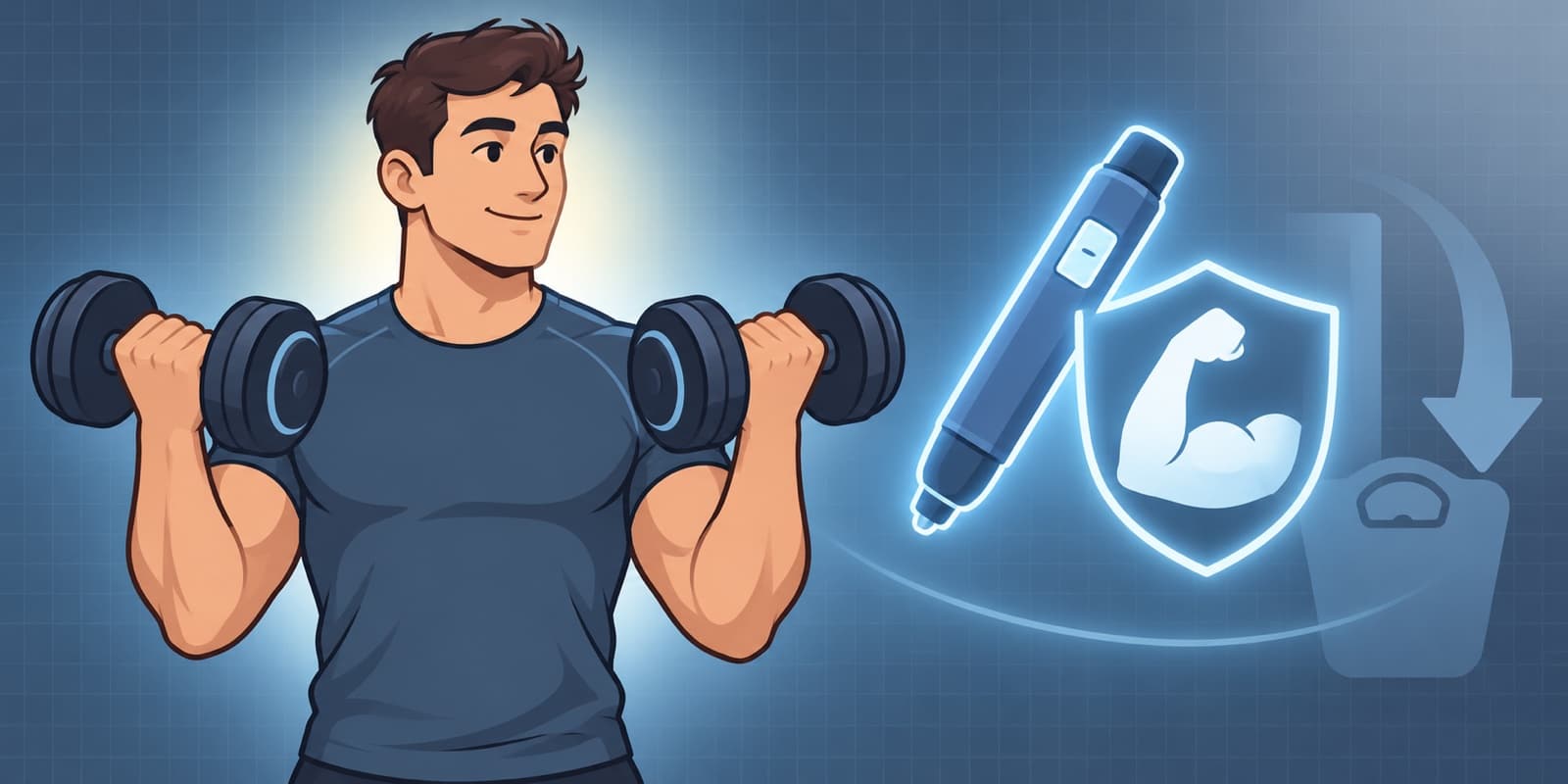
Semaglutide (Ozempic, Wegovy) and tirzepatide (Mounjaro, Zepbound) have changed obesity medicine. Weight loss of 15 to 20 percent of body weight, which used to require surgery, is now available by weekly injection. Millions of people are taking them. And a large share of those people are losing something they did not intend to: muscle.
This article is not about whether to take a GLP-1 medication. That is a medical decision between you and your doctor, based on your health, your history and your options. It is about what happens to your body composition once you do, and what the evidence says you should do about it.
What the drugs do
GLP-1 receptor agonists mimic a gut hormone that slows stomach emptying, increases insulin release when glucose is high, and, most importantly for weight, acts on the brain to reduce appetite and food reward. Tirzepatide adds a second hormone target (GIP) with a similar effect. People on these drugs eat substantially less without the constant hunger that defeats most diets, and weight falls, quickly, for a year or more.
The mechanism is a calorie deficit. A large, sustained one, created pharmacologically rather than by willpower. And a large, sustained deficit without countermeasures has the same effect on muscle whether it comes from an injection, a surgery, or a very low calorie diet.
What the trials found about lean mass
Semaglutide. In STEP 1, the pivotal trial of semaglutide 2.4 mg for obesity, participants lost about 15 percent of body weight over 68 weeks. A substudy of 140 participants with DEXA scans found that lean body mass fell by about 6 kg against 10 kg of fat mass, meaning roughly 40 percent of total weight lost was lean mass (Wilding et al. 2021).
Tirzepatide. In SURMOUNT-1, participants lost up to 21 percent of body weight over 72 weeks. The DEXA substudy showed about 25 percent of the weight lost was lean mass, with the rest fat (Jastreboff et al. 2022).
Liraglutide. Earlier GLP-1 studies show a similar pattern. Reviews of the class find lean mass typically accounts for 20 to 40 percent of weight lost (Neeland et al. 2024).
Three important caveats. First, "lean mass" on DEXA is everything that is not fat or bone: muscle, but also water, organs and connective tissue. Some loss of lean mass with fat loss is expected and normal, because a lighter body needs less supporting tissue and carries less water. Second, these trials did not include structured exercise or protein prescriptions; they were tests of the drug, not of the best possible program around it. Third, the ratio is similar to what has been documented in diet-only and bariatric-surgery weight loss for decades.
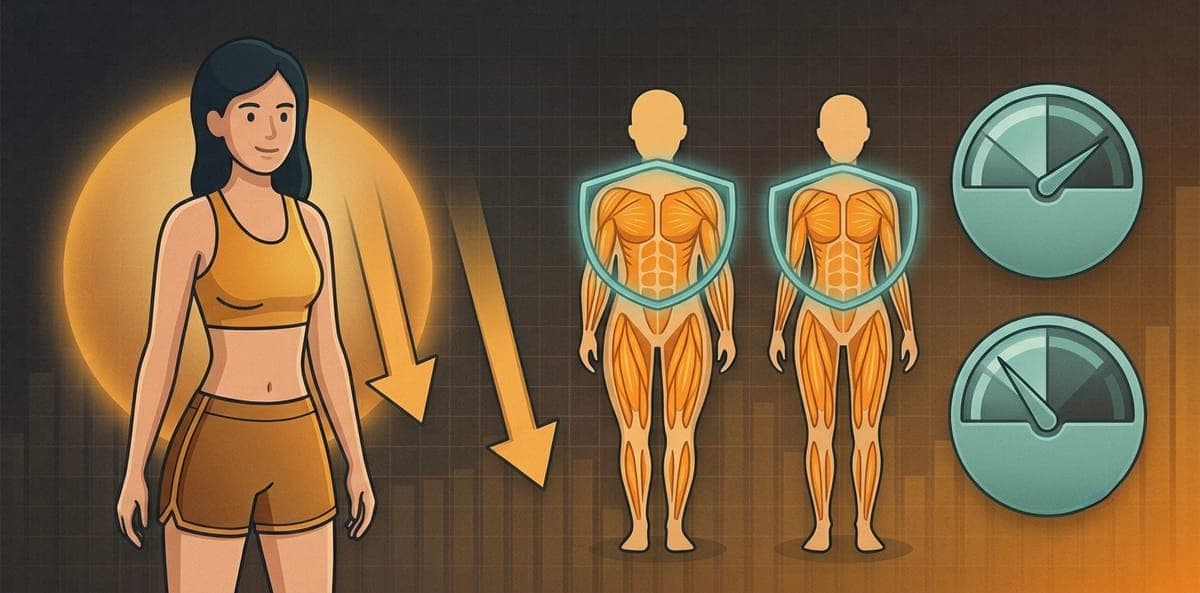
None of that makes the loss trivial. Losing 5 to 6 kg of lean mass, in a year, is a large amount for a body to give up, and the population using these drugs skews older and already at risk of low muscle.
Why it matters
Metabolic rate. Lean tissue is the main driver of resting energy expenditure. Losing muscle lowers the calories you burn at rest, which contributes to the metabolic adaptation that makes weight regain easier. See Reverse Dieting for how that plays out after a diet.
Regain. When people stop GLP-1 medication, most regain a large fraction of the weight, and regain is disproportionately fat. Ending a course lighter but with less muscle and a lower metabolic rate is the worst combination for keeping the result.
Glucose control. Muscle is the body's largest glucose sink. Losing it undermines the very insulin-sensitivity benefit many people take these drugs for.
Strength, function and ageing. For anyone over 50, lean mass loss on this scale meaningfully raises the risk of sarcopenia, falls and frailty. Muscle is very hard to rebuild in older adults. See Strength Training for Longevity.
Appearance. Weight loss that takes muscle with it leaves people smaller but soft, with loose skin and less definition. Weight loss that keeps muscle changes the shape of the body.
The goal is fat loss. GLP-1 drugs produce weight loss. The difference between the two is entirely within your control.
What protects muscle: the evidence
The research on preserving lean mass during weight loss is extensive and consistent, and it applies directly.
Resistance training. In trials of diet-induced weight loss, adding resistance training reduces lean mass loss dramatically, often to near zero, while fat loss is maintained or increased (Bellicha et al. 2021). In older adults on a weight-loss diet, a combination of resistance and aerobic training preserved lean mass and improved physical function far better than either type alone or diet alone (Villareal et al. 2017). A trial combining liraglutide with supervised exercise found the combination preserved lean mass and improved fitness and metabolic markers more than the drug alone, and maintained weight loss better after the drug was stopped (Lundgren et al. 2021).
Protein. Higher protein during a deficit preserves lean mass. In a controlled study of men on a severe deficit with resistance training, a group eating 2.4 g/kg of protein gained lean mass while losing fat, versus the 1.2 g/kg group who lost fat but maintained lean mass (Longland et al. 2016). Reviews of dieting athletes recommend 2.3 to 3.1 g per kilogram of lean mass (Helms et al. 2014).
Rate of loss. Faster weight loss loses proportionally more muscle. Rates above about 1 percent of body weight per week are associated with greater lean mass losses. GLP-1 drugs can drive loss faster than that in the early months.
Creatine. Supports strength and lean mass retention during training in a deficit. Not yet tested specifically in GLP-1 users, but low risk and plausible (Kreider et al. 2017).
The plan
1. Lift, from the start
Two to four resistance sessions a week, built on compound movements: squats or leg press, hip hinges, presses, rows, carries. Progressive overload on loads within your ability. Three full-body sessions is the simplest effective structure for someone new to lifting. See Full Body Training and How to Start Working Out.
If you are new to training, you may even gain some muscle in the early months despite the deficit, because beginners respond to the novel stimulus. If you are experienced, the goal is retention: keep your lifts within a few percent of where they started, and consider the deficit well managed.
Start before or as soon as you begin the medication. Muscle lost is far harder to regain than to keep.
2. Make protein the first thing on the plate
This is the practical challenge. GLP-1 drugs suppress appetite hard and slow stomach emptying, so a large plate of chicken can feel impossible. Strategies that work:
- Set the target: 1.6 to 2.2 g/kg of current body weight, or at least 2.0 g per kilogram of lean mass if body fat is high. For many people that is 120 to 160 g a day. See How Much Protein.
- Eat protein first at every meal, before vegetables and starches.
- Use dense, low-volume sources: whey or casein shakes, Greek yoghurt, cottage cheese, eggs, lean meat and fish.
- Spread it: 4 meals or snacks of 30 to 40 g beats two large meals you cannot finish.
- Track it. Most people on these drugs dramatically overestimate their protein intake because they feel full.
3. Do not let the deficit run unchecked
The drug will take intake very low if you let it. Total calories under about 1,200 for women or 1,500 for men make it nearly impossible to hit protein and support training. Talk to your prescriber about dose and pace; a slower rate of loss with better body composition is a better outcome than the fastest possible number on the scale. See The Cutting Guide for how a well-managed deficit is structured.
4. Walk, and keep cardio easy
Daily steps support energy expenditure, cardiovascular health and appetite regulation without competing with lifting for recovery. Hard cardio on very low calories is counterproductive. See Walking for Fat Loss.
5. Consider creatine and cover the basics
Creatine at 3 to 5 g daily. Adequate vitamin D and calcium. Fluids, since nausea and reduced intake make dehydration common. Fibre for gut function, which the drugs slow.
6. Measure the right thing
Weight alone hides what is happening. Track strength on your main lifts, waist and hip circumference, progress photos and, if possible, a DEXA scan at the start and every six months. Strength holding while weight falls is the signal the plan is working. See Body Fat Percentage and DEXA Scan Guide.
Practical issues with training on GLP-1 drugs
- Nausea and fatigue are common in the first weeks and after dose increases. Train lighter on those days rather than skipping.
- Low fuel. Delayed stomach emptying means a pre-workout meal may sit heavy. A small carbohydrate and protein snack 90 minutes before, or a shake, usually works.
- Hydration and electrolytes matter more when intake is low.
- Hypoglycaemia is a risk mainly if you also take insulin or sulfonylureas. Discuss training with your prescriber if you do.
- Injuries. Lax appetite and rapid loss can reduce connective tissue recovery. Progress load gradually.
When the medication stops
Weight regain after stopping is common and mostly fat. The people who keep the result are those who finish with more muscle, established training habits and a protein-first way of eating. Building those during the medication phase is the whole point of this article. If you plan to come off the drug, plan a transition to maintenance calories with the same training and protein, and expect appetite to return. See Maintenance Calories.
The bottom line
GLP-1 drugs produce large weight loss, and without countermeasures a quarter to two-fifths of it is lean mass. That loss is preventable with the same tools that protect muscle in any diet: resistance training two to four times a week, protein at 1.6 to 2.2 g/kg eaten first at every meal, a controlled rate of loss, daily walking and creatine. Take the medication decision to your doctor. Take the muscle decision seriously, because it determines whether the weight you lose is the weight you wanted to lose.
Sources
- Wilding JPH, Batterham RL, Calanna S, et al. "Once-Weekly Semaglutide in Adults with Overweight or Obesity." New England Journal of Medicine, 2021.
- Jastreboff AM, Aronne LJ, Ahmad NN, et al. "Tirzepatide Once Weekly for the Treatment of Obesity." New England Journal of Medicine, 2022.
- Neeland IJ, Linge J, Birkenfeld AL. "Changes in lean body mass with glucagon-like peptide-1-based therapies and mitigation strategies." Diabetes, Obesity and Metabolism, 2024.
- Lundgren JR, Janus C, Jensen SBK, et al. "Healthy Weight Loss Maintenance with Exercise, Liraglutide, or Both Combined." New England Journal of Medicine, 2021.
- Villareal DT, Aguirre L, Gurney AB, et al. "Aerobic or Resistance Exercise, or Both, in Dieting Obese Older Adults." New England Journal of Medicine, 2017.
- Bellicha A, van Baak MA, Battista F, et al. "Effect of exercise training on weight loss, body composition changes, and weight maintenance in adults with overweight or obesity: An overview of 12 systematic reviews and 149 studies." Obesity Reviews, 2021.
- Longland TM, Oikawa SY, Mitchell CJ, Devries MC, Phillips SM. "Higher compared with lower dietary protein during an energy deficit combined with intense exercise promotes greater lean mass gain and fat mass loss: a randomized trial." American Journal of Clinical Nutrition, 2016.
- Helms ER, Zinn C, Rowlands DS, Brown SR. "A systematic review of dietary protein during caloric restriction in resistance trained lean athletes: a case for higher intakes." International Journal of Sport Nutrition and Exercise Metabolism, 2014.
- Kreider RB, Kalman DS, Antonio J, et al. "International Society of Sports Nutrition position stand: safety and efficacy of creatine supplementation in exercise, sport, and medicine." Journal of the International Society of Sports Nutrition, 2017.
Frequently asked questions
How much muscle do you lose on Ozempic?
In the STEP 1 trial's body composition substudy, about 40 percent of the weight lost on semaglutide was lean mass. In SURMOUNT-1, about 25 percent of tirzepatide weight loss was lean mass. Lean mass includes water and organ tissue, not only muscle, but the losses are significant and comparable to diet-only weight loss of the same size.
Can you build muscle on GLP-1 medication?
Maintaining muscle is the realistic goal during rapid weight loss, and it is achievable with resistance training and adequate protein. Beginners and people returning to training can gain some muscle even in a deficit. Once weight stabilises, muscle building proceeds normally.
How much protein should I eat on semaglutide or tirzepatide?
About 1.6 to 2.2 g per kilogram of current body weight, or 2.0 g or more per kilogram of lean mass if you are at high body fat. Because appetite is strongly suppressed, prioritise protein at every meal and use shakes, Greek yoghurt and cottage cheese to reach the target in smaller volumes.
What is the best exercise while on weight loss injections?
Resistance training is the priority: two to four sessions per week of compound movements with progressive load. Add daily walking for energy expenditure and general health. Cardio alone does not protect muscle during rapid weight loss.
Why does losing muscle on GLP-1s matter if I am losing weight?
Muscle drives resting metabolism, glucose control, strength and function. Losing it makes weight regain more likely when the drug stops, worsens the metabolic picture, and in older adults raises the risk of sarcopenia and frailty. The goal is fat loss, not weight loss, and only training and protein make that distinction.
Does creatine help on GLP-1 medications?
There are no trials of creatine specifically in GLP-1 users yet, but creatine reliably helps preserve strength and lean mass during resistance training in a deficit and is safe. At 3 to 5 g daily it is a reasonable addition; it will add about a kilogram of water weight inside muscle.