Caffeine and Pre-Workout: What Works and What's Marketing
9 min read · September 2026 · by Manikanta Sirumalla

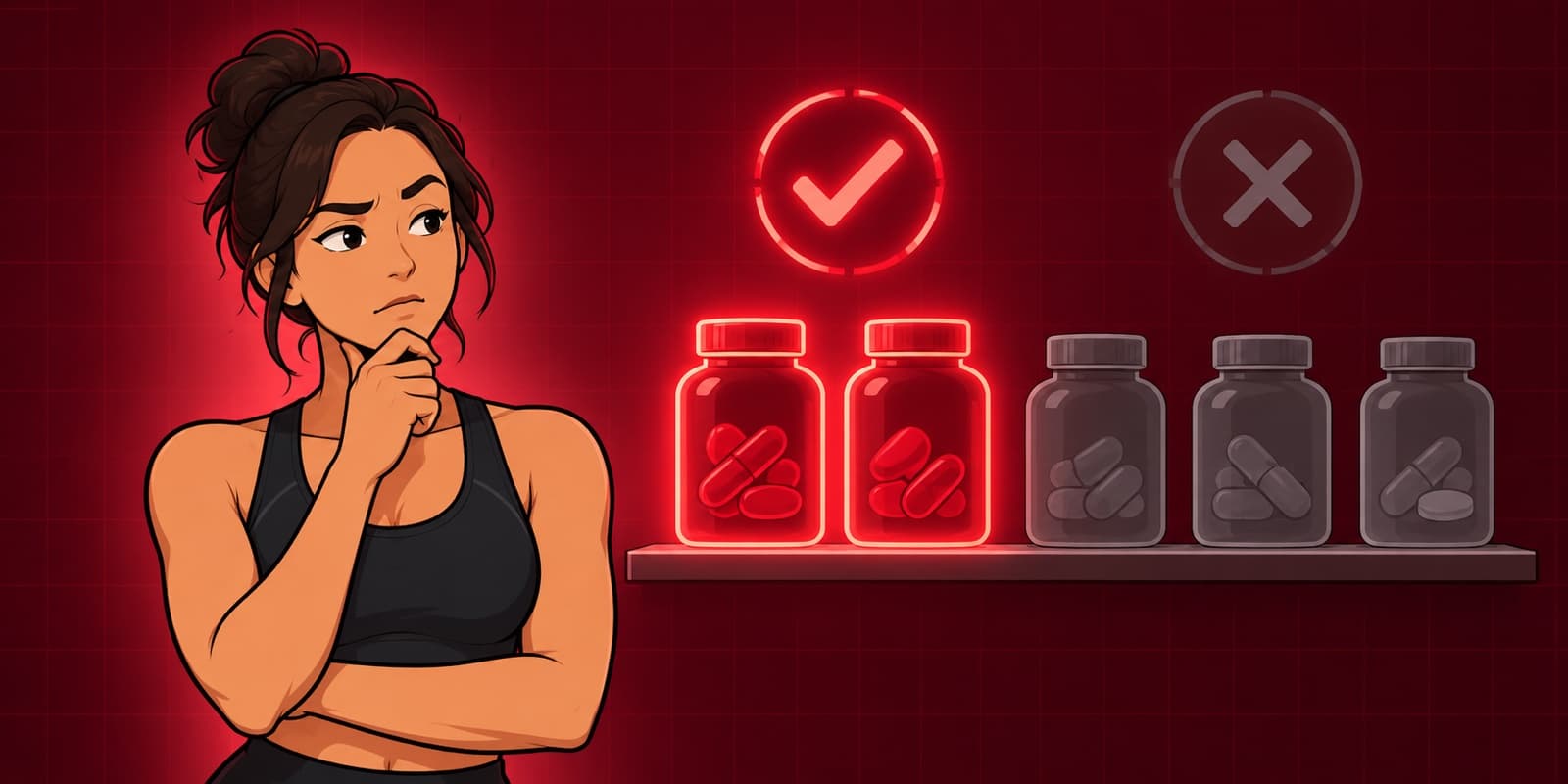
Walk into any supplement shop and the pre-workout shelf is the loudest thing in the room. Neon tubs, aggressive names, ingredient lists with twenty entries. Strip the marketing away and almost every pre-workout is a delivery vehicle for one ingredient with real evidence, plus a handful of others with some, plus filler. This article separates the three.
Caffeine: the ingredient that works
Caffeine is one of the most studied ergogenic aids in existence. The International Society of Sports Nutrition's 2021 position stand summarises hundreds of trials: caffeine improves muscular endurance, maximal strength, power, sprint performance and aerobic endurance, with the largest and most consistent effects in endurance events (Guest et al. 2021).
For lifters, a meta-analysis of resistance-training studies found caffeine improved maximal strength by a small but reliable margin and muscular endurance (reps to failure) by a slightly larger one (Grgic et al. 2018). Effect sizes are modest, a few percent, but a few percent on every set for years compounds.
How it works. Caffeine blocks adenosine receptors in the brain. Adenosine builds up through the day and signals fatigue; block it and effort feels easier, alertness rises and pain perception falls. It also modestly increases calcium release in muscle. The performance effect is mostly central, which is why it improves almost every type of exercise rather than one.
Dose. 3 to 6 mg per kilogram of body weight. For a 70 kg person, 210 to 420 mg. For 90 kg, 270 to 540 mg. Doses below 3 mg/kg still help some people, and doses above 6 mg/kg increase side effects without adding much (Guest et al. 2021). Start at the bottom of the range.
Timing. Blood caffeine peaks 30 to 90 minutes after ingestion. Take it 30 to 60 minutes before you train. Caffeine gum and mouth rinses work faster (10 to 15 minutes) if you need it in a hurry.
Sources. Coffee, tablets, gum and pre-workout powders all work. Coffee's caffeine content varies (a shop espresso can range from 50 to over 200 mg), so tablets are more precise when the dose matters. There is no evidence that "natural" caffeine from green tea or guarana behaves differently from synthetic caffeine.
Habitual use and tolerance. Regular caffeine users still get a benefit from a pre-training dose, though it is smaller than in non-users (Guest et al. 2021). A dose above your normal daily intake is what matters. Cycling off for 7 to 14 days restores sensitivity if you want the maximum effect for a competition, but it is not needed for training.
Genetics. Variants in the CYP1A2 gene alter how fast you metabolise caffeine. Slow metabolisers may gain less and may see more side effects. This explains why your training partner thrives on a dose that leaves you jittery. Adjust by response, not by the label.
The side effects worth respecting
Sleep. This is the real cost, and it is large. Caffeine has a half-life of about five hours, so a 400 mg dose at 4 pm leaves 200 mg in your system at 9 pm and 100 mg at 2 am. A 2023 meta-analysis found that a 107 mg dose (one coffee) should be consumed at least 8.8 hours before bed, and a 217 mg dose (a pre-workout) at least 13.2 hours before bed, to avoid measurable effects on sleep (Gardiner et al. 2023). Poor sleep reduces strength, muscle gain and recovery far more than caffeine improves them. If you train in the evening, use a small dose or none. See Sleep Optimization for Athletes.
Anxiety and jitters. Dose-dependent, worse in slow metabolisers and people with anxiety disorders. Cut the dose.
Heart rate and blood pressure. Caffeine raises both acutely. Healthy adults tolerate this fine. People with hypertension, arrhythmias, or heart disease should talk to a doctor before using pre-workout doses.
Digestive upset. Coffee more than tablets, and worse on an empty stomach.
Daily ceiling. Regulators such as EFSA consider up to 400 mg per day safe for healthy adults, and 200 mg per day in pregnancy. Two pre-workouts and a coffee can exceed that easily. Count all sources.
The other ingredients, ranked by evidence
Beta-alanine: real, but not a pre-workout. Beta-alanine raises muscle carnosine, which buffers acid during efforts of 1 to 4 minutes, improving performance in that window by a modest amount (Saunders et al. 2017; Trexler et al. 2015). The catch: carnosine accumulates over weeks of daily dosing at 3.2 to 6.4 g per day. Taking it only before training, in the 1.5 to 2 g most tubs contain, does very little. The skin tingling (paresthesia) is harmless and unrelated to the benefit. If you want it, buy it separately and take it daily.
Citrulline malate: probably real, usually underdosed. Citrulline raises blood arginine and nitric oxide, which may improve blood flow and reduce fatigue. A meta-analysis found a small benefit for high-intensity strength and power performance (Trexler et al. 2019). Effective doses are 6 to 8 g of citrulline malate, or about 3 to 4 g of pure L-citrulline, 60 minutes before training. Most pre-workouts contain 1 to 3 g.
Creatine: real, but daily. Some tubs add creatine. Creatine works by saturating muscle over weeks, not by being taken before a session, and pre-workout doses are usually 1 to 3 g. Buy it separately at 3 to 5 g daily. See Creatine: The Complete Guide.
Nitrate (beetroot): real for endurance. Dietary nitrate improves efficiency and time-to-exhaustion in endurance exercise, especially in less-trained people (Senefeld et al. 2020). Effective dose is about 6 to 12 mmol of nitrate, which is 300 to 500 ml of beetroot juice. Pre-workout powders rarely contain a meaningful amount.
Sodium bicarbonate: real for short intense efforts. Buffers acid like beta-alanine but acutely, at 0.3 g/kg, 60 to 180 minutes before. Effective but hard on the stomach, and not something you find in pre-workout tubs.
Taurine, tyrosine, theanine. Taurine may modestly help endurance; tyrosine may help mental performance under stress; theanine smooths caffeine's edge. Evidence for performance is thin. Harmless at typical doses.
Arginine, AAKG. Poorly absorbed, consistently outperformed by citrulline. Marketing.
BCAAs. Do not build muscle if you already eat enough protein. Pure filler in a pre-workout. See Supplements That Actually Work.
Proprietary "energy blends," "pump matrices," yohimbine, synephrine. No dose listed means you cannot assess it, and stimulants stacked on caffeine are where the safety problems live. Avoid products that do not list every dose.
Do you need a pre-workout product?
Let us count. The ingredient that works, caffeine, costs pennies as a tablet or coffee. The next two, beta-alanine and citrulline, are usually underdosed in the tub and one of them needs to be taken daily anyway. Creatine likewise. Everything else is noise.
A reasonable evidence-based "pre-workout" therefore looks like this:
- Caffeine 3 to 6 mg/kg, 30 to 60 minutes before, from coffee or a tablet.
- Creatine 3 to 5 g daily, any time.
- Beta-alanine 3.2 to 6.4 g daily in split doses, only if your training involves hard 1 to 4 minute efforts.
- Citrulline malate 6 to 8 g, 60 minutes before, optional.
- Food. A meal with carbohydrate and protein 1 to 3 hours before training does more for a session than any powder. See Pre-Workout Nutrition.
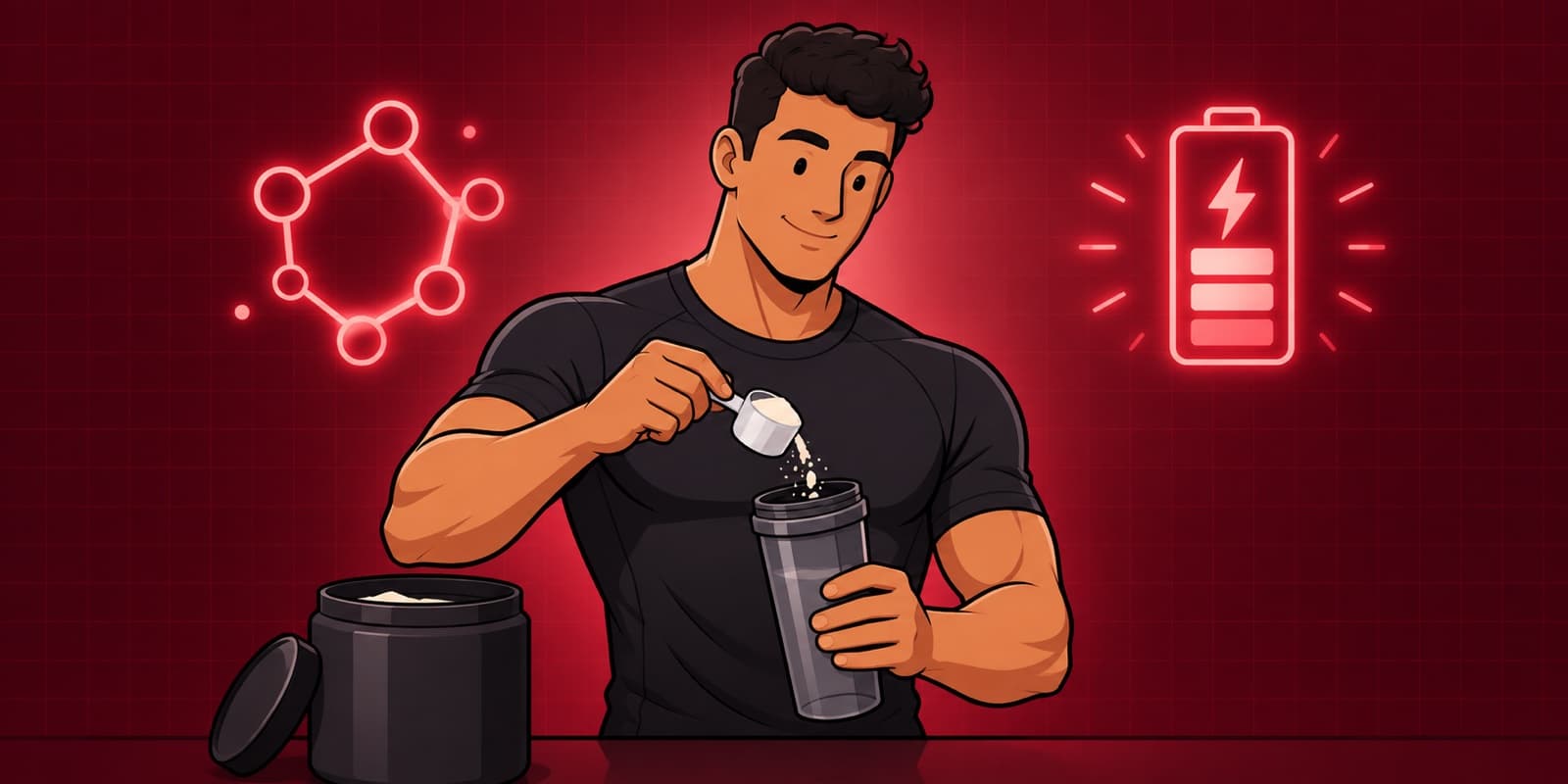
If you like the ritual of a scoop and a shaker, that is fine. Choose a product that lists every dose, is third-party tested, delivers 150 to 300 mg of caffeine per serving, and understand you are paying for convenience and flavour, not for a formula.
When to skip it entirely
- Evening sessions, unless you can tolerate a much smaller dose.
- Any sign your sleep is suffering.
- Pregnancy, heart conditions, anxiety disorders, or medications that interact with stimulants.
- Deload weeks and easy days. Save the strong stimulus for sessions that need it, and your sensitivity for when it counts.
The bottom line
Caffeine works, at 3 to 6 mg per kilogram, 30 to 60 minutes before training, and it is the only reason most pre-workouts do anything. Beta-alanine and citrulline have real but modest evidence and are usually underdosed in the tub. The rest is marketing. Take the caffeine you need from a source you can measure, keep it far from bedtime, and put the money you save into food and sleep.
Sources
- Guest NS, VanDusseldorp TA, Nelson MT, et al. "International society of sports nutrition position stand: caffeine and exercise performance." Journal of the International Society of Sports Nutrition, 2021.
- Grgic J, Trexler ET, Lazinica B, Pedisic Z. "Effects of caffeine intake on muscle strength and power: a systematic review and meta-analysis." Journal of the International Society of Sports Nutrition, 2018.
- Gardiner C, Weakley J, Burke LM, et al. "The effect of caffeine on subsequent sleep: A systematic review and meta-analysis." Sleep Medicine Reviews, 2023.
- Saunders B, Elliott-Sale K, Artioli GG, et al. "β-alanine supplementation to improve exercise capacity and performance: a systematic review and meta-analysis." British Journal of Sports Medicine, 2017.
- Trexler ET, Smith-Ryan AE, Stout JR, et al. "International society of sports nutrition position stand: Beta-Alanine." Journal of the International Society of Sports Nutrition, 2015.
- Trexler ET, Persky AM, Ryan ED, et al. "Effects of Citrulline Supplementation on Exercise Performance in Humans: A Review of the Current Literature." Journal of Strength and Conditioning Research, 2019.
- Senefeld JW, Wiggins CC, Regimbal RJ, et al. "Ergogenic Effect of Nitrate Supplementation: A Systematic Review and Meta-analysis." Medicine and Science in Sports and Exercise, 2020.
- Harty PS, Zabriskie HA, Erickson JL, et al. "Multi-ingredient pre-workout supplements, safety implications, and performance outcomes: a brief review." Journal of the International Society of Sports Nutrition, 2018.
Frequently asked questions
How much caffeine should I take before a workout?
About 3 to 6 mg per kilogram of body weight, 30 to 60 minutes before training. For a 70 kg person that is 210 to 420 mg, roughly two to four cups of coffee. Start at the low end; benefits do not increase much above 6 mg/kg and side effects do.
Do I actually need pre-workout?
No. Caffeine does most of the work in any pre-workout, and coffee or a caffeine tablet delivers it for a fraction of the price. The other ingredients are either underdosed, unproven, or only work when taken daily regardless of training time.
What does the tingling from pre-workout mean?
That is paresthesia from beta-alanine, a harmless tingling of the skin caused by nerve activation. It is not a sign the product is working. Beta-alanine works by accumulating in muscle over weeks, so the tingling and the benefit are unrelated.
Does caffeine stop working if I take it every day?
Partly. Habitual users get a smaller boost than non-users, but a dose above your usual intake still improves performance. Taking a week or two off before an important event restores sensitivity, but it is not necessary for everyday training.
How long before bed should I stop caffeine?
A 2023 meta-analysis found that a standard 100 mg dose should be taken about 9 hours before bed and a pre-workout dose of about 200 mg about 13 hours before to avoid affecting sleep. If you train in the evening, use a low dose or skip it. Sleep loss costs you more than caffeine gains you.
Are pre-workout supplements safe?
Products from reputable, third-party tested brands with clearly listed doses are generally safe for healthy adults under about 400 mg caffeine per day. Risks come from stacking caffeine sources, proprietary blends with hidden doses, unlisted stimulants, and pre-existing heart conditions or pregnancy.