Progress Photos: How to Take Them So They Actually Tell You Something
6 min read · May 2025 · by Manikanta Sirumalla
The scale tells one narrow truth, your total mass, and says nothing about what that mass is made of. You can lose fat, gain muscle, and weigh the same. The mirror is better, but daily mirror checks are unreliable because your brain adapts to gradual change and stops registering it.
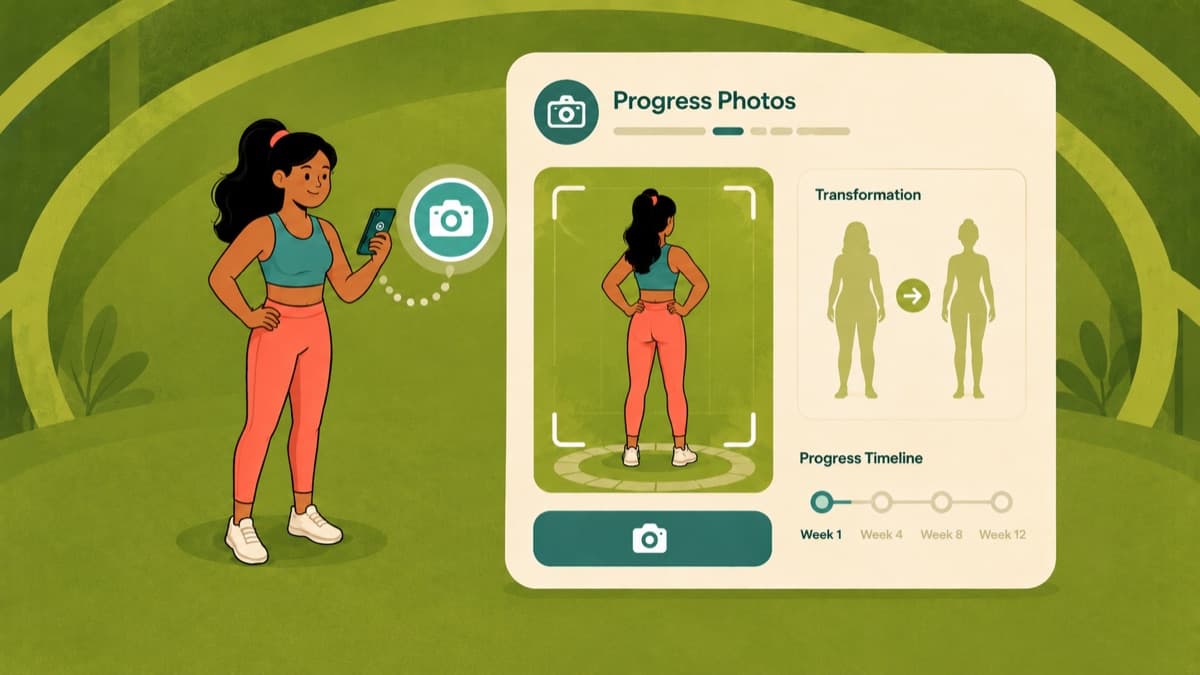
Progress photos solve that, on one condition: they have to be comparable. A photo taken in different light, at a different distance, at a different time of day, in different clothing, is not evidence of anything. Most people's photo series fail for that reason rather than for lack of effort.
This guide is about the method, which works with any camera. An in-app progress photo system is not confirmed in the current App Store build, so the steps below assume your phone's camera and photo library rather than a specific app screen.
What Photos Give You That Numbers Do Not
- An objective visual record. Your perception adapts. A dated photo does not.
- Signal during a plateau. When the scale stalls for a fortnight, a comparison against a photo from two months ago often shows change the scale missed.
- Program feedback. Photos alongside training data help you judge whether a block produced the composition change you wanted.
- Something useful to show a coach. If you work with one, photos are among the most informative things you can send.
Standardising the Shot
Lighting
- Use the same light source every time. Diffuse natural daylight from a window is ideal.
- Face the light. Front lighting illuminates evenly; side lighting throws shadows that fake definition one week and hide it the next.
- Skip the flash. It blows out highlights and flattens detail.
- Shoot in the same room at the same time of day.
Angles and Poses
Take three shots each session:
- Front, standing naturally, arms at your sides, feet about shoulder-width apart
- Side, turned 90 degrees, same arm position, standing tall
- Back, turned another 90 degrees, same stance
Keep the poses identical every time. Do not flex in some and relax in others, and do not change your distance from the camera. Consistency in pose is what makes the comparison mean something.
Timing
- Morning, after waking and using the bathroom, before eating or drinking
- The same day each week or fortnight, chosen once and kept
- Before training, not after, since a pump temporarily changes how you look
Post-meal bloating, training pumps, and hydration shifts all affect appearance more than a week of real progress does. Controlling for them is the whole game.
Clothing
Wear the same minimal clothing every session, whatever lets you see the areas you are tracking. One more variable eliminated.
Storing and Organising Them
Whatever you use, three habits keep a photo series usable:
- Keep them dated. Phone cameras do this automatically; do not strip the metadata by re-saving through messaging apps.
- Keep them together. A dedicated album beats hunting through a year of camera roll.
- Note the context. Body weight that day and a one-line comment on how you felt turns a photo into a data point.
If you want the photos on your device only, keep them out of shared albums and check whether your photo library is backing up somewhere you did not intend. Progress photos are personal, and the storage decision should be a deliberate one rather than a default.
Comparing Them Properly
- Same angle to same angle. Front to front, side to side. Comparing a front shot to a side shot tells you nothing.
- Similar conditions. A morning shot against an evening post-workout shot shows the effect of timing, not training.
- Four to eight week intervals. Week-to-week comparisons mostly show noise. Give your body enough time to have actually changed.
Pairing Photos With Numbers
Photos are strongest next to objective data. A weekly average body weight, a body fat estimate with its error understood, and a few tape measurements give the photo a context it cannot supply on its own. When a photo shows visible change and your weight has not moved, measurements and composition estimates are what confirm that recomposition is what happened. The measuring real progress guide covers which numbers are worth keeping.
Frequency
- During a fat-loss phase: weekly. Change is faster and worth capturing.
- During maintenance: every two to four weeks. More often is discouraging rather than informative.
- During a lean bulk: every two weeks, mainly to watch that fat gain stays proportionate.
Common Mistakes
Inconsistent lighting. The single biggest cause of a useless photo series.
Flexing sometimes and relaxing others. Pick one, ideally relaxed, and keep it. If you want flexed shots, take them as a separate consistent series.
Checking too often. Your body does not change visibly in 24 hours. Daily comparisons only generate frustration.
Only shooting the front. Backs, sides, and legs change too, and a front-only series misses most of it.
Deleting the unflattering ones. Those are usually the most valuable later, because they are the "before" that makes a comparison legible.
Keep Reading
- Measuring real progress: which numbers are worth tracking alongside photos
- Body fat percentage: what the estimates can and cannot tell you
- Logging workouts: the training-side record that gives the photos context
Frequently asked questions
How do I take good progress photos?
Face a consistent light source, ideally diffuse daylight, put the phone on a shelf or tripod at the same height, use the self-timer, and take front, side and back shots in a relaxed pose with the same stance and distance each time. Skip the flash and the mirror selfie.
How often should I take progress photos?
Weekly during a fat-loss phase, every two weeks during a lean bulk, and every two to four weeks at maintenance. Compare shots four to eight weeks apart; week-to-week comparisons mostly show noise.
What poses should I use for progress photos?
Front, side and back, standing naturally with arms at your sides, and the same pose every time. If you want flexed shots, take them as a separate consistent series rather than mixing flexed and relaxed.
When is the best time of day for progress photos?
Morning, after using the bathroom and before eating or drinking, and before training. Meals, hydration and a training pump change how you look more than a week of real progress does.
How do I keep progress photos private?
Keep them in a dedicated album on your device, out of shared albums, and check whether your photo library backs up somewhere you did not intend. Do not re-save them through messaging apps, which strips the date metadata you need.